
Kriyaban
Travel log by a Yogananda devotee
Visa
You should apply for your visa to India a couple of months in advance. The procedure through this website will generate a document called e-Visa. Remember to fully complete all necessary phases until you ensure that the document you have is the final one. This must contain as prominent features your photo and a seal stamped in the center of the document; anything that does not meet these requirements will not be a valid e-Visa.
IMPORTANT: Always carry printed copies of your passport and visa with you. YSS ashrams will ask you for copies multiple times during your stay, and having copies ready will save you a lot of hassle. It's also advisable to have passport-sized photographs (they may ask you for photos).
Climate
North India (Delhi, Noida, Ranchi, Dakshineswar):
If you're traveling during the months of January to April, the daytime temperature ranges between 12 and 18 degrees and drops to about 8 degrees at night. In December-February it can be quite cold, especially at night, as the rooms in some ashrams and kendras DO NOT have heating. The typical fog of this season also makes the cold feel more intense as the sun doesn't come out. It's advisable to bring some warm clothing if you visit during these months.
In summer (April-June) it gets very hot and can be uncomfortable. The best time to visit North India is from October to March, when the weather is more pleasant.
South India (Chennai, Coimbatore):
In November, at the end of the monsoon rains, the climate feels like the typical stuffiness of tropical areas. The nights can be a bit heavy. The atmosphere is humid and warm for much of the year.
Puri (east coast):
The proximity to the sea means that energy doesn't get trapped like in inland cities; the atmosphere "breathes" better. As in most of North and East India, the best time is from October to March.
Jammu (north, near Kashmir):
October and November are ideal months for pleasant temperatures. In winter it can be very cold, especially in Srinagar.
What to bring - Complete list
Clothing:
• Modest clothing that covers shoulders and knees (essential for ashrams and temples)
• Light layered warm clothing for the north in winter
• Light cotton clothing for the humid climate of the south
• Pillowcase
• Sleeping bag or light blanket
Hygiene and health:
• Mineral salts for dehydration cases
• Stomach protector, in case spicy food doesn't agree with you
• Mosquito repellent
• Electric mosquito device and 2 refills (although there are usually some in the ashrams, the insecticide is not always quality)
• Laundry soap
Technology:
• Spare cable for your mobile phone (you can lose it or break it)
• Charger and power bank fully charged BEFORE landing
• Adapters are NOT necessary - European plugs work in India
For meditation:
• Armrests for Om practice (can be purchased in Ranchi)
• Bead necklace (mala) to keep count of Kriyas (can be purchased at ashrams)
Other essentials:
• Half-meter chain with padlock to secure your backpack on overnight train/bus trips
• A piece of rope and about 6 clothespins for hanging laundry
• Paper with all your visa and passport data written down (to fill out forms without taking out the originals each time)
• Travel insurance data: company name, phone number and policy number
• Receipt from airport money exchange (can serve as proof document if you lose your passport)
• 5-10 passport photos (YSS ashrams request them frequently)
• Copies of passport and visa (multiple copies)
• Loose rupees for temple donations, tips, offerings, etc.
Accommodations in YSS Ashrams
Reservations:
You must book TWO OR THREE MONTHS in advance, especially for highly sought-after ashrams like Ranchi. If your visit coincides with important celebrations (mahasamadhis, births of gurus, Kriya initiations), DO NOT delay in booking, as these events can gather between 800 and 2000 devotees.
Ashrams generally take 2-3 days to respond. Be patient, they will eventually respond. Read ALL reply emails VERY CAREFULLY because they contain specific instructions about necessary documentation, forms to fill out, coexistence rules and what to bring at check-in.
Required documentation:
When the reservation is approved, you'll be asked to attach:
• Copy of visa
• Copy of passport
• Passport-sized photographs
• Completed forms (there may be several)
• At check-in: you'll have to fill out MULTIPLE forms with the same data repeatedly. That's why it's so useful to carry a paper with all your information already written down.
Donations (payment for stay):
• The standard donation at most YSS ashrams is 1200 rupees/day and is voluntary
• You CANNOT pay with credit card - only cash
• You must withdraw the necessary money TWO DAYS in advance, as ATMs have daily limits and you may need to return a second day to complete the amount
• Consider withdrawal fees by taking out large amounts to extend the time until next operations
Length of stay:
Initially they only allow stays of 6 days at most ashrams. If you wish to stay longer, you can request an extension once you're there. If they grant it, perfect; if not, the maximum is 6 days.
Facilities:
• Rooms are simple but clean and functional
• In some places there is NO heating - prepare for cold nights in winter
• Many ashrams have water purification and filtration machines - you can drink and refill water bottles without fear (ask first to be sure)
• Most have a small electric water heater - you'll need to plug it in 2 hours before showering
• All outlets have a switch that "activates" them - look for it parallel to the outlet
• European plugs work directly without an adapter
Meditations:
Ashrams have their own meditation dynamics. It's advisable to adhere to them, even if it means getting up very early. For example:
• In Ranchi: On Thursday nights there's a long three-hour meditation (the same as in SRF centers). On other days meditations are approximately 1 hour
• If you wish to meditate longer on your own, you can skip breakfast or dinner as they go immediately after the sessions
Food:
• Vegetarian in all ashrams
• Served on aluminum trays with separate compartments
• Generally repetitive but nutritious and well-prepared
• Milder in spice than local restaurants
• You can repeat as much as you want
• Food is usually soft, which is convenient if you have dental problems
Indian bathroom:
Instead of toilet paper, water is used. All bathrooms have a tap with a small hose or a container for this purpose. Culturally in India the left hand is used for personal cleaning and the right hand for eating and greeting. A practical solution is to greet with namaste (hands together in front of the chest) which is culturally appropriate.
Bed orientation:
Remember to orient the bed where you're going to sleep with your head to the north and feet to the south. It's the best way to sleep if you're in India.
Special celebrations in ashrams:
If you can organize your visit to coincide with any of these celebrations, do so. The experience will be much richer:
• New Year's Eve (December 31): Year transition meditation, usually from 11:30 PM until after midnight
• Yogananda's Birth (January 5): One of the most important celebrations, can gather 800-2000 devotees
• Mahasamadhis of Yogananda and Yukteswar (March 7-9): Very emotional celebrations
• Kriya Initiations: Special moments, especially in places like Ranchi
• Births of other gurus of the lineage
• Janmashtami (Krishna's birth)
Additional YSS services:
Yogoda Satsanga Society has a network of small homeopathic medical care centers throughout India where they treat you for FREE. There's one in front of the Dakshineswar ashram. If you need medical attention during your stay, ask about these centers. In case you need something stronger, the ashram staff will help you get conventional medical care.
Shop in ashrams:
At the ashram shop (especially Ranchi) you can buy:
• Armrests for Om practice
• Bead necklaces (malas) to keep count of Kriyas
• Copies of Autobiography of a Yogi in different languages
• Pictures of the gurus
• Other devotional materials
Prices are reasonable and quality is excellent.
Food outside ashrams
Food in India is very rich - it's a widespread opinion, not just personal. However:
• NEVER drink tap water - only bottled or boiled, even to rinse your mouth when brushing your teeth
• Try NOT to eat on the street even if you're hungry; wait to eat at the ashram or in an established restaurant - your digestive system will thank you
• Packaged food on the street is usually expired
• Fried foods are delicious but your body won't appreciate them much
• If you buy fruit, wash and peel it
• In established restaurants, the rupee-euro exchange rate works well: for 15-20€ you can eat as if in Spain you spent 70€
Money
Recommended cards:
Carry THREE cards: one regular debit card and two credit cards (an extra one in case you lose the first). SEPARATE THEM, don't carry them together. Whenever possible, withdraw and pay with the debit card to avoid paying interest.
Money exchange strategy:
• Bring 100€ and exchange them at the airport. They'll charge you quite a commission (approx. 6-7€ for exchanging 200€), but with those 94€ you'll have enough for several days
• Keep the exchange receipt - it can serve as proof document if you lose your passport
• Afterwards, with foresight, withdraw from ATMs with a commission of about 5 euros per 100 euros
• You can also exchange at small exchange shops with very good rates
ATMs in India without commission:
• Yes Bank
• Bank of Baroda
• Vijaya Bank
• Union Bank of India (has an ATM at Delhi airport exit, opposite the taxi stand)
• State Bank of India (SBI) - very widespread, you can withdraw with debit
• Syndicate Bank
• Indian Overseas Bank
Problem with confirmation SMS:
Some banks send SMS requesting confirmation when you make online purchases. If you've changed the SIM for an Indian number, these SMS won't reach you. Solutions:
1. Before leaving, buy and install the Indian SIM and add that number to your bank to receive SMS
2. Buy tickets at agencies in India paying in cash (highly recommended)
3. Ask someone in your country to buy tickets for you
Always carry rupees with you:
You'll need them for temple donations, paying whoever watches your shoes at temples, offerings, tips, etc.
Other:
• Bottle of water: 20 rupees
• Mobile SIM (30 days, 1.5GB/day, unlimited calls): 350 rupees
• Laundry (8 pieces): approx. 250 rupees (2.5€)
• YSS ashrams donation: 1200 rupees/day
• Exchange commission 100€ at airport: 6-7€
Mobile and connectivity
SIM card:
If you can buy the SIM in your country before traveling, better. Otherwise:
• Look for an Airtel store or "Outlet" (the most used company)
• Small Airtel shops are for recharging, but NOT for activating new SIMs
• "Airtel Outlets" can activate you - they're less common
• Recommended rate: 30 days with unlimited calls/messages and 1.5 GB/day = 350 rupees
• You need: passport, visa and contact number in India (give the ashram/hotel one)
• You can manage recharges from the "myAirtel" app or in cash at recharge points
CRITICAL - Problems in the country:
Due to national security issues, it is EXTREMELY DIFFICULT for foreigners to get SIM cards. It is strongly recommended:
• Manage this issue BEFORE arriving in India
• Rely on help from local contacts
• Have alternative communication plans (WiFi in hotels)
• If you depend on internet for work, seriously consider if this destination is viable
Important about online purchases:
If you change your SIM, you won't receive bank confirmation SMS. Plan this before traveling or use the alternatives mentioned in the Money section.
Transportation
Airplane:
• I've booked domestic flights with IndiGo - very good prices (between 30 and 60€) and works very well
• You can book them from home once you have clear dates
Train:
• The most used means for long trips - very cheap
• Personally I prefer plane if the train takes more than 18 hours
• Advisable to travel at night
• Buy tickets IN ADVANCE to ensure comfortable seat
• To buy online: register with IRCTC (India's state train service)
• It's EASIER to buy at local agencies - minimal commission and you ensure buying correctly
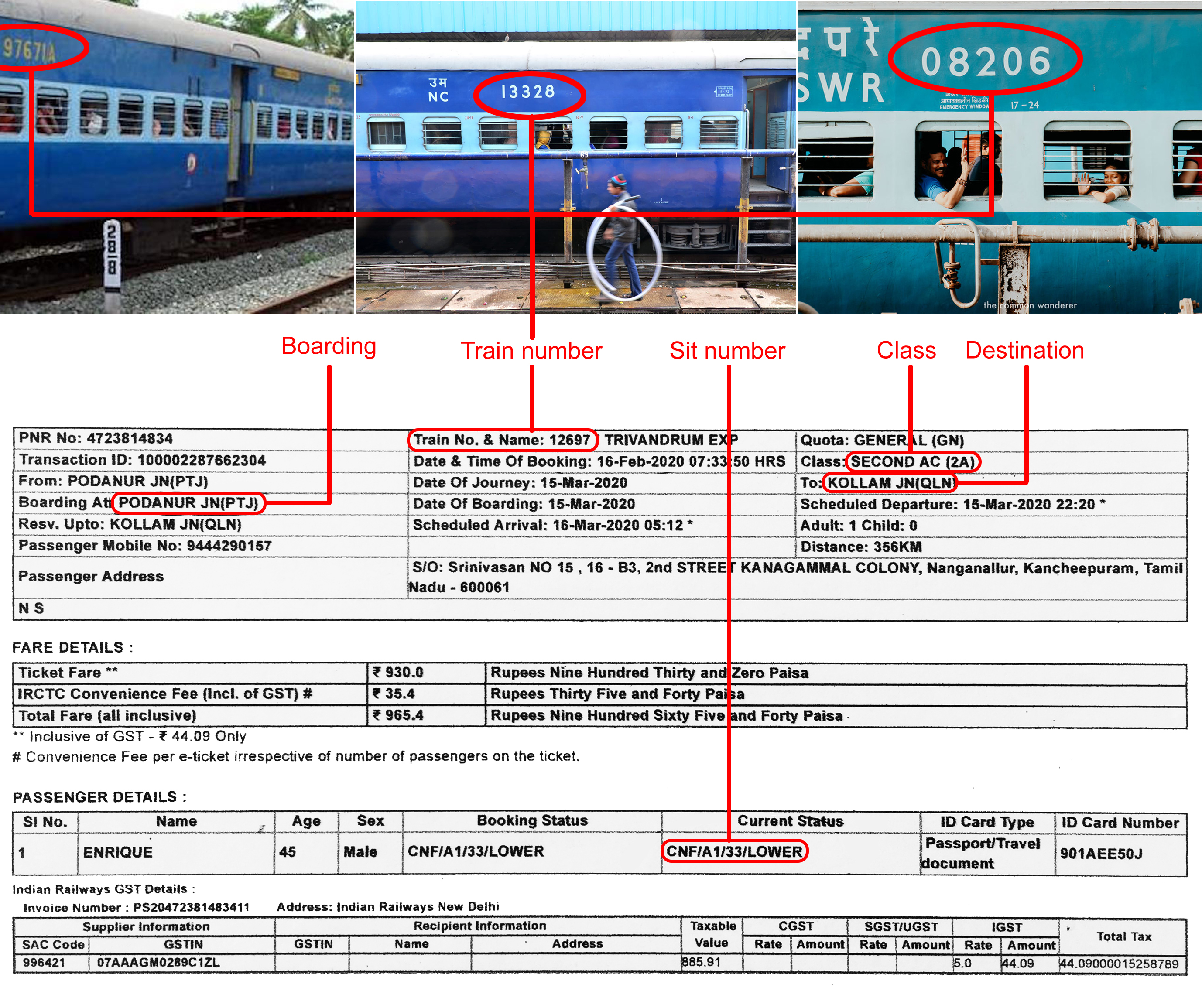
• See section at the end about how to interpret a train ticket
Taxi:
• USE THE Uber APP - it's INDISPENSABLE
• Gives you real prices, not inflated for tourists
• Alternative: pre-paid taxis at airports (fixed price, no negotiation, avoid scams)
• Less recommended option: street taxis (requires negotiation, higher risk)
• Useful contacts of trusted taxi drivers:
- Suno in Ranchi (WhatsApp: 7488686758)
- Debasis in Dakshineswar (WhatsApp: +91 90070 58579) - also guide to Yogananda's places
Guides and useful contacts
Debasis - Devotee guide in Calcutta/Dakshineswar:
If you want to truly take advantage of your stay in Calcutta as a Yogananda devotee, hiring Debasis is ABSOLUTELY ESSENTIAL. He's a devotee who works as a tour guide specializing in places related to Yogananda. Ask for him at the Dakshineswar ashram reception.
The tour includes truly special places:
• Yogananda's birthplace on Garpar Road
• House of the Levitating Saint
• Shiva Temple mentioned in the Autobiography
• Yukteswar's house in Serampore
• Tree by the Ganges where Babaji appeared to Yukteswar
• Yogananda's uncle's house
• House of the Sleepless Saint
• Ramakrishna Mission Center
• And many other places loaded with history
Debasis is not only a guide but can help you with:
• Train ticket purchases
• Taxi organization
• Finding the best fruit juice in Calcutta
• Healthy Indian food restaurants
• Buying special souvenirs
WhatsApp: +91 90070 58579
Laundry
There are always places near the ashrams (or in the ashrams themselves) where they wash clothes for you. A bag with 8 pieces costs about 250 rupees (2.5€). Alternatively, you can wash it yourself and hang it - that's why it's useful to bring soap, rope and clothespins.
Initial adaptation to India
It's completely normal that:
• The first nights are difficult to sleep (different comfort zone, jet lag, new sounds)
• Generally after 2-3 days you sleep better
• "Indian English" has accent peculiarities - your ear will adjust
• Indian food requires a few days of digestive adaptation
• The Indian bathroom system (water instead of paper) takes practice
• Traffic chaos seems overwhelming at first
Give your body and mind time to adapt. It's part of the process.
Safety and health
• Water: NEVER drink from the tap, only bottled or boiled
• Food: Avoid street food, especially at first
• Medicines: Bring mineral salts and stomach protector
• YSS medical centers: There are free homeopathic care centers - ask at the ashrams
• Travel insurance: Essential - always carry the data with you
• Mosquitoes: Use repellent and electric devices
Important cultural aspects
• Respect in temples: Dress modestly, cover shoulders and knees
• Shoes: Remove them in temples and ashrams - someone watches them (leave a tip)
• Namaste: Culturally appropriate greeting (avoids right/left hand dilemma)
• Right hand: For eating and greeting
• Left hand: For personal cleaning
• Photographs: Ask permission before photographing people
• Cows: They're sacred - respect them
• In India when monks quote the gurus: They start with Krishna, Jesus Christ, Babaji... (opposite from the West)
Recommendations before the trip
How to interpret a train ticket
Trains in India are one of the most used forms of transport, especially for long distances. If you're new to India, knowing how to interpret a train ticket and how to identify your train and carriage can be a great relief. In the following screenshot I show you the most relevant information. I also attach this website where you can get a lot of information about how to get around India by train.
May your pilgrimage through India be blessed and transformative
You serve the Guru, the Guru is the guide, the Guru responds