
Kriyaban
The only way to find God's Love is to surrender to Him.
So master your mind that you may offer it to Him.
So master your mind that you may offer it to Him.
"Paramahansa Yogananda"
India is filled with ashrams and Dhyana Kendras of Yogoda Satsanga Society, sacred places where the master's presence can still be felt. This guide compiles information about many of them, as well as temples and spaces of deep spiritual significance that I have had the fortune to visit. Each location offers something unique: opportunities for deep meditation, spiritual retreat, and growth on the path toward God and the Guru.
YSS ashrams and Kendras are distributed throughout India, from north to south, and each has its own character. Some are large and majestic, others small and humble, but all share that special atmosphere of devotion only found in places where Yogananda and his disciples have left their spiritual imprint.
In case you don't know what a Kendra is, I'll give you a brief explanation right below.
What are Dhyana Kendras?
Yogoda Satsanga Society's Dhyana Kendras are meditation and spiritual gathering centers founded by Paramahansa Yogananda. These centers are dedicated to the practice of meditation, specifically Kriya Yoga, and to teaching the spiritual doctrines promoted by Yogananda. Dhyana Kendras offer a space for group meditation, yoga classes, satsangas (spiritual gatherings), and community activities.
In addition to promoting individual spiritual growth, Dhyana Kendras also engage in charitable activities, such as medical camps and blood donations, to support local communities. Devotees and practitioners can participate in daily meditations, study programs, and special events designed to strengthen their spiritual practice and connection with the YSS community. At this link you can consult all the Dhyana Kendras, ashrams, and retreat places in India of Yogoda Satsanga Society. As you'll see, there are many and they are spread throughout the country.
Ranchi
The Heart of Yogoda Satsanga Society in India
Ranchi is, without a doubt, the most representative place of Yogananda in India. Not by chance is it the headquarters of Yogoda Satsanga Society (YSS), the sister organization of Self-Realization Fellowship in the United States. This ashram was founded by Yogananda himself in 1917 as a school for boys where modern education was combined with spiritual training. It was here that Yogananda had the vision of his mission in the West, and it was also in this sacred place that Daya Mata, his closest disciple, experienced her samadhi.
I have had the fortune of visiting Ranchi on three different occasions: on my first trip to India, then in 2024, and finally in 2025. Each visit has been unique and revealing, allowing me to experience the place from different perspectives and states of consciousness.
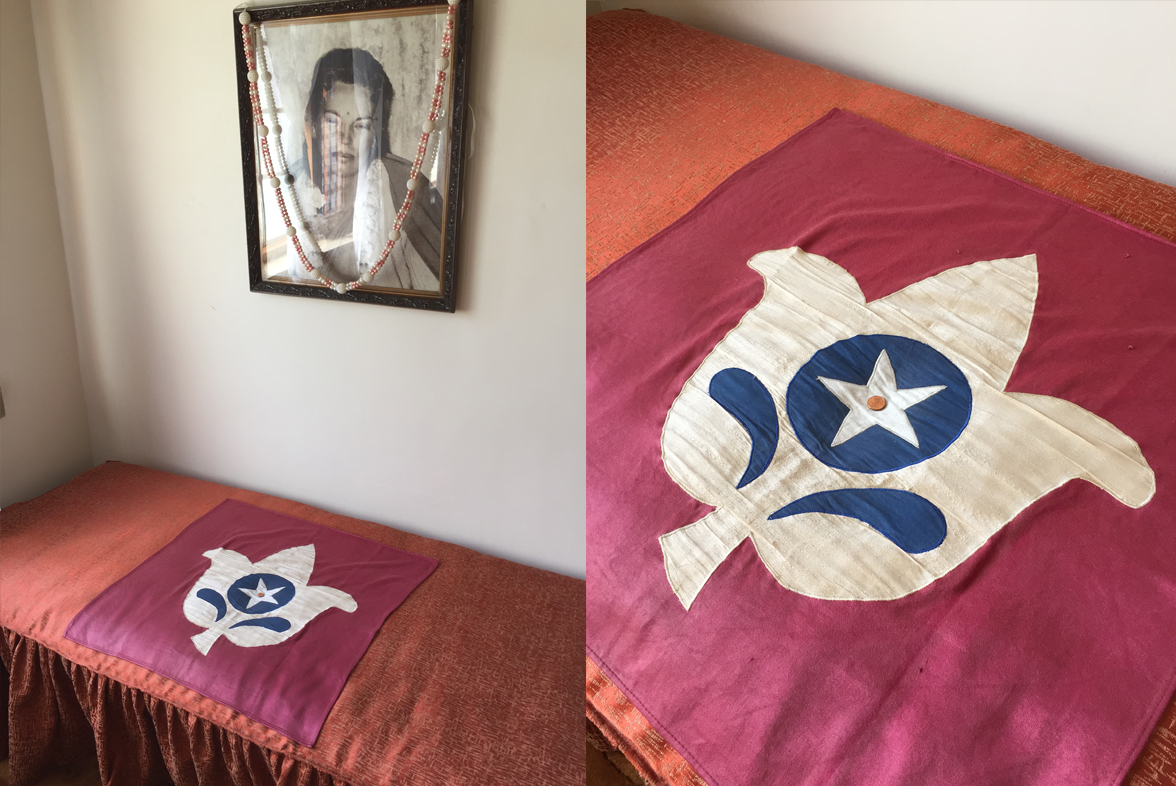
Place where Daya Mata had her samadhi in Ranchi
The ashram is a true oasis in the middle of India. When I say this I'm not exaggerating: everything is clean, cared for, peaceful, and meticulously maintained. The gardens are extensive and beautifully landscaped, offering multiple corners where one can meditate, practice, or simply sit and enjoy the sun. The difference from the typical chaos of Indian cities is so marked that upon entering you feel you've crossed a portal to another world.
One of the most special characteristics of Ranchi is that it's filled with places where you can tangibly feel the master's presence. Whether because Yogananda meditated there, because there's some object of his, or simply because decades of devotees have been expressing their love in those spaces, the spiritual atmosphere is palpable. Being able to meditate in YSS's meditation room, visit the room where the master lived, or sit in the place where Daya Mata reached samadhi are experiences that deeply mark any devotee.
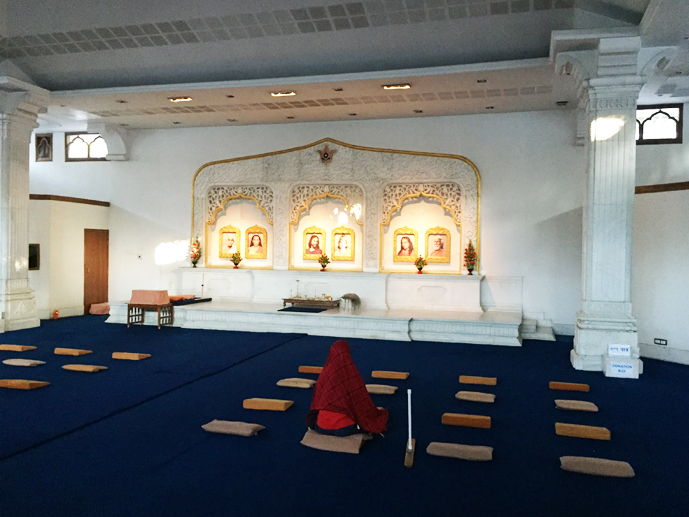
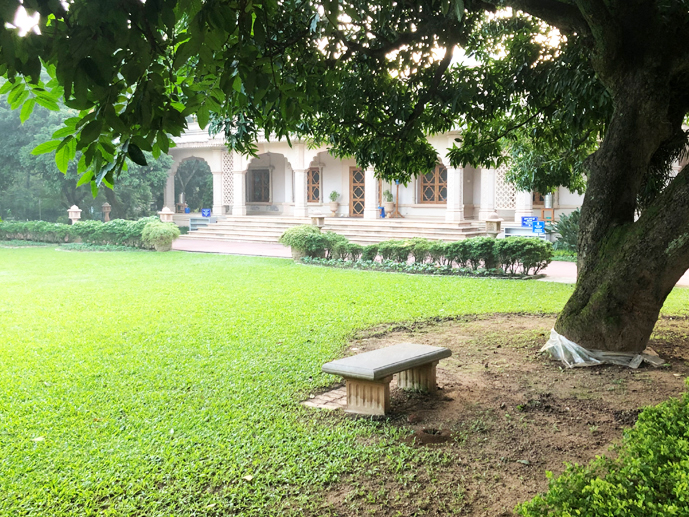
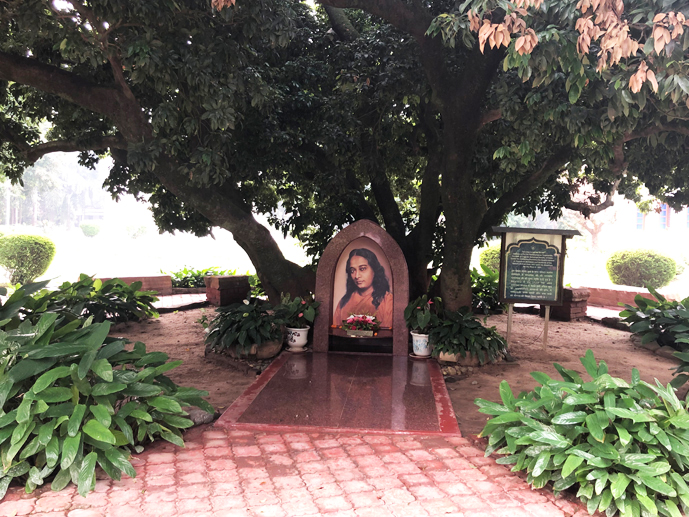
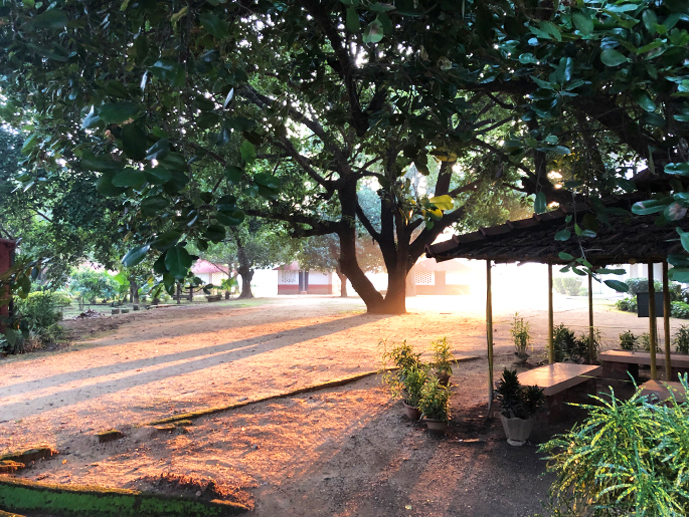
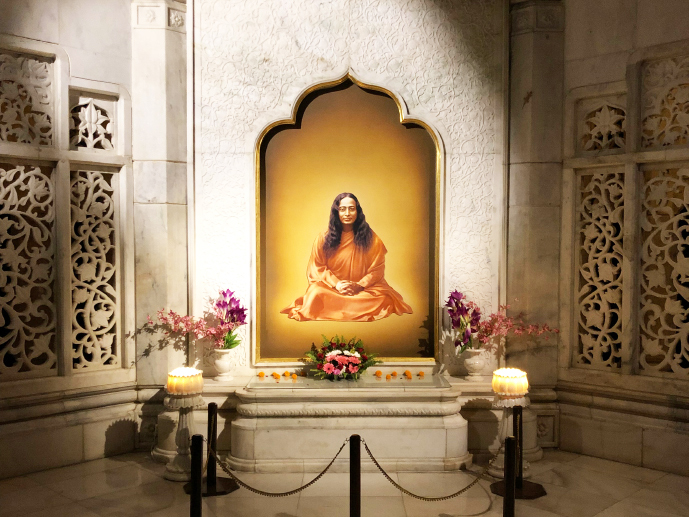
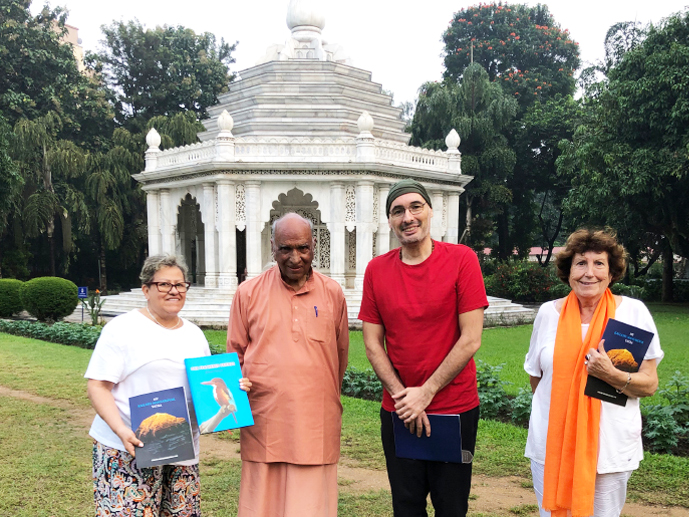
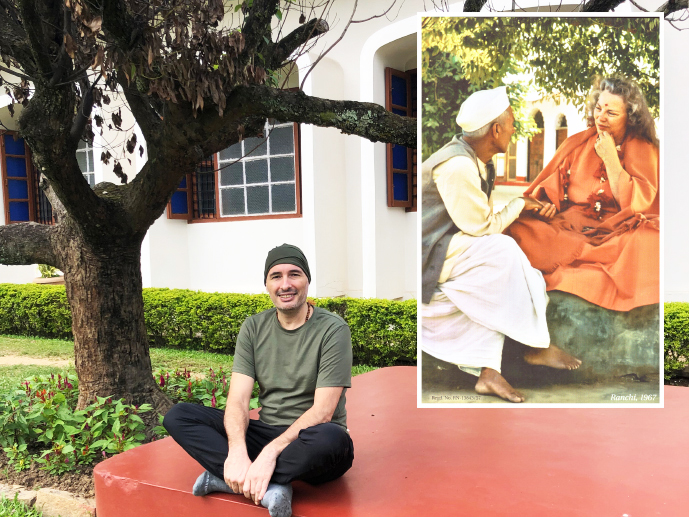
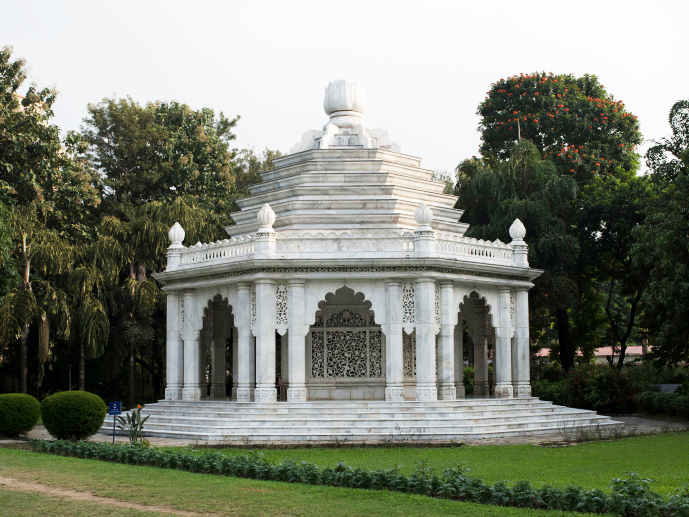
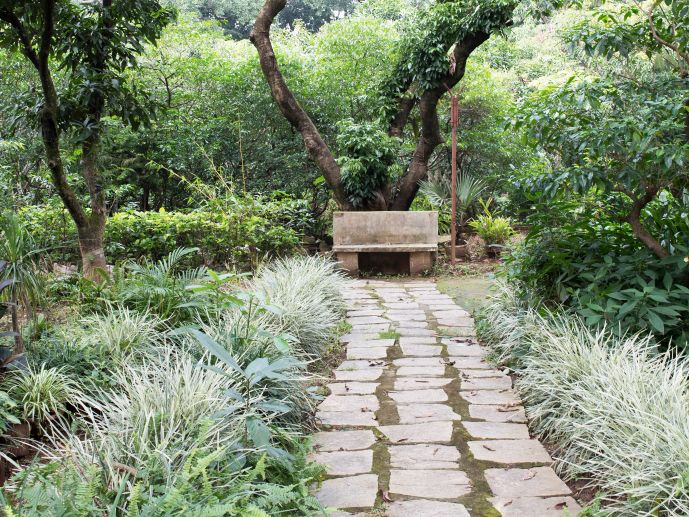
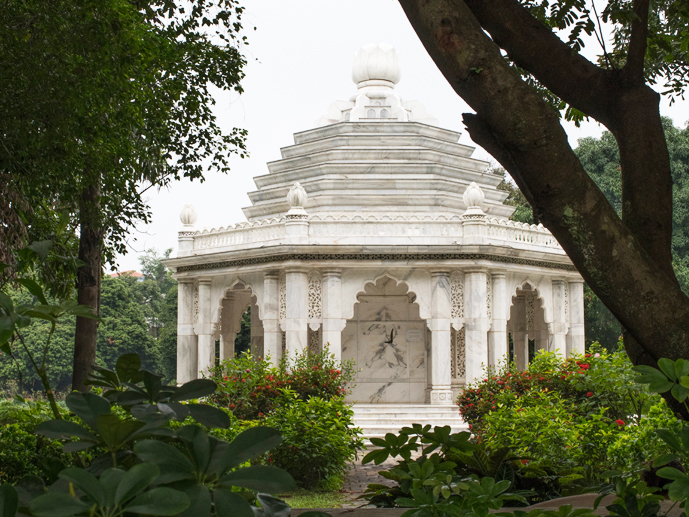
Images of the YSS ashram in Ranchi

Meditations in Ranchi follow a specific schedule. Thursday nights feature the three-hour long meditation, which is the same one practiced at SRF centers around the world (the one where they play Yogananda speaking before beginning). The rest of the days, scheduled meditations are shorter, typically one hour. If you wish to meditate longer, you'll have to do it on your own, which may mean missing breakfast or dinner, as both come immediately after meditation sessions. It's something to consider in your daily planning.
During evening meditations something truly magical happens: they coincide with the call to prayer from nearby Muslim mosques. The sound of the chants mixes with the silence of meditation creating an indescribable atmosphere. The first time you experience it you get goosebumps. It's one of those moments that remind you that, although we practice different traditions, we're all seeking the same thing.
An important practical detail: initially they only allow stays of six days. If you wish to stay longer, you can request an extension once you're there. If they grant it, perfect; if not, the maximum is six days. It's also crucial to book well in advance, especially if your visit coincides with an important celebration like the mahasamadhi, the gurus' birthdays, or Kriya initiations. During these events the place fills completely and accommodation can be difficult to secure.
Speaking of initiations, Ranchi is one of the most special places to be initiated into Kriya Yoga. Imagine receiving this sacred technique in the same place where Yogananda taught it, surrounded by the accumulated energy of decades of devotional practice. It's truly a privilege to be able to experience it here.
On my 2024 visit I had the fortune of having an audience with Swami Krishnananda, an 81-year-old monk with a fascinating life and influence. Swami Krishnananda speaks Spanish perfectly because he lived many years in South America, which greatly facilitates communication for Spanish-speaking devotees. During our conversation, I asked him what he would recommend for maintaining God's presence during the day. He shared with me a specific mantra of Babaji that I have since incorporated into my daily practice.
I also conversed with a Menorcan devotee who had been at the ashram for quite some time. She told me about the celebrations held here: the mahasamadhi, the gurus' birthdays, and Kriya initiations. As she explained, during these events the atmosphere is completely different, with hundreds of devotees gathered and spiritual energy multiplied. Without a doubt, if you can organize your visit to coincide with any of these celebrations, the experience will be even richer.
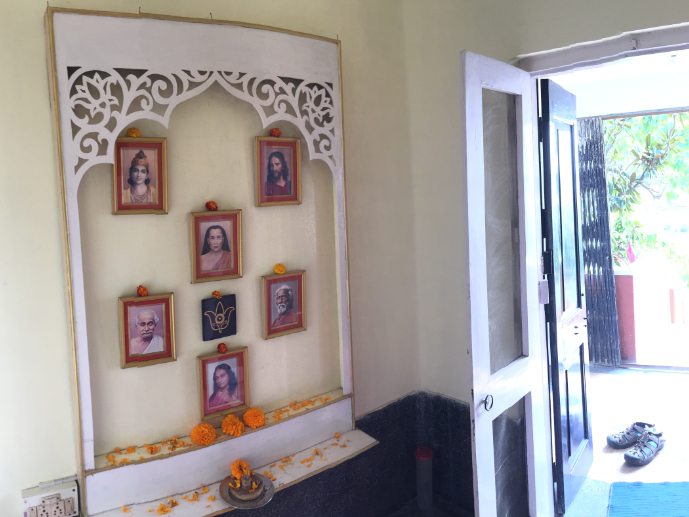
A cultural curiosity that caught my attention is that in India, when monks begin citing the different gurus on the altar during ceremonies, in the West we start with Jesus Christ, Krishna, Babaji... but they start in reverse: Krishna, Jesus Christ, Babaji... It's a small detail that reflects the difference in cultural perspective, although the message and reverence are the same.
Ranchi is, fundamentally, a place to come, stay, and not move. Although there are things to visit in the city, the ashram itself is the destination. It's the ideal place for an intensive retreat. The grounds are very large and offer multiple spaces for different spiritual practices. You can spend days exploring its corners without ever feeling enclosed or limited. There's a beautiful shiva-lingam to meditate at, extensive gardens for practicing energization exercises, meditation rooms, the library, and of course, all the sacred places associated with Yogananda.
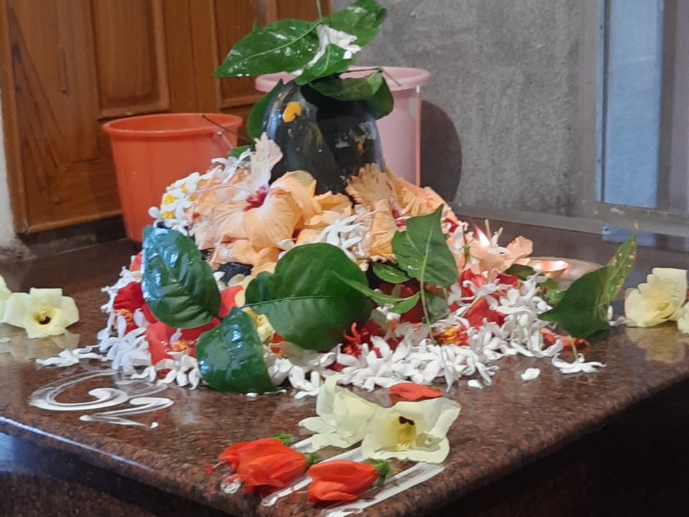
Shiva Lingam at the Ranchi ashram
That said, if you need a break from the ashram environment or need to work a bit, there's a five-star hotel called Chanakya just six minutes walking. It's a wonderful place where you can have a cappuccino (though quite expensive by Indian standards) while enjoying a more Western atmosphere. It's curious how they greet you there with a respectful namaste, probably because they see the bead necklace and assume you're religious. In India, respect toward religious people is notable and widespread.
On my most recent visit, in 2025, the ashram had experienced an impressive transformation. They had completely remodeled all the rooms, expanded the main building to accommodate more devotees, installed an elevator to ensure universal access, and built a new building for large conferences and meditations. All thanks to the generous contributions of devotees and exemplary resource management. The place is now better prepared than ever to welcome the crowds that gather during important celebrations.
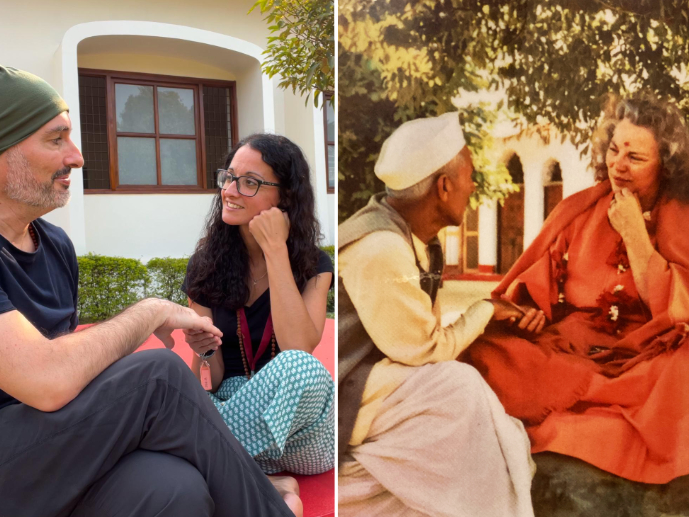
Recreating Daya Mata's iconic photo
An interesting observation about spiritual practice that emerged from my experiences in Ranchi: only if during meditation your mind is clear and calm can you converse with God. This is a necessary condition. Hence the sense of all the techniques we learn: preparing the stage for "the encounter." Yogananda's techniques, especially the energization exercises, play a crucial role in this process. How are you going to be able to consciously abandon the body if you haven't previously learned to become aware of it? The energization exercises build a mental-energetic map of your body that translates into progressive awareness, a necessary condition to be able to disconnect "the telephones of the senses," as Yogananda used to say.
In the ashram shop you can buy various spiritual items: armrests for Om practice, bead necklaces (malas) for counting Kriyas, copies of Autobiography of a Yogi in different languages, pictures of the gurus, and other devotional materials. Prices are reasonable and quality is excellent. It's a good opportunity to equip your meditation space at home.
One last practical tip: the climate in Ranchi can vary considerably depending on the time of year. In winter (December-February) temperatures can drop quite a bit at night, so it's advisable to bring some warm clothing. In summer (April-June) it's very hot. The best time to visit is usually from October to March, when the climate is more pleasant.
Ranchi is more than an ashram; it's a portal to a deep spiritual dimension. It's the place where Yogananda planted the seeds of his worldwide mission, where his closest disciples reached spiritual realizations, and where today thousands of devotees continue practicing and growing on the path. If you're a follower of Yogananda's teachings, a visit to Ranchi is not optional, it's almost mandatory. It's returning home, touching the roots of our spiritual tradition, and reconnecting with the source.
Important:
If you haven't yet read the Considerations section, don't forget to do so. In this section you'll find very valuable information that can save you many headaches. In particular, there are details related to credit cards and mobile phone use that are essential.
Would you like to know my complete experience in Ranchi? Enjoy my stay in Ranchi, with all the details here.
Ranchi has an airport, so ideally you should travel by plane from Delhi or Calcutta, depending on where you're coming from. Arrange in advance with the Ranchi ashram for them to send a taxi to pick you up at the airport.
Email: hospitality@yssi.org, helpdesk@yssi.org
Website: click here.
Recommended donation: 1200 rupees/day.
Stay: Initially 6 days. Extension can be requested once on site.
Recommended taxi: Suno (WhatsApp: 7488686758)
Dakshineswar
Birthplace of Saints and Place of Spiritual Confluence
Calcutta is one of the most fascinating cities in India, not only for its historical and cultural richness, but especially for its spiritual density. For devotees of Yogananda, Calcutta is a mandatory pilgrimage site. Here the master was born, here he met Sri Yukteswar, and here he spent much of his youth and spiritual formation. Every corner of this city holds sacred stories and energies that can still be clearly felt today.
The Dakshineswar ashram, located on the outskirts of Calcutta along the Ganges River, is the second headquarters of Yogoda Satsanga Society (YSS) in India. It's a place that combines natural beauty with a deep spiritual atmosphere. I have had the fortune of visiting it on several occasions and each time I discover new dimensions of the place.
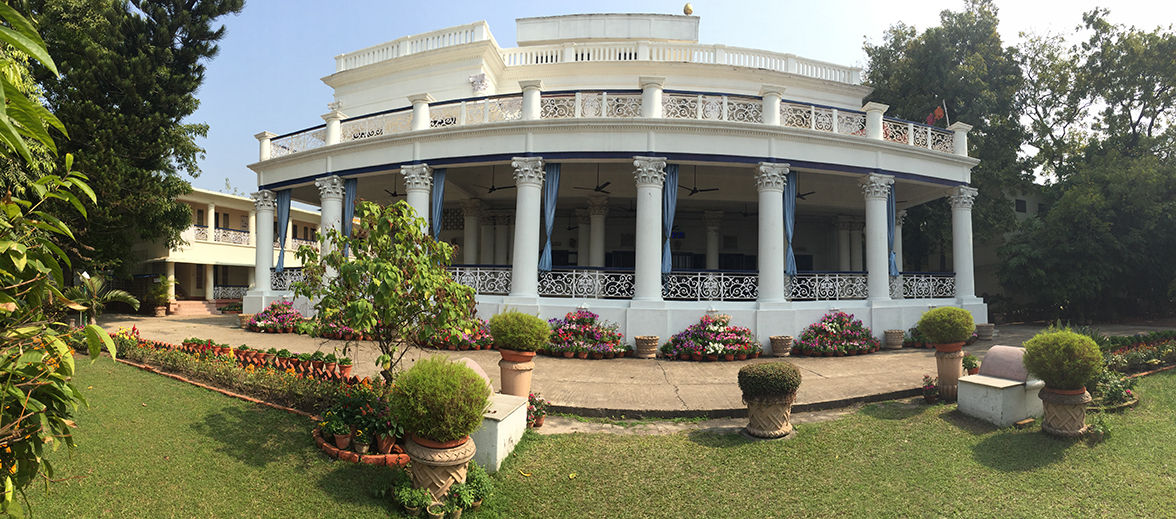
Central building at Dakshineswar ashram
The ashram is situated on extensive grounds with well-maintained gardens that directly overlook the Ganges. This landscaped area is simply unbeatable and offers multiple spaces for meditation, reading, practicing energization exercises, or simply enjoying the sun. The meditation room is smaller than you might expect for the size of the ashram, which in summer can pose an additional challenge for practice, but it's part of the experience. At the end of the ashram, touching the river, there's a beautiful little chapel where Daya Mata meditated during her visits. This is one of the most special places on the grounds and I highly recommend spending time meditating there.
Little chapel at the end of the ashram, touching the river
Something to highlight is that in recent years the ashram has been significantly renovated. They've installed air conditioning in the rooms (something absolutely vital in hot season in India), renovated the floors and exterior with more flowers and better facilities. These improvements make the stay really comfortable and pleasant. The food has also improved a lot over the years and you eat very well, which is important because the Indian diet can become repetitive if not well prepared.
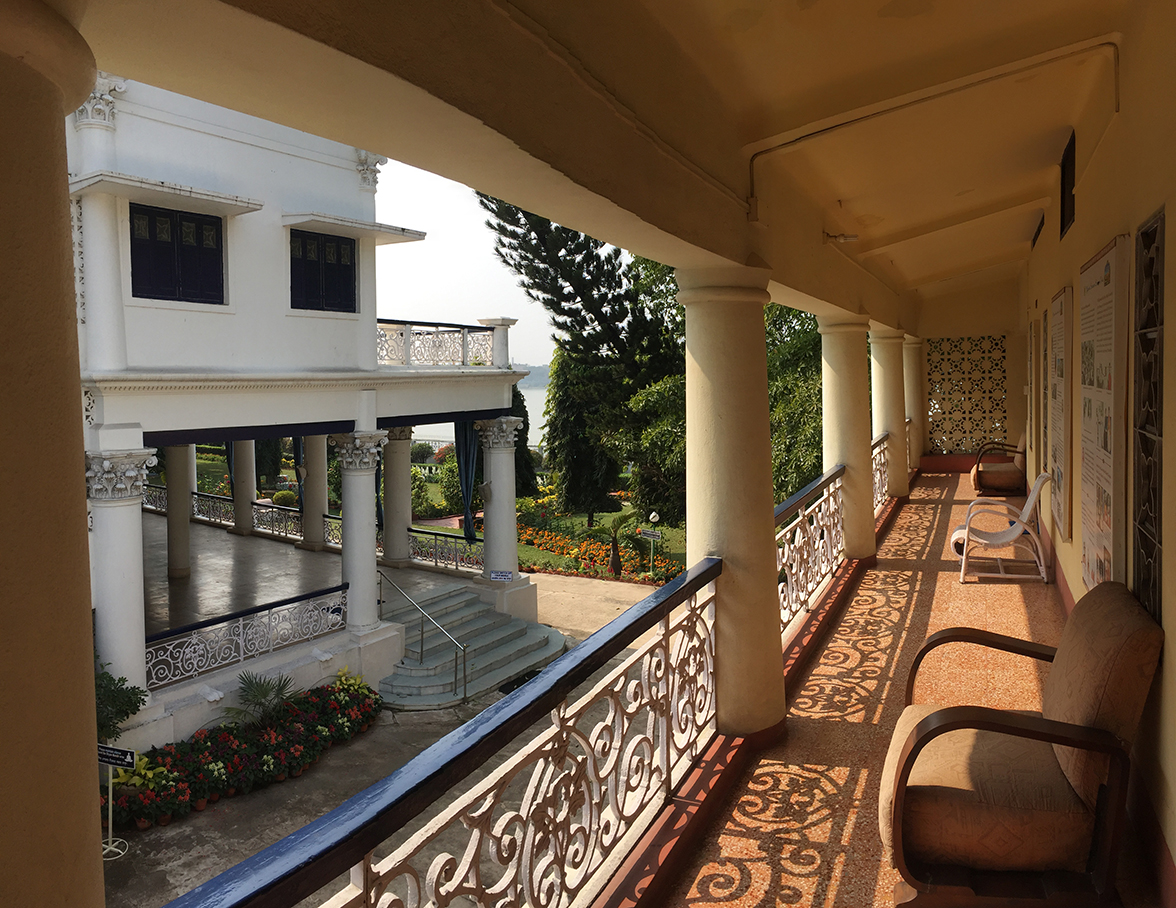
Multifunctional place, with shade at midday and sunshine in the evening
Sundays are especially recommended at the ashram. That day the Satsanga is celebrated, which is wonderful, and you can also visit (only on Sundays) a special room on the roof of the main building where there's the bed that the master had brought specifically to Dakshineswar so there would be something of his in the place. There's also a small temple to Shiva with a linga. Meditating in these spaces is a very powerful experience.
One of the great advantages of staying in Dakshineswar is its proximity to the famous Kali temple, which is just a 15-minute walk from the ashram. This temple has special importance not only in Hinduism in general, but specifically for Yogananda's devotees, as here the master meditated before the Goddess Kali and had deep spiritual experiences. It's also the place where Ramakrishna received his enlightenment from the Divine Mother and where his room is, which can be visited.
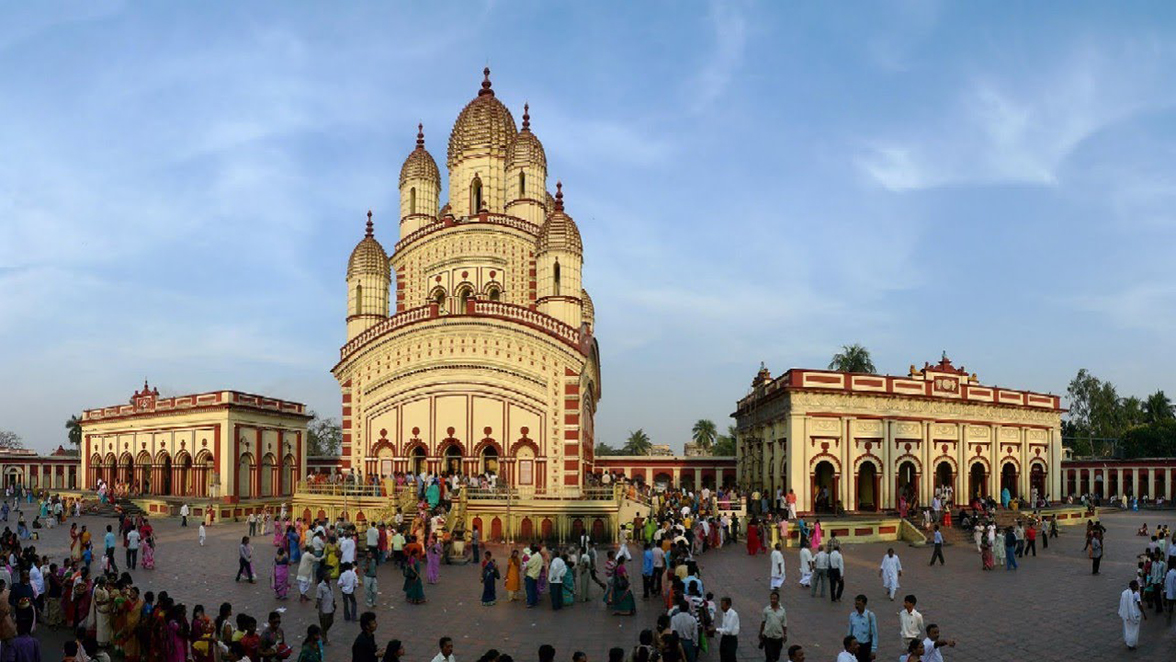
Kali Temple
The Kali temple itself is more a space for making offerings and a brief prayer than for staying a long time, as the line to enter is usually considerable. However, you can meditate outside, touching the temple wall, and believe me the energy can be felt perfectly. For me the ghat (steps) going down to the Ganges is very special, where you can bathe in the sacred river. This place has an incredible atmosphere. People come with their typical colorful clothes, children with painted eyes, carrying flower offerings in small cups made from palm leaves. Sitting there to observe while keeping your mind on God is an incomparable experience.
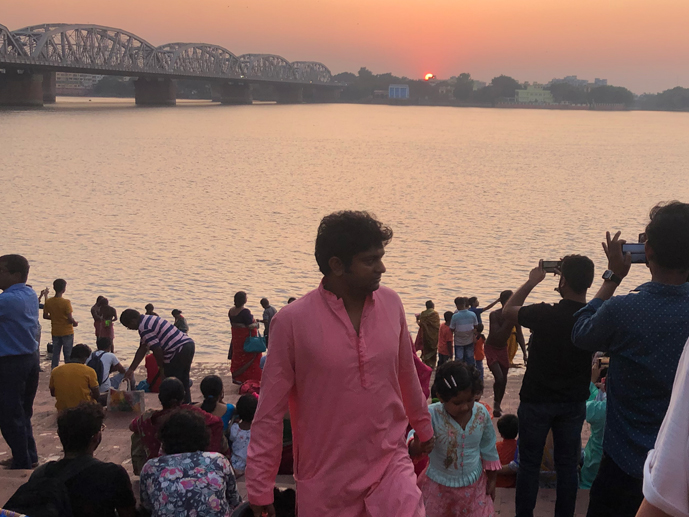
Ghat adjacent to the Kali temple
Very close to the ashram, crossing the river on a small boat (which takes only a few minutes), is Ramakrishna's Samadhi at Belur Math. This is the main building of the Ramakrishna Math & Ramakrishna Mission. Starting at 5:30 PM chants are held in the main temple that are absolutely essential. The energy generated during these chants is so powerful it can catapult your subsequent meditation to very high levels. It's one of those places and moments you can't miss.
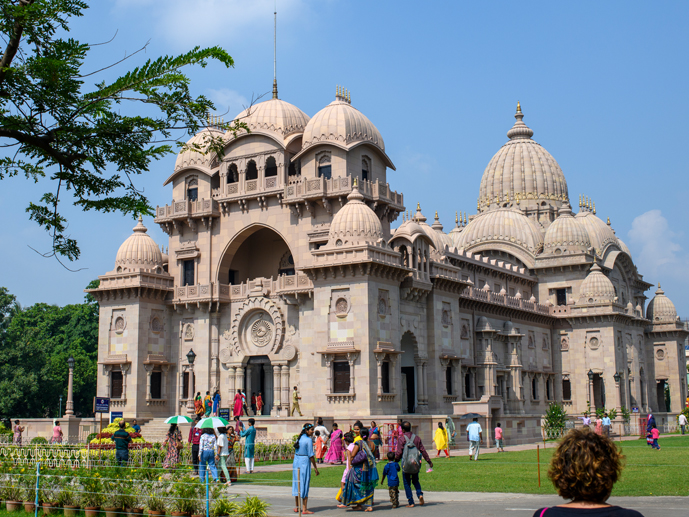
Ramakrishna's Samadhi on the opposite bank of the Dakshineswar ashram
Now, if you want to truly take advantage of your stay in Calcutta as a devotee of Yogananda, it's absolutely essential to hire the services of Debasis. Debasis is a devotee who also works as a tour guide specializing in places related to Yogananda. You can ask for him at the ashram reception and he'll organize a complete tour of all the sacred sites related to the master.
This tour includes truly special places: Yogananda's birthplace on Garpar Road (where Sri Yukteswar, Babaji, and Daya Mata also were), the house of the Levitating Saint (which Yogananda frequently visited), the Shiva Temple mentioned in the Autobiography, Yukteswar's house in Serampore, the tree by the Ganges where Babaji appeared to Yukteswar, Yogananda's uncle's house where he lived during his studies, the house of the Sleepless Saint, the Ramakrishna Mission Center, and many other places charged with history and spiritual energy.
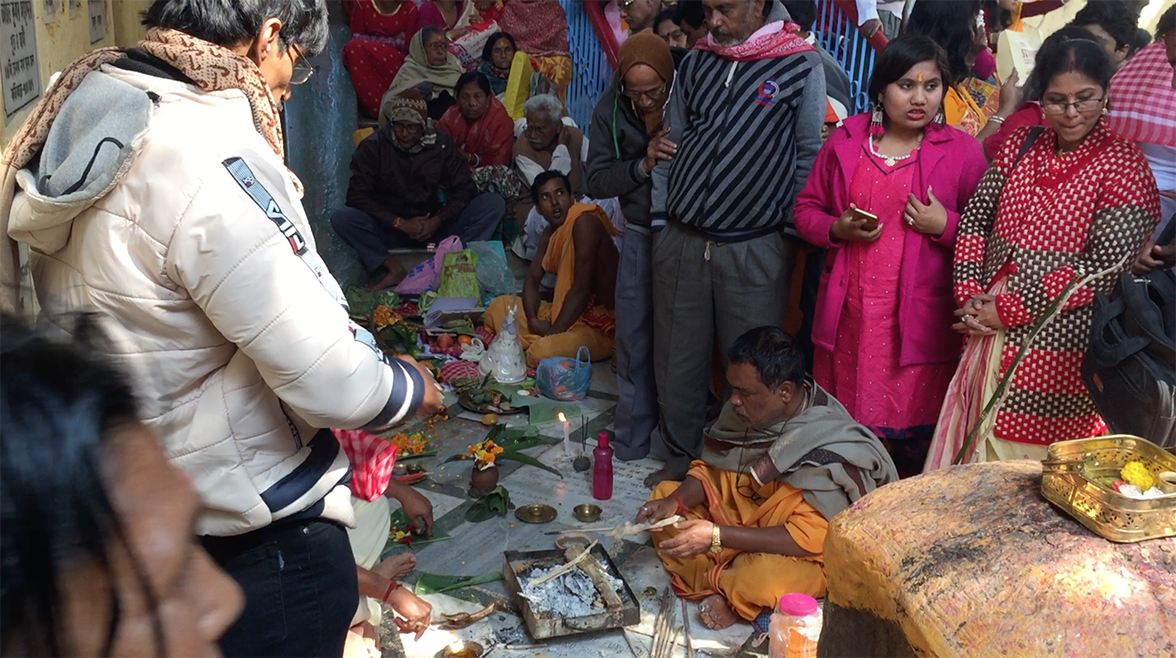
Images of the Shiva Temple. I really liked the ritual of the white ox, to whom while covering his right ear you ask a wish through the left one
The experience of meditating in the room where Yogananda stayed at his uncle's house in Serampore is particularly notable. The energy there is especially palpable and pleasant. Being able to mentally recreate young Mukunda studying and meditating in that same space adds a very emotional dimension to the visit. Yukteswar's ashram in Serampore is also a very special place. Part of the original ashram was demolished due to poor condition and in its place Daya Mata ordered the construction of a small temple mandir. Recently, Yogoda purchased Yukteswar's original house, which is fantastic news because soon devotees will be able to visit it and meditate in the room where he lived and practiced.
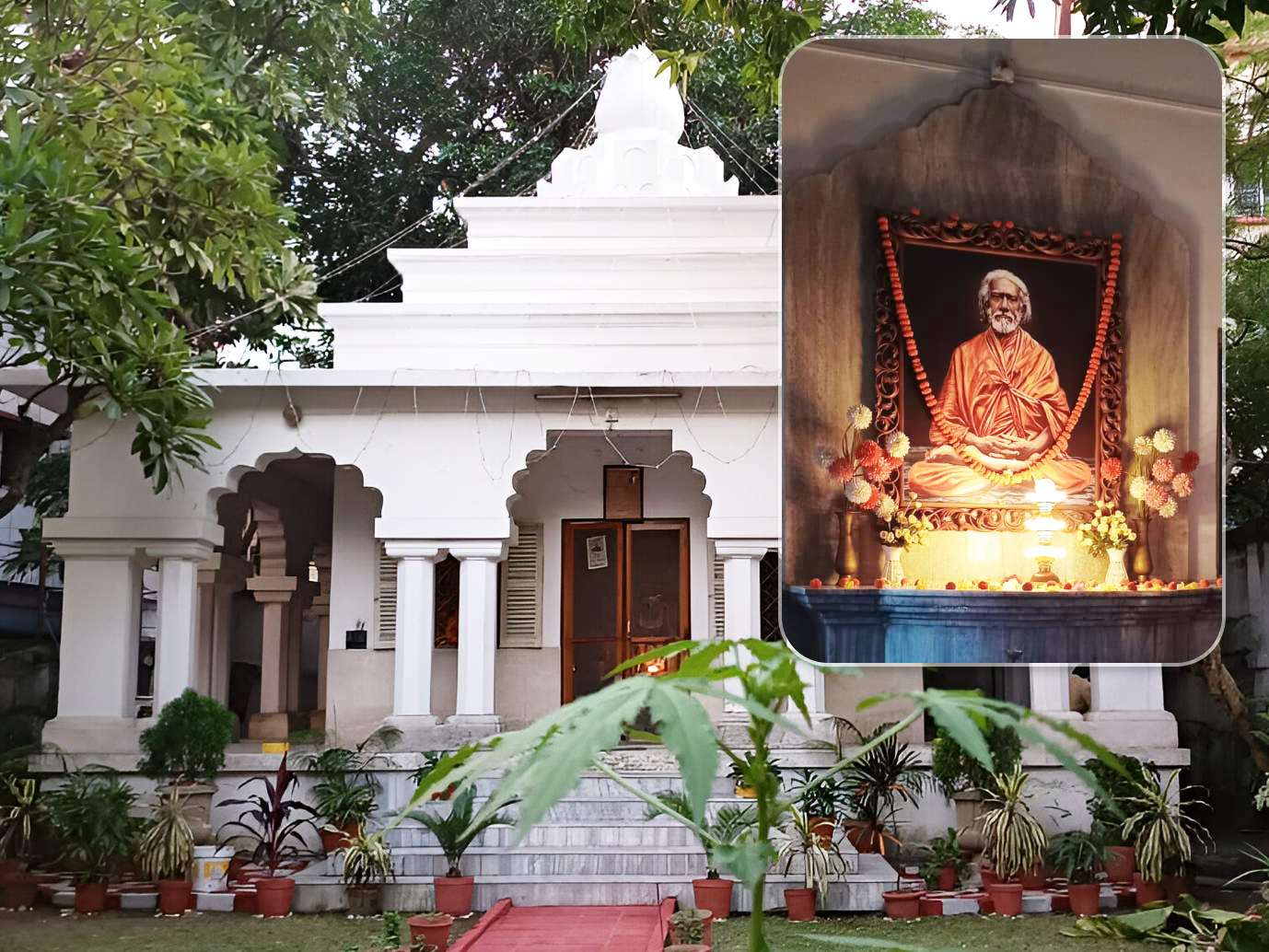
Mandir ordered built by Daya Mata, on the land adjacent to Yukteswar's house in Serampore
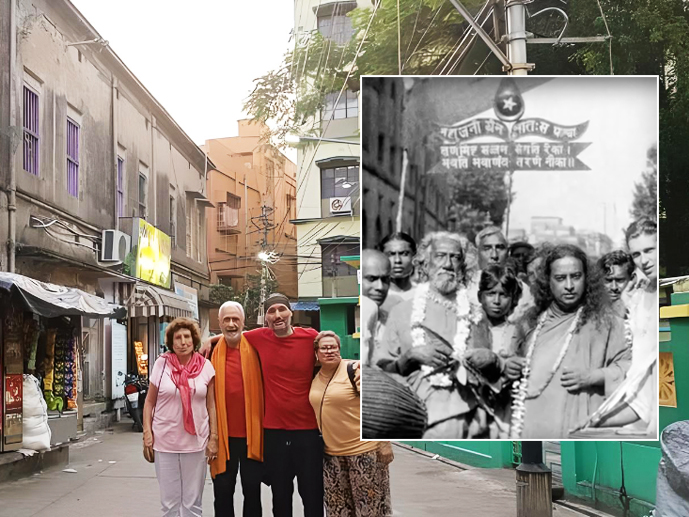
Yukteswar's ashram in Serampore
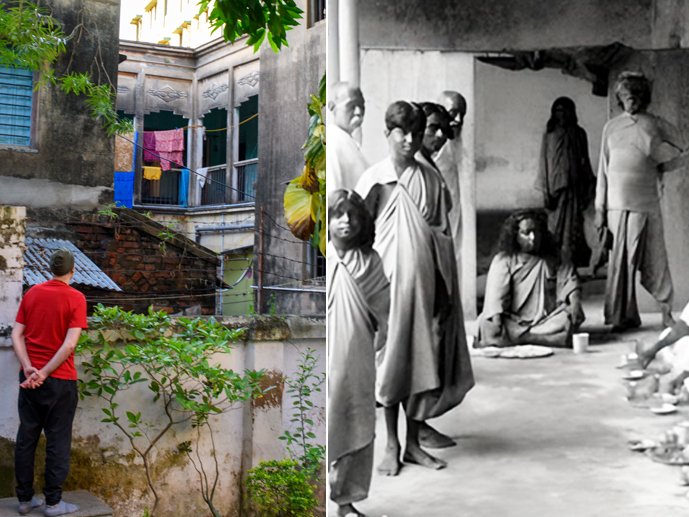
Yukteswar's ashram in Serampore
Being able to mentally recreate the famous aerial photo of Yogananda with Yukteswar and devotees, right in the same place where it was taken, is an experience difficult to describe. Also the famous tree at the foot of the Ganges, from where Yogananda and Yukteswar walked down to their morning bath, is a place that invites contemplation and devotional imagination.
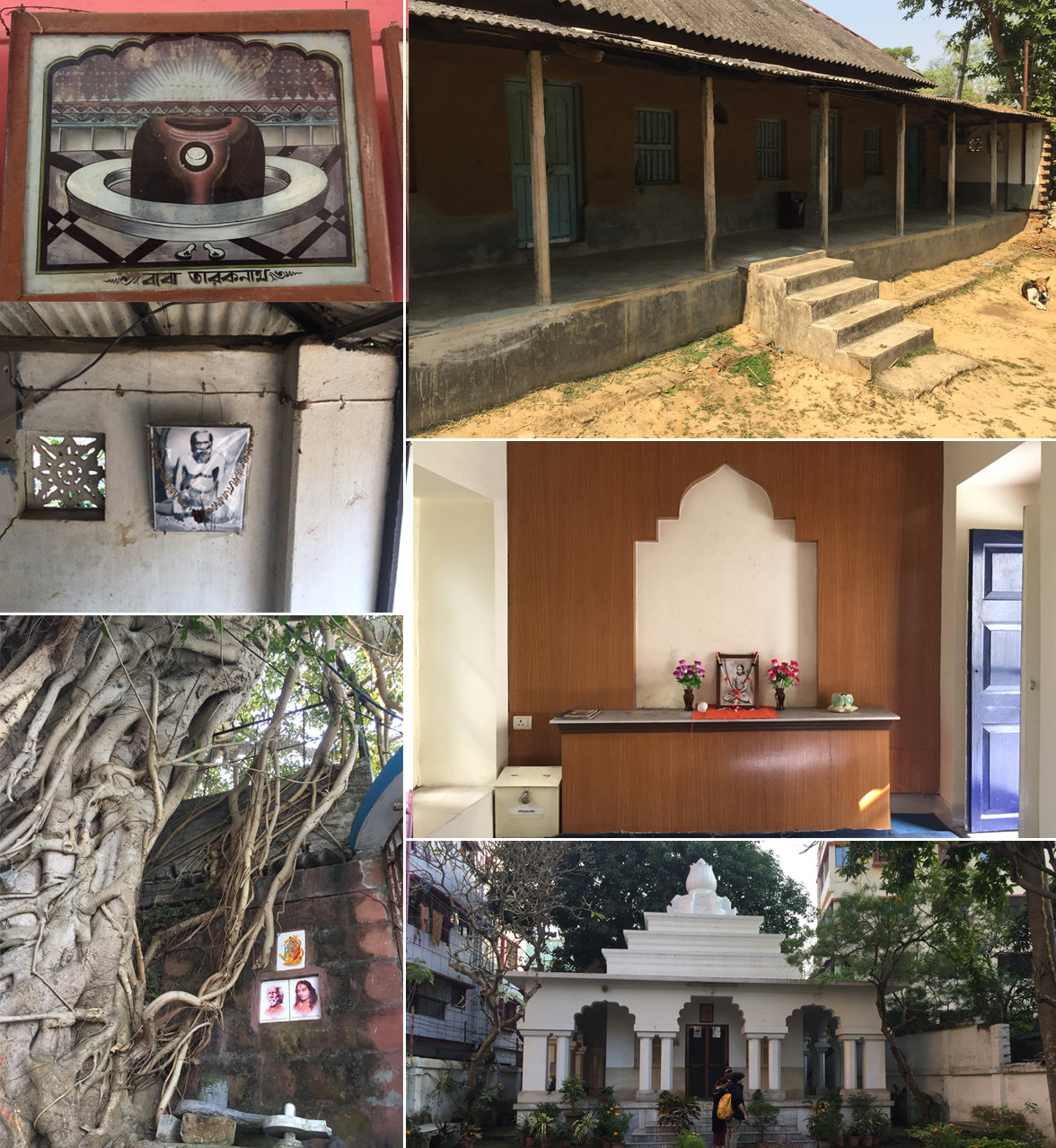
Images of the Shiva stone, the porch of the Sleepless Saint's house where Yogananda ate with the Saint, Yogananda's room in his uncle's house in Serampore, the site of Yukteswar's old ashram, and the tree at the foot of the ghat near Yukteswar's ashram
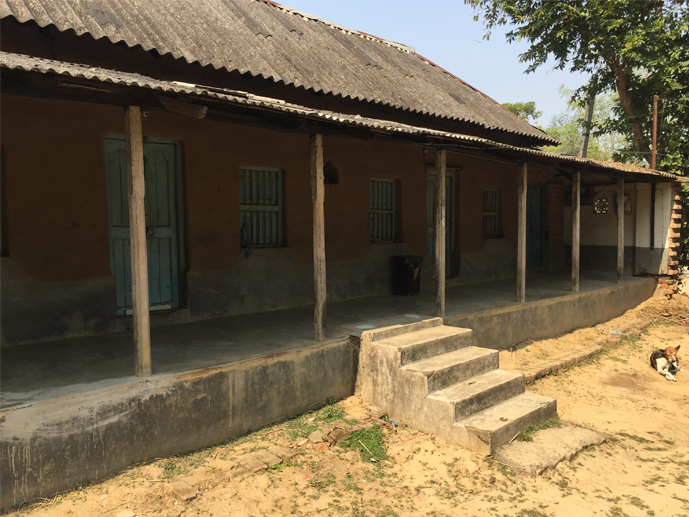
The Sleepless Saint's house, cited in Autobiography of a Yogi
The Levitating Saint's house (Maharshi Nagendranath) deserves special mention. The energy in this place is very evident and the Saint's photo transmits a remarkable sense of omnipresence. If you visit this place, I highly recommend acquiring the book they sell there for a donation. This book is not only a tremendous source of inspiration, but helps you understand how Yogananda drew from the best he found on his spiritual path to build his sadhana proposal. It becomes very clear that he was inspired by this saint to add the Bhakti Yoga component to the Kriya Yoga proposal he offers. Without Bhakti, the devotee cannot reach God; it's necessary to surrender with fervent love to seduce Him and call His attention.
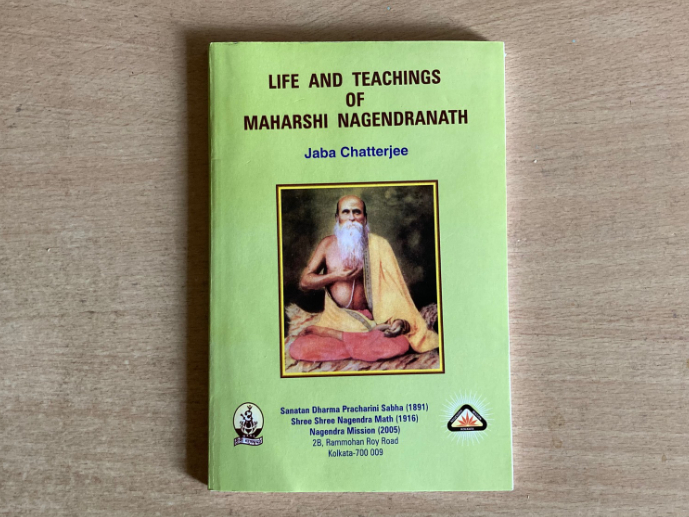
The great Maharshi Nagendranath
Yogananda's birthplace is another highlight of the tour. It's not always possible to enter the interior (it depends on the availability of the person managing the place), but when you can it's an unforgettable experience. Meditating in the loft where devotees usually spend time, or better yet, in the master's room, is priceless. If you're lucky, you might even see an unpublished photo album with images of Daya Mata and Sri Nalini's visits to this place.
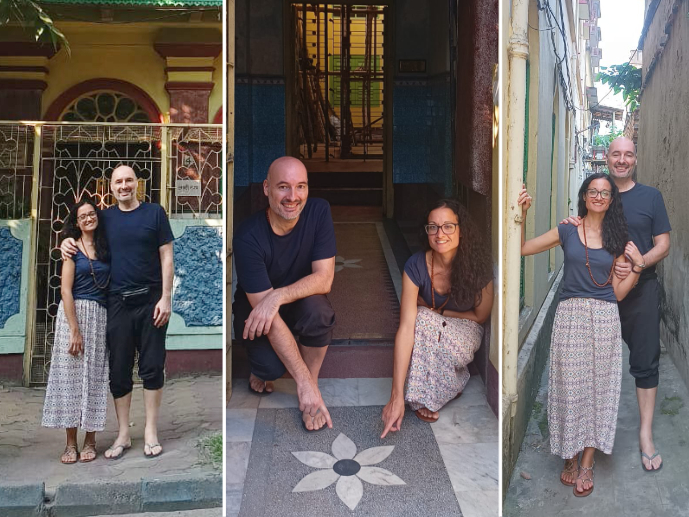
The photo on the right is where the master threw his backpack in his escape to the Himalayas
The best thing about going with Debasis is that everything is easy and fluid. There's no rigidity or rush, which allows you to be in the different places meditating as much as you need. He adapts completely to your needs. Additionally, anything you need during the day—whether it's the best fruit juice in Calcutta, a good healthy Indian food restaurant, or buying a special souvenir—he resolves it perfectly for you. He accompanies you, protects you, and explains everything with affection and deep knowledge.
Another essential place in Calcutta is Mother Teresa's center (Mother Teresa of Calcutta). Although not directly related to Yogananda, it's a place of undeniable spiritual power and a unique opportunity to connect with another deep devotional tradition. Days begin with a lovely early morning mass. If you have the courage and desire to volunteer, it's an experience that will transform you. The work can be emotionally hard, but the moment you decide to do it, a kind of "protection" allows you to perform it from a neutrality that surprises. The place is very dignified, clean, and orderly, and you clearly see where donations go. You can also visit the museum and meditate in front of Saint Teresa's tomb.

Mother Teresa of Calcutta. September 5, 1997 - August 26, 1910
Another fascinating place to visit is Anandamayi Ma's ashram. Upon setting the first foot in her room, many devotees feel a very clear and strong energy. This is undoubtedly a truly special place where you can meditate in different spaces, all of them very powerful.
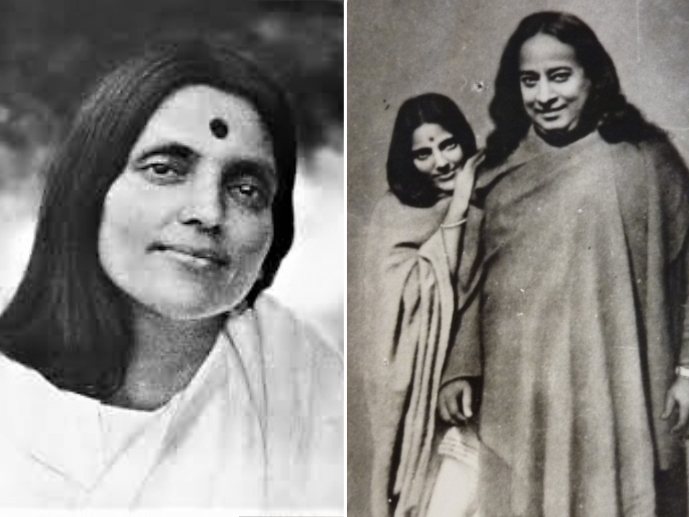
Anandamayi Ma
The Ramakrishna Mission Center is also worth visiting. The room where Ramakrishna, Vivekananda, and other devotees used to meditate has an immediate and very pleasant energy that's perceived upon entering.
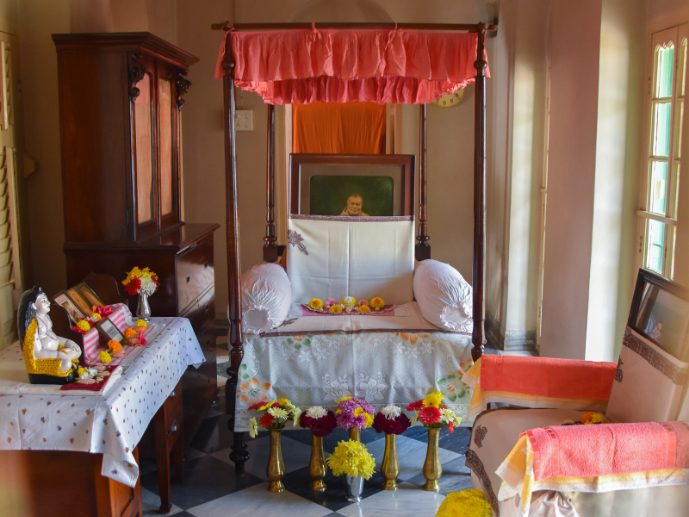
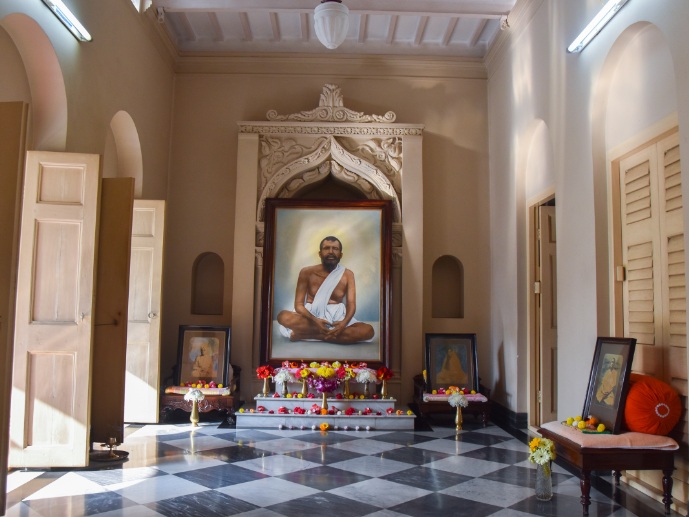
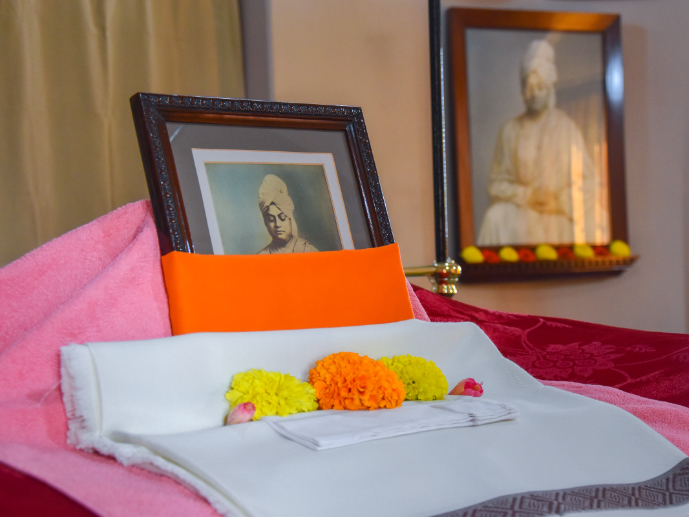
Quarters of Vivekananda and Ramakrishna
Calcutta is also a modern city that's growing rapidly. It has a metro, shopping centers, international restaurants like Starbucks, and very developed areas with English-style architecture evidencing the past colonial presence. It's interesting to see this contrast: on one hand, modern and cosmopolitan India, and on the other, yellow taxis with 70s aesthetics, pedal carts transporting live chickens, buses with improvised incense temples on the dashboard. Calcutta rushes to modernize while still dragging a culture deeply rooted in its daily uses and customs.
If you need a change of scenery, work a bit, or simply enjoy a moment of Western comfort while in Calcutta, there are good restaurants and cafes downtown. The rupee-euro exchange gives you a lot of room and allows you to go from a modest place to a gourmet restaurant for the same price. For fifteen or twenty euros you can eat as if you spent seventy in Spain. It's wonderful.
An important practical detail: Yogoda Satsanga Society has a network of small homeopathic medical centers throughout India where they treat you for free. There's one right in front of the Dakshineswar ashram. If you need medical attention during your stay, this is a valuable resource. The homeopathic doctor can help you with various health problems. If you need something stronger, the ashram staff (especially Mousumi and Aliv, who are charming and very helpful) will help you get conventional medical attention.
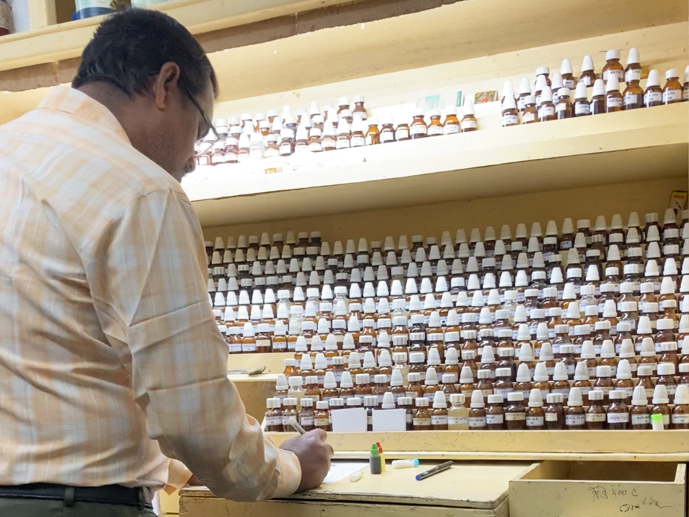
YSS homeopathic center in Dakshineswar
To organize your stay, it's important to know that the Dakshineswar ashram requires filling out multiple forms to make a reservation. Read the response email carefully to determine precisely everything you need to provide and be able to complete the reservation correctly.
Ultimately, Dakshineswar and Calcutta together constitute one of the richest spiritual destinations for any devotee of Yogananda. Between the YSS ashram, the Kali temple, the multiple places related to the master, Belur Math, and the possibility of exploring other ashrams and spiritual traditions, you can easily spend between a week and ten days without getting bored for a moment. The density of sacred places per square meter is astonishing.
The importance of doing retreats here, combining them with stays in Ranchi, can have a huge impact on your spiritual progress. Being continuously surrounded by events and places of spiritual character helps you reconnect with God if you got lost at some point. After all, being permanently connected is the key to success on the spiritual path.
A valuable experience you have when returning to these places from time to time is that it allows you to see your state of growth and evolution more clearly. You can compare how you felt previous times and how you feel now. It's the best way to check your internal state and measure your real progress on the path.
Calcutta is Yogananda. Ranchi is Yogananda. But Calcutta is where it all began, where young Mukunda took his first steps, where he met his guru, where he was spiritually formed before departing for America to fulfill his divine mission. Walking these places is touching the living history of our spiritual tradition, it's connecting with the roots of the teachings we love so much, it's feeling in the flesh the energy of the masters who dedicated their lives to showing us the way back Home.
Important:
If you haven't yet read the Considerations section, don't forget to do so. In this section you'll find very valuable information that can save you many headaches. In particular, there are details related to credit cards and mobile phone use that are essential.
Would you like to know my complete experience in Dakshineswar? Enjoy my stay in Dakshineswar, with all the details here.
Dakshineswar is in Calcutta, so you can arrive by plane. Arrange in advance with the Dakshineswar ashram for them to send a taxi to pick you up at the airport.
Donation: 1200 rupees/day.
Check-in: Multiple forms required. Read confirmation email carefully.
Homeopathic center: Across from the ashram, free attention.
Dihika
Yogananda's First School
Dihika is a special place in the history of Paramahansa Yogananda. Here, in 1917, he founded his first school, Brahmacharya Vidyalaya, an innovative educational project that combined modern education with spiritual training. For devotees familiar with Autobiography of a Yogi, Dihika is familiar thanks to three iconic photographs that appear in the book: the master meditating in front of the ruined tower, sitting under the great pipal tree, and the pond in the school grounds.
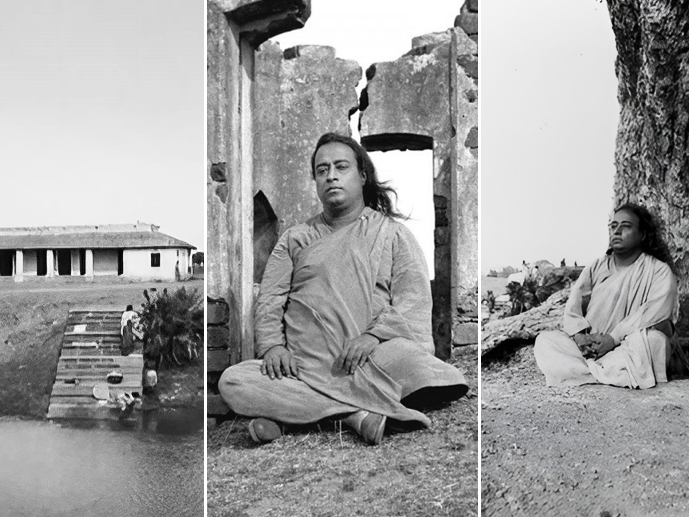
The pond, the tower and the pipal tree
Although less known than the great ashrams of Ranchi or Dakshineswar, Dihika has a unique charm precisely because it's more intimate and quiet. It's a perfect place for a short spiritual retreat of a few days, especially if you're staying at the Dakshineswar ashram, as it's only four hours away by train. The opportunity to be in the same space where young Yogananda took his first steps as educator and guru is an experience no devotee should miss.
The wonderful thing about some Dhyana Kendras like this one in Dihika is that they allow devotees to stay for spiritual retreats. So far I know of three where it's possible to stay: Puri, Coimbatore, and Dihika. In all of them the attention is excellent and the environment is ideal for intensive practice. If you want to explore more Dhyana Kendras in your travels through India, at this link you can consult the complete list of centers, ashrams, and retreat places of Yogoda Satsanga Society in India.
History of the Place
In 1917, when Sri Paramahansa Yogananda started his first Brahmacharya Vidyalaya in Dihika, the Maharaja of Kasimbazar offered him a one-story bungalow to establish the school. The grounds included a tower where the master used to meditate during school days, a large pond, and extensive gardens with leafy trees, including a magnificent pipal tree.
In 1935, during his tour of India, Yogananda returned to Dihika to meditate in the place that meant so much to him. By then, the tower had largely fallen into ruins. The photographs taken during that visit by C. Richard Wright, his disciple and secretary who accompanied him during the tour, have become iconic images for devotees worldwide.
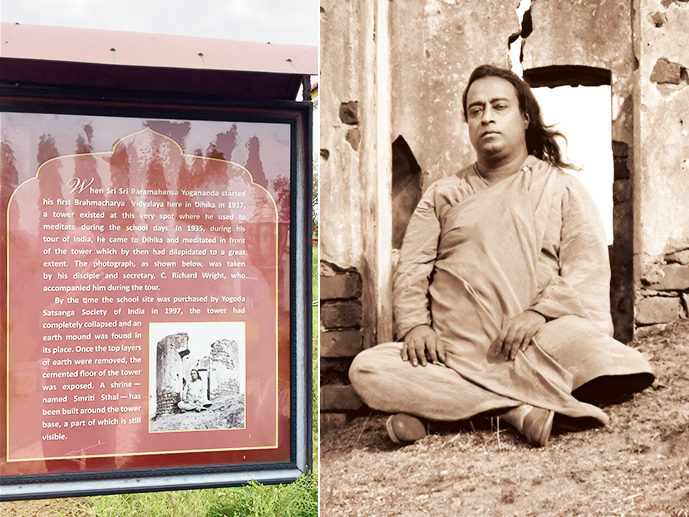
Yogananda at the foot of the tower in 1935
Over the decades, the place fell into abandonment. The tower collapsed completely, the pond filled with sediment, and the original vegetation disappeared. However, in 1997, Yogoda Satsanga Society acquired the land with the purpose of keeping alive the legacy of the first school founded by the master. Since then, careful and respectful restoration work has been carried out that has returned the place to its splendor.
The Place Today
The current Dhyana Kendra of Dihika is an impeccably maintained space that follows the line of all Yogananda's centers: clean, orderly, decorated with vegetation, and filled with a deep calm. You really feel the place is sacred and sanctified by the master's presence.
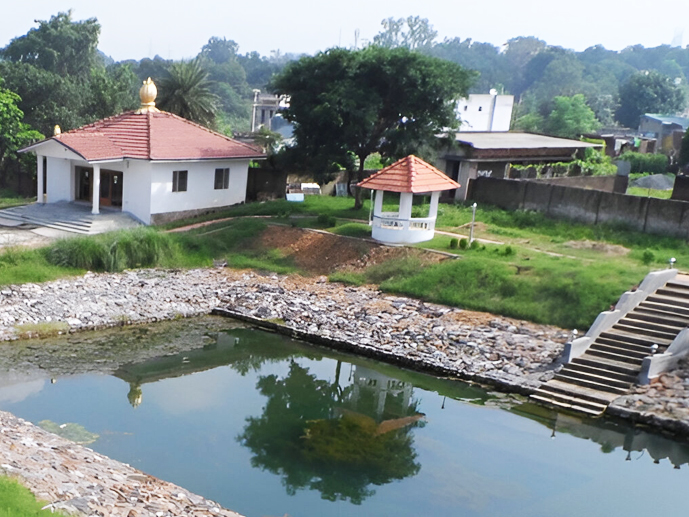
Aerial view of the Dhyana Kendra
The grounds have a small building that serves as accommodation for devotees who come on retreat and as a dining hall. The facilities are simple but comfortable, perfectly suitable for a stay focused on spiritual practice.
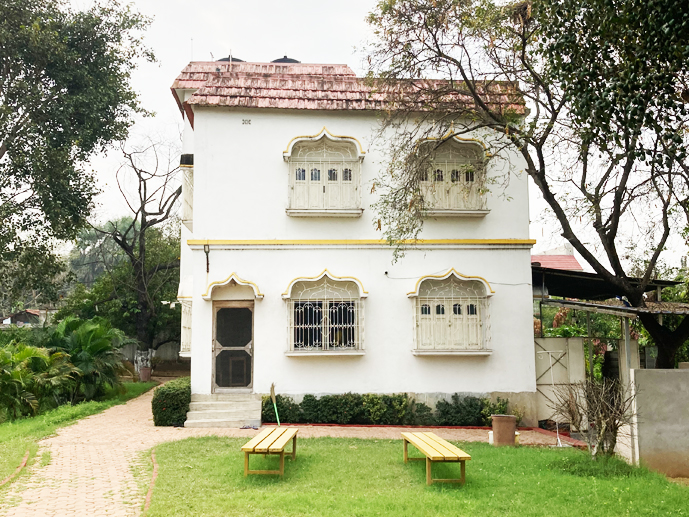
Building for devotee accommodation and dining hall
One detail to consider is that there's a railway track about 100 meters away and trains pass quite frequently, whistling, though very slowly. At first it can be somewhat uncomfortable, but most visitors get used to it quickly. The place is so special that this small annoyance fades into the background.
The Tower (Smriti Sthal)
The most special place in the entire grounds is, without doubt, the site where the tower stood. When Yogoda acquired the land in 1997, the tower had completely collapsed and only a mound of earth remained. Once the upper layers of earth were removed, the cement floor of the tower was exposed. A shrine was then built—called Smriti Sthal—around the base of the tower, part of which is still visible.
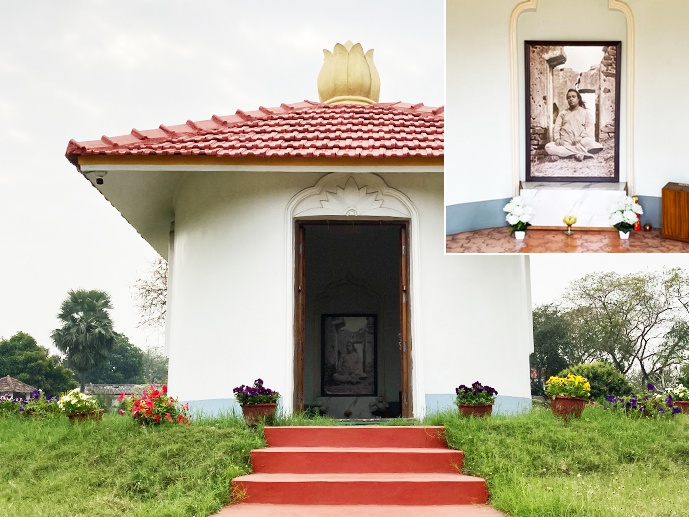
The tower currently
Today, in the space of the old tower there's a beautiful little chapel where you can meditate. Many devotees report deep spiritual experiences in this place. The concentrated energy of decades of the master's practice seems to remain in the space, creating an atmosphere conducive to deep meditation. It's, without doubt, one of those places where the master's presence is tangibly felt.
The Pond
When Yogananda founded his school in 1917, there was a large pond within the school grounds located some distance from the main building. In 1997, when YSS purchased the land, the pond was found along with the intact original stairs, although completely filled with sediment and earth accumulated over the years.
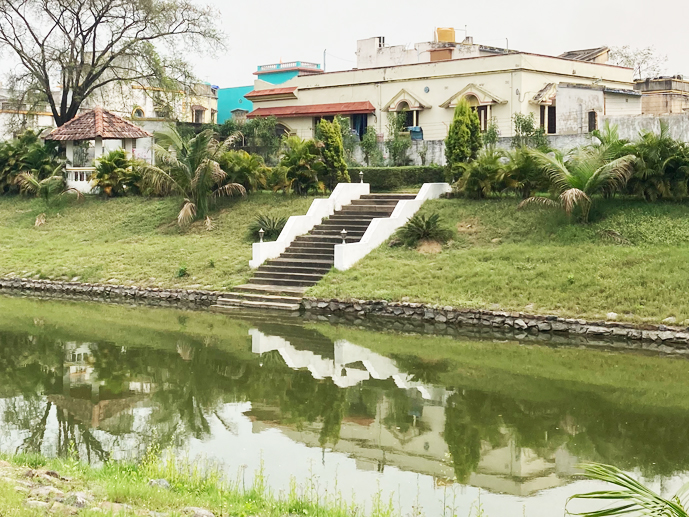
Pond in the grounds
The restoration work was able to unearth the stone blocks of the stairway, which are the originals, those that the master surely stepped on many times. Considerable excavation was needed to give the pond its current appearance, but the stairs were left intact and given the same pristine appearance they had a century ago. It's beautiful to be able to recognize the pond as it appears in the original photographs and know you're stepping on the same stones the master stepped on.
The Pipal Tree
In the place where the great pipal tree (Ficus religiosa) stood, under which Yogananda meditated in 1935, the same space has been recreated by planting trees of the same species. The original pipal tree, with its great trunk and many extended branches with thick leaves, was lost to the ravages of time. However, the current tree is in all probability a shoot of the old one, thus maintaining the energetic continuity of the place.
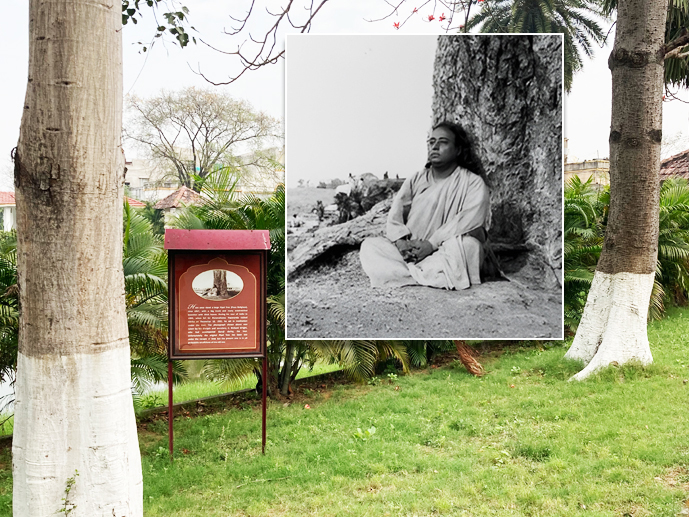
Place where Yogananda sat at the foot of the great pipal tree
The photograph of the master sitting under this tree in meditation is one of the most beautiful of all Yogananda iconography. Being able to meditate in the same place, under the descendant of the original tree, is an experience that directly connects with that historical moment.
How to Get There and Get Organized
Dihika is about four hours by train from Dakshineswar. The best way to organize the trip is to contact Debasis (the devotee guide of the Dakshineswar ashram) who can help you with purchasing tickets and organizing taxis to get to the station.
When you arrive at Dihika train station, you'll need a taxi to get to the Dhyana Kendra. As happens in many places in India, the taxi driver probably won't know the exact location, but will have a general idea and will ask the local population as they get closer. This is completely normal and part of the experience of traveling through India.
As with all Yogoda Satsanga Society ashrams, you'll need to fill out multiple forms for check-in. Carefully read the response email after your accommodation request to determine precisely everything you need to provide and be able to make the reservation correctly.
The Experience of Being in Dihika
Dihika has something special that's difficult to explain in words. Perhaps it's because it's a smaller and more intimate place than the great ashrams, or perhaps because it was the master's first project, his first materialized dream. Whatever it is, there's a particular energy here that many devotees describe as feeling Yogananda's close presence.
The place invites silence, deep practice, contemplation. The well-maintained gardens offer multiple corners for outdoor meditation. The tower chapel is perfect for intense meditation sessions. The pond invites you to sit on the original stairs and simply be present, imagining the young guru walking through these same spaces more than a hundred years ago.
For devotees doing a tour of Yogananda's sacred places in India, Dihika is absolutely essential. Although it requires a little extra effort to get here from Dakshineswar, that effort is amply rewarded. Being in the place where the master began his educational and spiritual mission, where he had his first students, where he experimented with new ways of combining education and spirituality, adds a complete dimension to your understanding of his life and work.
If you have the opportunity, try to stay at least two or three days. One day may be enough to visit the main places, but several days allow you to deepen your practice, explore the grounds calmly, and really absorb the energy of the place. The tranquility of Dihika is conducive to longer retreats, especially if you're coming from more chaotic cities like Calcutta.
Care and Hospitality
The devotees who manage the Dihika Dhyana Kendra are extremely kind and helpful. They make every effort to make your stay as comfortable as possible and are always willing to help with any need you may have, whether organizing transportation, providing information about the place, or even helping you with medical issues if necessary.
The food is simple but nutritious, following the vegetarian style typical of Yogananda's ashrams. Meals are included in the daily donation, which makes the stay very economical. The atmosphere during meals is one of recollection and gratitude.
Practical Recommendations
• When to go: As with most places in northern India, the best time is from October to March, when the climate is cooler. In summer it can be very hot.
• Recommended duration: Minimum 2-3 days to take good advantage of the place. If you want to do a deeper retreat, a week would be ideal.
• What to bring: Comfortable clothes for meditation, flashlight (there may be occasional power cuts), mosquito repellent, and basic medications. Facilities are simple so don't expect luxuries.
• Combine with other destinations: Dihika combines perfectly with a stay in Dakshineswar. Ideally spend several days in Dakshineswar, then come to Dihika for 2-3 days, and return to Dakshineswar or continue to another destination.
• Communication: Make sure to have the Dhyana Kendra's contact information and Debasis's in Dakshineswar. Communication is important for coordinating arrivals and departures.
• Respect for the place: Remember you're in a sacred place. Keep silence in meditation areas, dress modestly, and follow ashram rules.
Why Dihika Matters
In the narrative of Yogananda's life, Dihika represents the beginning. Here, a young man barely over twenty years old had the courage and vision to start a revolutionary educational project that combined the best of East and West. Here he learned the practical lessons of being guru, teacher, administrator, and visionary. The difficulties he faced in Dihika prepared him for the much greater challenges he would come to face in America.
Visiting Dihika is understanding that every great project begins with a first step, often modest and full of challenges. It's remembering that Yogananda wasn't born as the world-renowned master we know, but forged himself through experiences like that of Dihika. It's inspiring to see where it all began and recognize that humble beginnings can lead to extraordinary realizations when driven by a divine vision.
For any serious devotee of Yogananda, making the trip to Dihika is completing an important chapter in the pilgrimage through the master's sacred places. It's touching the roots of his mission, feeling the energy of his early years as guru, and connecting with the pioneering spirit that characterized him throughout his life.
Dihika smells of Yogananda. And when you're there, meditating in the Smriti Sthal, walking on the original pond stairs, or sitting under the pipal tree, you'll understand exactly what that means.
Important:
If you haven't yet read the Considerations section, don't forget to do so. In this section you'll find very valuable information that can save you many headaches. In particular, there are details related to credit cards and mobile phone use that are essential.
Would you like to know my complete experience in Dihika? Enjoy my stay in Dihika, with all the details here.
Assuming you're staying in Dakshineswar, ideally get there by train. The journey takes about 4 hours and costs about 400 rupees. Contact Debasis (WhatsApp: +91 90070 58579) to organize ticket purchase.
Email: ysdk.dihika@gmail.com
Website: click here.
Recommended donation: 1200 rupees/day.
Stay: Initially 6 days. Extension can be requested once on site.
Puri
Sri Yukteswar's Ashram
Puri is a coastal city in the state of Odisha (formerly known as Orissa) that has special importance for Yogananda's devotees. Here is Sri Yukteswar's ashram, where his tomb is and where he spent much of his spiritual life. For any follower of Yogananda's teachings, visiting Puri is directly touching the heart of the lineage, it's being in the same space where the master of our master lived and taught.
But Puri is much more than Yukteswar's ashram. It's one of the most important sacred cities of Hinduism, home to the famous Jagannath temple (though foreigners cannot enter), and a pilgrimage center that attracts millions of devotees each year. The combination of having a beach, multiple important temples, and Yukteswar's ashram makes Puri a unique destination in any spiritual pilgrimage through India.
The YSS Kendra in Puri
The Yogoda Satsanga Society kendra in Puri is different from the ashrams of Ranchi or Dakshineswar. It's smaller and notably more humble. While in other ashrams rooms are prepared to accommodate between two and four people, here rooms have about 6 beds and space is more limited. Facilities are simple, without luxuries, but functional for spiritual practice.
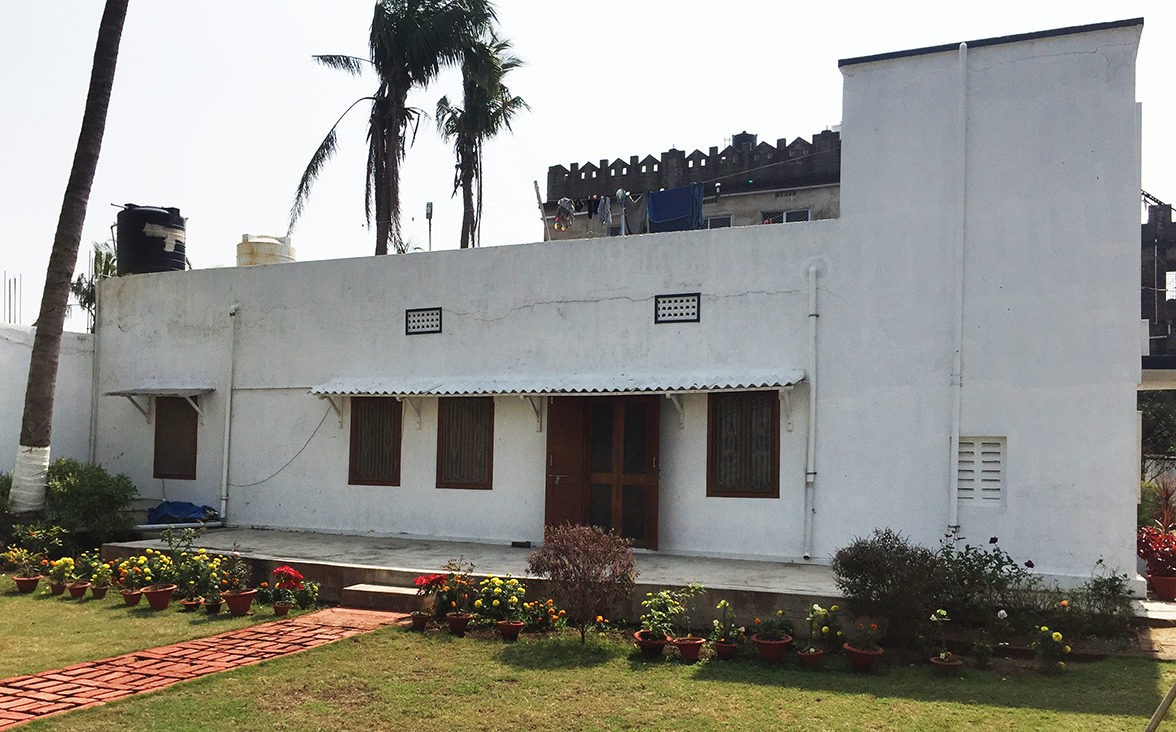
YSS Kendra in Puri
What makes this kendra special isn't its physical facilities, but the atmosphere lived there. It's very familiar and welcoming. The team that manages it is charming and does everything possible to make your stay pleasant. Meals are communal, sitting on the floor next to the kitchen, all together. This humility and simplicity of the place, far from being a defect, gives it a very authentic and warm touch that many devotees deeply appreciate.
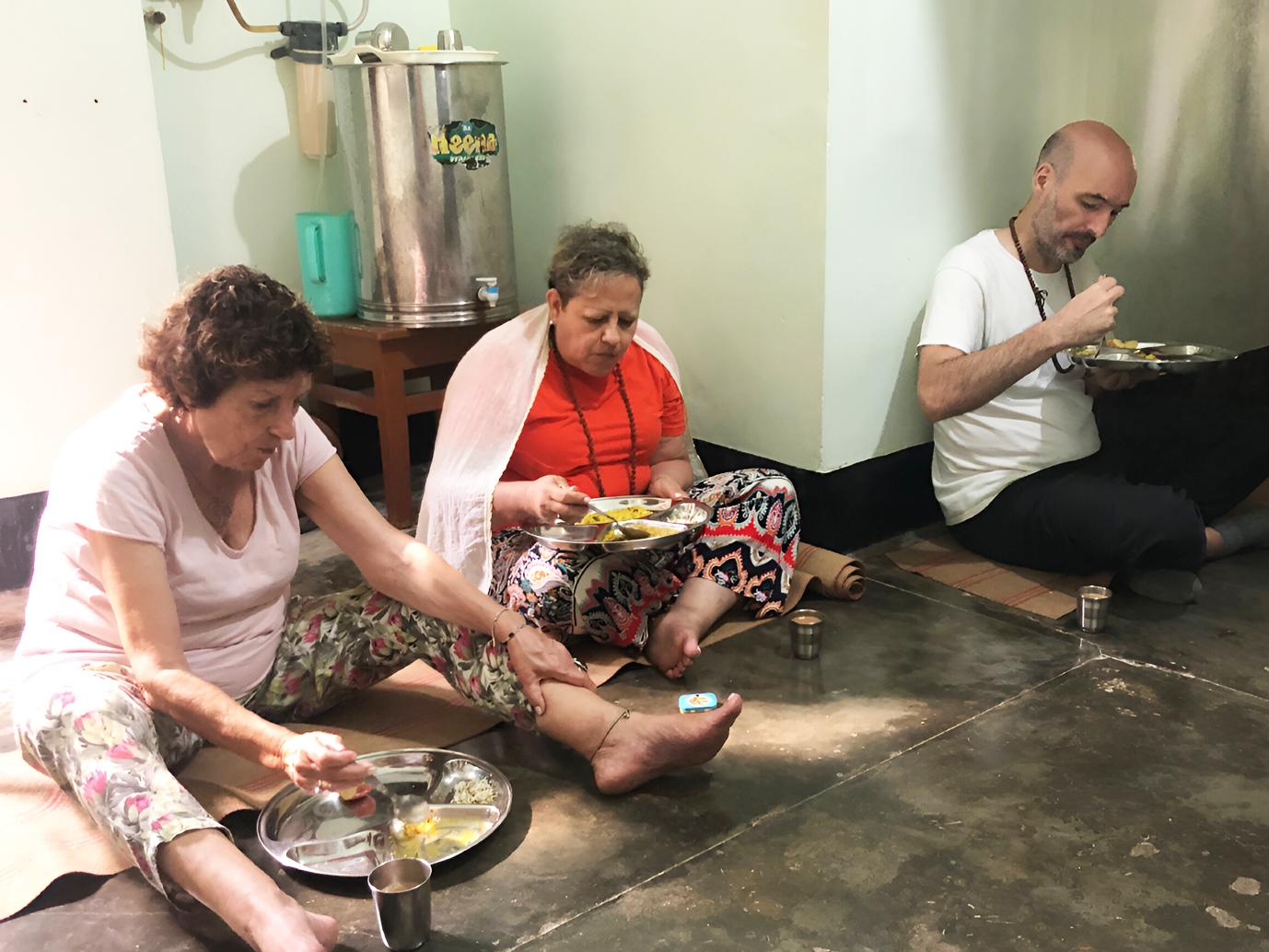
Eating in the "dining room" of the Puri kendra
The kendra is located in the city of Puri, relatively close to both Yukteswar's ashram and other places of interest. The main contact person is Maheswar, who handles daily management and guest welfare. As in all YSS centers, the recommended donation is voluntary and not defined, which reflects the humble and non-commercial spirit of the place.
Sri Yukteswar's Ashram
This is, without doubt, the most important place in Puri for Yogananda's devotees. The ashram where Sri Yukteswar lived, where he taught, where he had his mahasamadhi, and where his remains now rest, is a sacred space that every follower of this tradition should visit at least once in life.
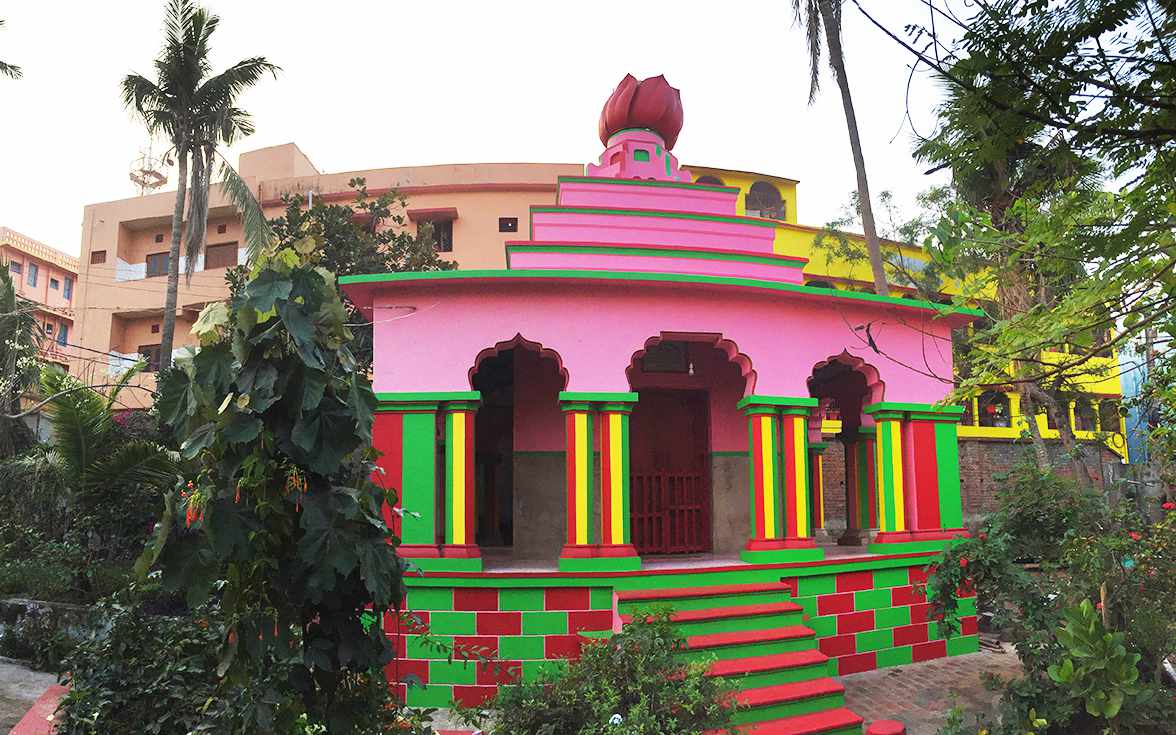
Place where Yukteswar's tomb is located in the Puri ashram
Check the visiting hours carefully to plan your visit well. The place is relatively small but has a very special energy. There's a meditation room where you can practice, and of course, the chapel where Yukteswar's tomb is. Many devotees report deep spiritual experiences when meditating here.
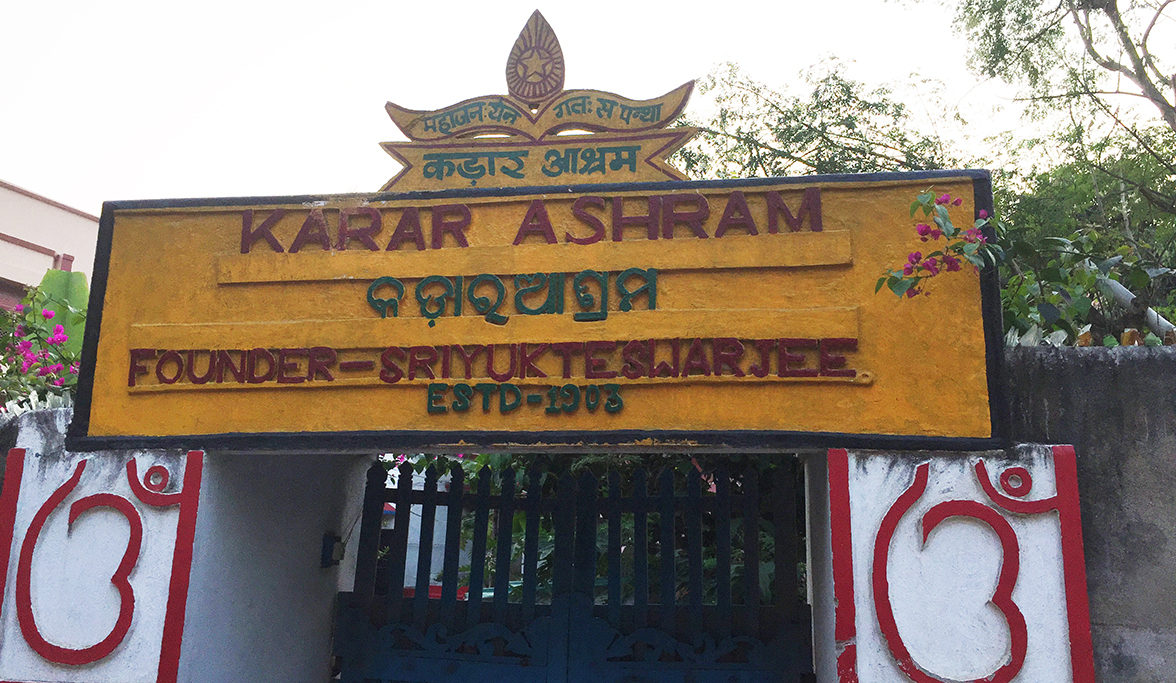
Sri Yukteswar's Ashram
The monks who manage the kendra are kind and respectful. If you have any questions about Yukteswar or the history of the place, they're generally willing to share their knowledge. It's advisable to go with modest clothing and a reverent attitude, remembering you're in an active sacred place, not a museum.
An interesting reflection that arises when visiting Yukteswar's tomb: although it's natural to feel physical reverence before his remains, the true way to honor him is to bring him to your mind in meditation. That's where you can really "talk" with him, where you can feel his blessings, where spiritual communion is possible. The tomb is an important physical reminder, but the true encounter happens on the inner plane.
The City of Puri and Its Beach
One of the things that makes Puri special is that it has a beach. For those of us who have lived near the sea, this adds a different energetic dimension to the place. The fact of being next to the ocean means that energy doesn't get trapped as in inland cities; the environment "breathes" and releases more. This is noticeable in the general atmosphere of the city and contributes to the pressure exerted by the typical Indian environment being less.
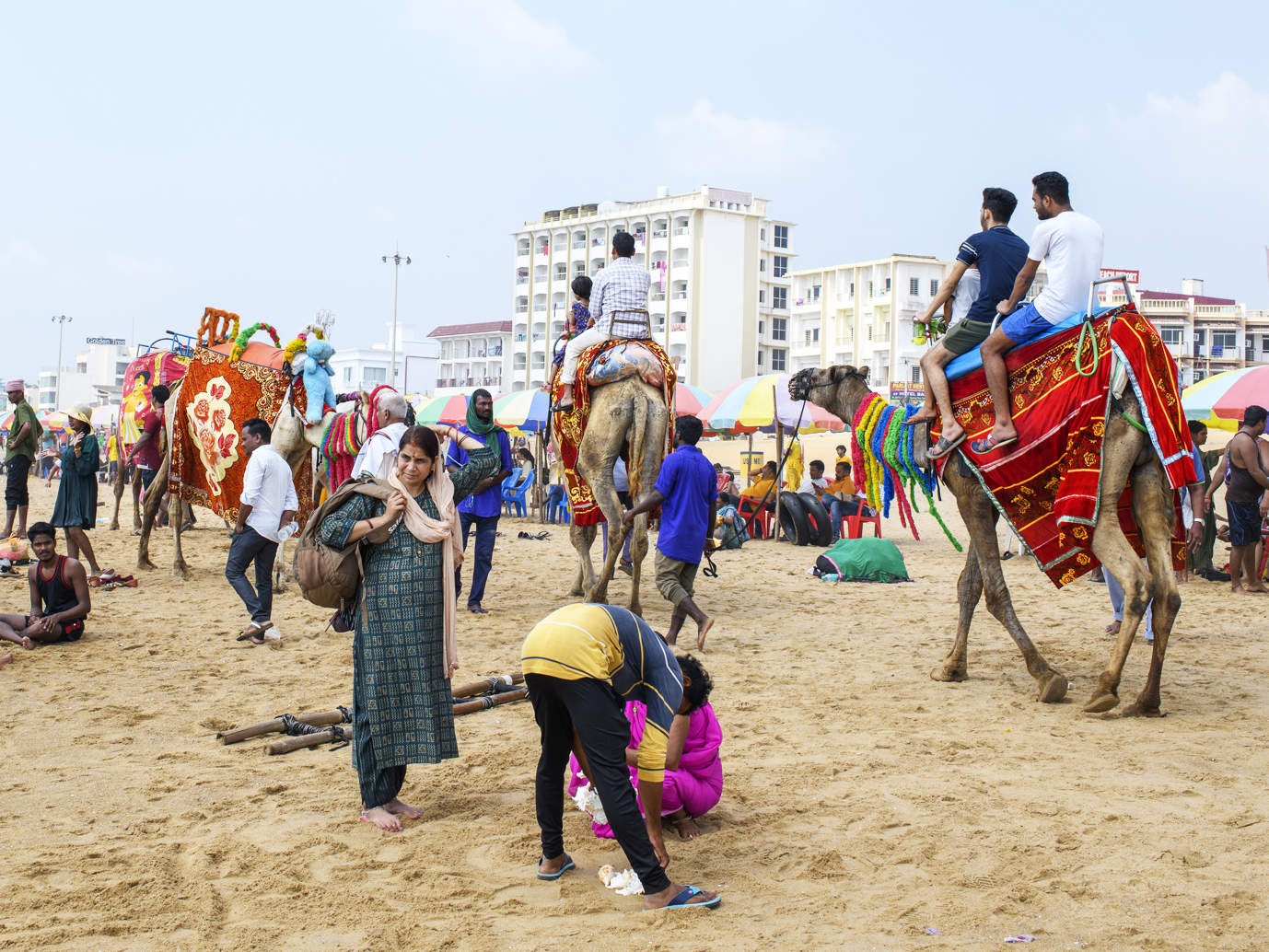
The beach in Puri
However, the beach in Puri isn't experienced as in the West. Here people don't come in swimsuits to sunbathe or swim. The beach is a multifunctional space where daily life happens: buying and selling, eating, families gathering, but always dressed. Cows have their place for contemplation and camels circulate hoping to catch some tourist wanting a different experience. It's a lively, bustling, authentically Indian beach.
Walking on the Puri beach can be a very pleasant meditative experience, especially at sunrise or sunset when activity is less. The sound of the ocean, combined with the spiritual atmosphere of the city, creates a unique environment for reflection and practice.
The Jagannath Temple
The Jagannath temple complex is one of the four most important dhams (sacred places) of Hinduism. The central tower is impressive and the energy the place gives off is truly remarkable. Unfortunately, foreigners are forbidden entry to the temple, a restriction that's strictly enforced.
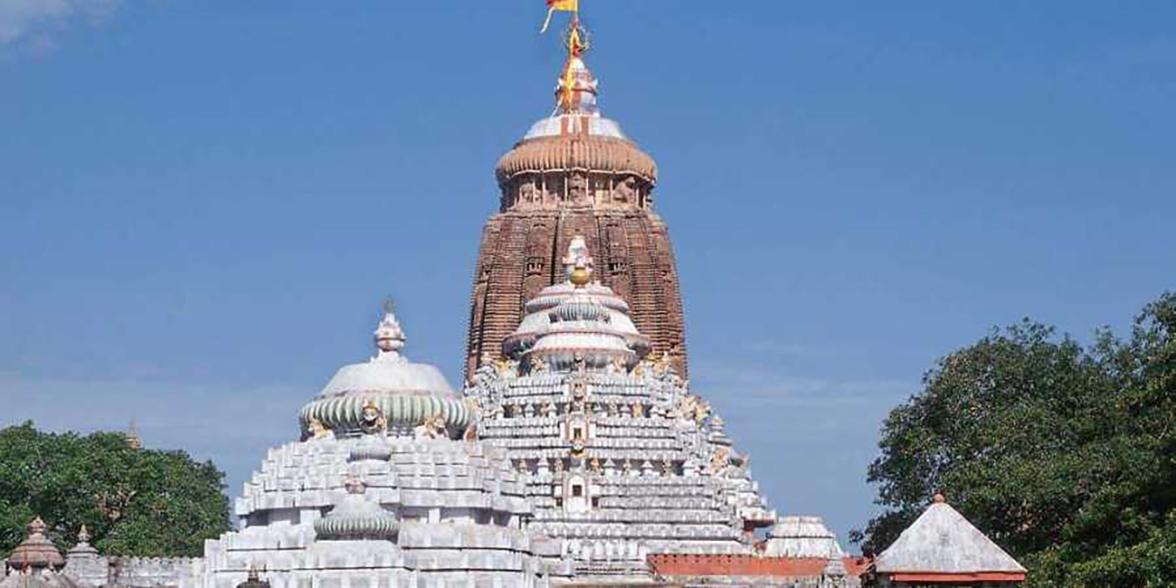
Jagannath Temple
However, even from outside, the experience can be very powerful. You can sit somewhere nearby and simply absorb the energy of the place. Thousands of devotees visit this temple daily, and that accumulation of devotion and spiritual practice over centuries has created a very particular energy field. Although you can't enter physically, the spiritual atmosphere of the place is accessible to all.
There are restaurants with terraces that have views of the Jagannath temple, which can be a good option for having something while enjoying the view and energy of the place from a distance.
Totapuri's Temple
Totapuri is an important figure in India's spiritual history. He was Ramakrishna's guru and taught him Advaita Vedanta (the philosophy of non-duality). Ramakrishna is very well known and revered in India, especially in Bengal, where he was in charge of the Kali temple for a time and where he received his enlightenment from the Divine Mother.
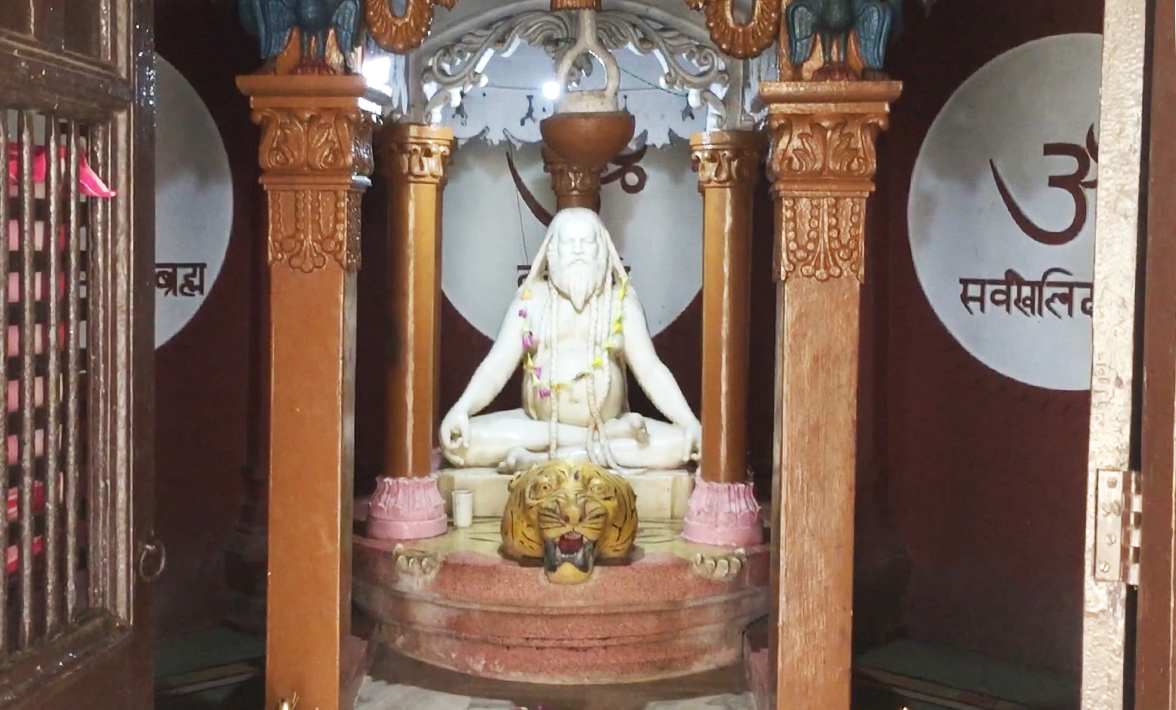
Totapuri's Temple
Totapuri's temple in Puri is a special place that many visitors don't expect to find. It has a chapel with a marble figure of Totapuri and a meditation room. The energy of the place is really powerful and can significantly contribute to the clarity and depth of your meditation. It's one of those places that, without high expectations, pleasantly surprises you with its spiritual power.
For devotees interested in Ramakrishna's tradition or Advaita Vedanta, this temple offers a unique opportunity to connect with that lineage. Even if your main practice is Yogananda's Kriya Yoga, visiting this place can enrich your understanding of the various spiritual currents in India and how they all converge toward the same ultimate truth.
The Ashram, Master Hariharananda, and the Legal History
Master Hariharananda has an interesting and somewhat complex history related to Yogananda and Yukteswar's ashram. It's important to know it to understand the current context of Puri.
When Yogananda was alive, Sri Yukteswar ceded ownership of his Puri ashram to Self-Realization Fellowship (SRF), but maintenance was granted to Hariharananda, who was a disciple of Yukteswar. When Yogananda died in 1952, Hariharananda claimed ownership of the ashram arguing he had been in charge of maintenance for years. SRF embarked on a legal lawsuit to recover what it considered rightfully theirs.
For many decades, SRF lost this lawsuit and the ashram was managed by the gurus descending from Hariharananda's lineage. This situation created some tension, although apparently mutual respect was maintained between both organizations. However, in 2024 news arrived that SRF finally won the legal case after decades of litigation, recovering ownership of Yukteswar's ashram.
This story is a reminder that India, although being the cradle of all things religious and spiritual, isn't exempt from human disputes over property, authenticity, and spiritual authority. As in any field where different factions exist, in the religious realm there are also "struggles" to possess "the most authentic," "the most blessed," "the best." Perhaps these disputes aren't tinged with violent bad forms, but they exist, and generally each faction thinks theirs is best. For the visiting devotee, what's important is to maintain a balanced perspective.
Technique of Communion with the Saints
Regarding visiting these sacred places and connection with the masters, it's worth sharing a powerful technique that Yogananda taught to Janakananda (first president of SRF after the master's departure). This technique allows you to attune with the saints and benefit from living in communion with each one's attributes.
The technique is as follows:
Whenever you wish to communicate with any saint, first transfer his image to the spiritual eye, then relax and concentrate on the heart, trying to feel some of his main characteristics. For example, of Swami Shankara, think of wisdom; of Lahiri Mahasaya, think of joy, wisdom, and devotion; of Yogananda, also think of joy, wisdom, and devotion; of Sri Yukteswar, think of wisdom and a calm perception of bliss. Then, lose yourself in that perception, and the soul of those individuals will possess you. You will act, reason, think, and feel like them. Sometimes this can last hours or days. When this is perfected, you'll finally see them with closed eyes. When you can do it at will, you'll see them with open eyes. This is the mystery of inner communion with the saints. Practice that with unfailing fervor until you're certain of this communion.
This technique is especially powerful when practiced in sacred places like Yukteswar's ashram in Puri. The combination of the place's energy with deliberate attunement practice can create deep spiritual experiences. The sensations it leaves are very pleasant and you can live with them for quite some time. The more you practice, the longer the effects last. It's interesting to note that similar techniques are also used in Buddhism, which shows the universality of certain spiritual principles.
Other Places of Interest in Puri
In addition to the main places already mentioned, there are other sites worth visiting in Puri and its surroundings:
The Konark Monument: A 13th-century sun temple declared a UNESCO World Heritage Site. The architecture is impressive and the history fascinating.
Bhubaneswar Temple: In the nearby city of Bhubaneswar (where the nearest airport to Puri is) there are multiple ancient temples that deserve a visit.
King of Lingas Pagoda: A modern Buddhist structure that offers another spiritual perspective.
Surya Temple: Dedicated to the sun god, it's another example of the region's rich religious tradition.
Practical Aspects of Puri
Transportation: The nearest airport to Puri is in Bhubaneswar, approximately one hour by taxi. Flights from Calcutta to Bhubaneswar are relatively economical (around €23) and frequent. From the airport to the Puri kendra, a taxi costs about 1400 rupees.
Within Puri, the best way to get around is by rickshaw. Prices vary depending on distance, but are generally reasonable. As always in India, it's good to agree on the price before getting in the rickshaw to avoid misunderstandings at the end of the journey.
Google Maps works very well in Puri and is practically indispensable for navigating the city and finding the various temples and ashrams.
Climate: As in most of northern and eastern India, the best time to visit Puri is from October to March, when temperatures are cooler. In summer it can be very hot and humid due to proximity to the sea.
Accommodation: Besides the YSS kendra, there are multiple hotels and guesthouses in Puri for all budgets. The city is accustomed to receiving pilgrims, so the infrastructure for visitors is well developed.
Food: Puri has many restaurants serving quality vegetarian food. Some have sea views, which adds a plus to the experience. Prices are generally very reasonable.
Recommended duration: To visit the main places related to Yogananda and Yukteswar, 2-3 days are enough. However, if you want to do a deeper retreat or explore other temples and places in the region, a week would be ideal.
Final Reflections on Puri
Puri has a unique energy among India's spiritual destinations. The combination of the sea, millennial religious tradition, and Yukteswar's tangible presence creates a special atmosphere that's hard to find elsewhere.
For Yogananda's devotees, visiting Puri isn't optional, it's essential. Here Sri Yukteswar lived and taught. Here is his tomb. Here Yogananda spent time with his guru, learning and growing spiritually. Meditating in Yukteswar's ashram, walking the same streets he walked, sitting by the sea where he sat, is directly connecting with the lineage.
But beyond historical and devotional importance, Puri offers something more subtle: it's a place that invites deep practice. The spiritual atmosphere accumulated by centuries of devotion (both in the Jagannath temple and other temples), combined with the ocean's energy, creates optimal conditions for meditation and inner growth.
If you're planning a spiritual pilgrimage through India following Yogananda's footsteps, Puri must definitely be on your itinerary. It's a place that touches the soul in a deep and lasting way, and that you'll probably want to visit more than once in your life.
Essential Places in Puri:
Recommendations:
• Plan at least 2-3 days to visit the main places
• Yukteswar's ashram opens in the afternoon (3:30 PM), plan your visit accordingly
• Use Google Maps to navigate the city - it works very well
• Rickshaws are the best means of transport within Puri. Agree on price before getting in
• Dress modestly, especially when visiting Yukteswar's ashram and temples
• The beach is very different from Western beaches - people go dressed and it's multifunctional
• There are restaurants with views of Jagannath temple where you can feel the place's energy
• Practice the technique of communion with the saints while at Yukteswar's ashram
• Combine your visit to Puri with stays in Dakshineswar, Dihika, or Ranchi for a complete pilgrimage
Cultural Considerations:
• Foreigners cannot enter Jagannath temple - it's a strictly enforced restriction
• Puri is a very traditional sacred city - respect local customs
• During certain festivals, the city fills enormously with pilgrims
• Food is mainly vegetarian due to the religious character of the city
Puri is an essential destination for Yogananda's devotees. Yukteswar's ashram is the spiritual heart of the place and should be visited with reverence and inner preparation. If you're looking for more general information about traveling through India, consult the sections on credit cards, mobile phone use, vaccines, and other essential details.
Important:
If you haven't yet read the Considerations section, don't forget to do so. In this section you'll find very valuable information that can save you many headaches. In particular, there are details related to credit cards and mobile phone use that are essential.
Would you like to know my complete experience in Puri? Enjoy my stay in Puri, with all the details here.
Puri has an airport, so the easiest way is to fly from Calcutta to Bhubaneswar (Puri). Arrange a taxi with the Puri kendra to pick you up at the airport.
Email: ysdk.puri@gmail.com
Website: click here.
Contact person: Maheswar.
Contact phone: +919778363452
Recommended donation: 1200 rupees/day.
Stay: Initially 6 days. Extension can be requested once on site.
Jammu
The City of Temples and Adi Shankaracharya
Jammu, known as "the city of temples," is a less common destination in Yogananda devotees' itineraries, but offers unique and profound experiences. Here there's a Dhyana Kendra of Yogoda Satsanga Society that, although not officially enabled to receive devotees in retreat mode like the main ashrams, is a special place where you can intimately connect with the local devotee community and experience Indian hospitality in its most authentic form. Therefore, this Kendra only has two rooms reserved for monks when they visit the place during special celebrations.
The Jammu Dhyana Kendra
The Jammu Kendra is surprisingly large, even more than some YSS ashrams in India. For those unfamiliar with the term, Dhyana Kendras are meditation and spiritual gathering centers founded by Paramahansa Yogananda, dedicated to Kriya Yoga practice and teaching spiritual doctrines. They offer spaces for group meditation, yoga classes, satsangas, and community activities. Additionally, they engage in charitable activities like medical camps and blood donations to support local communities.
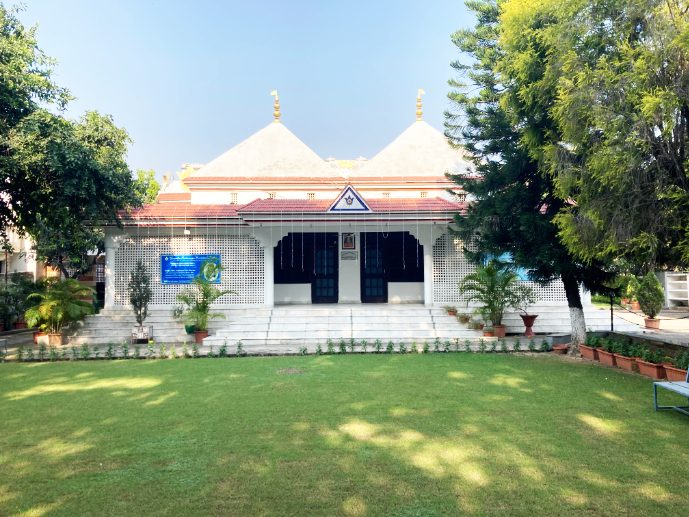
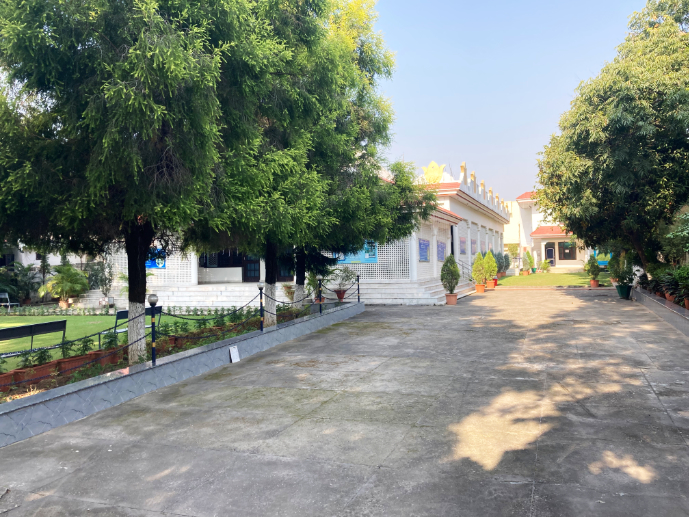
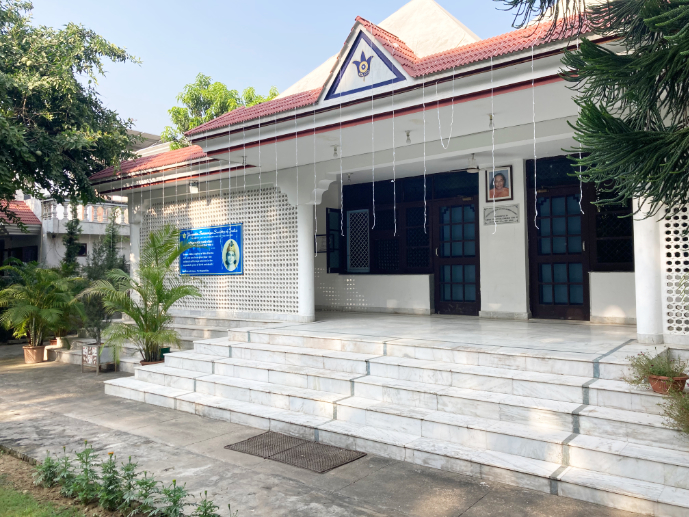
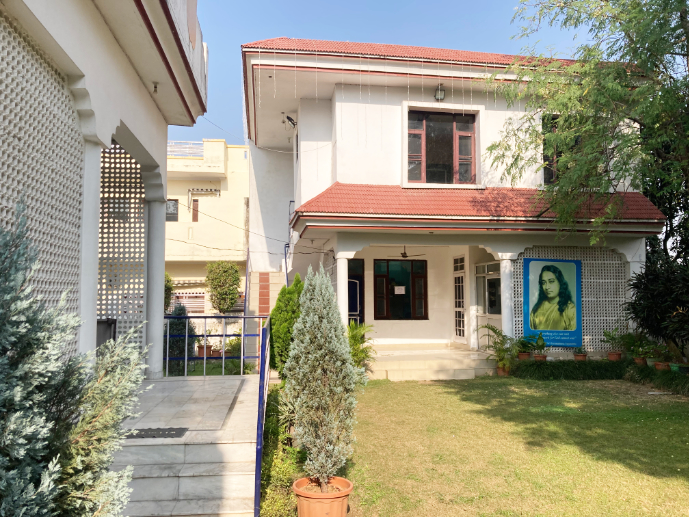
Images of the Jammu Kendra
The main building of the Kendra is really beautiful. The facade of the meditation room, with its lawn area right in front for practicing energization exercises, conveys the feeling of having arrived at an important place. Throughout the grounds there are hanging pictures with images from the master's life, many of them little known, which is a gift for devotees who enjoy discovering new aspects of Yogananda's history.
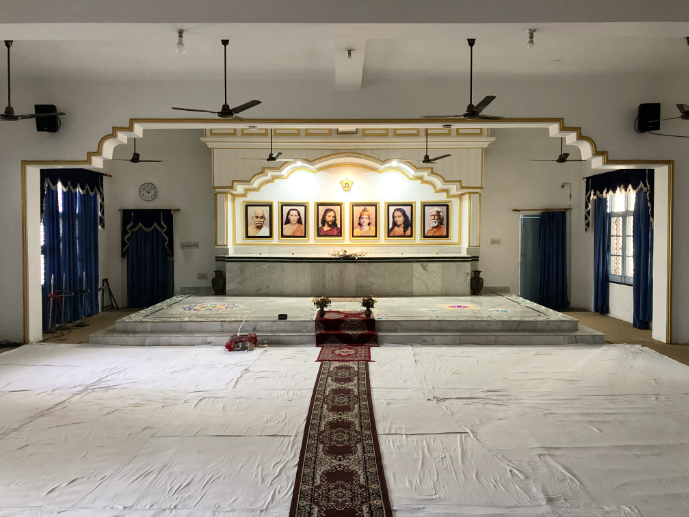
Image of the meditation room
Once inside the main building, the meditation room is enormous and has excellent energy. It's one of those spaces where you immediately feel like meditating without interruption. The ritual they perform before starting each meditation session is especially beautiful: with a candle in front of the masters they make a movement in the air drawing an infinity symbol and then sound a conch shell. It's a truly inspiring moment that adds a very pleasant ceremonial dimension to the practice.
The Jammu Kendra's devotee community is very welcoming. When a foreign visitor arrives, they're introduced to the group during meditation, which generates a very nice feeling of belonging. Local devotees approach afterward to greet and show interest in the visitor's stay, creating an atmosphere of genuine hospitality and spiritual brotherhood.
The Jammu Region and Practical Considerations
Jammu is located in northern India, approximately 50 km from the Kashmir border. Jammu airport is small. Upon exiting you quickly find yourself on the street negotiating a taxi. It's common to see many Sikhs (followers of Sikhism, a monotheistic religion founded in the 15th century in the Punjab region) with their characteristic turbans, as this religion has a strong presence in the region.
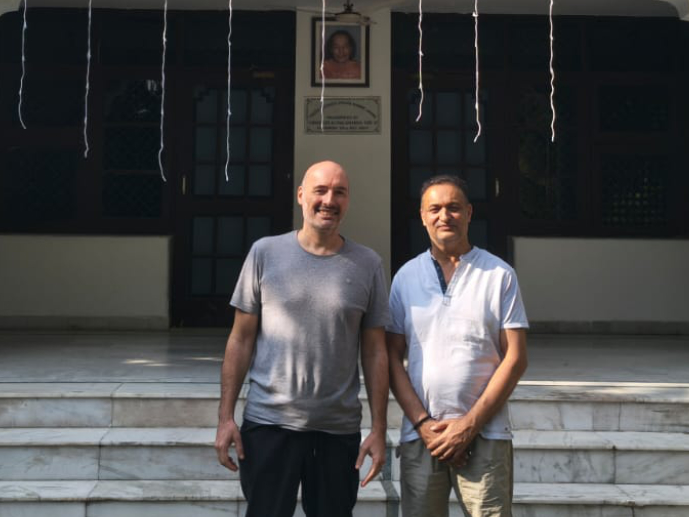
At the Jammu Kendra
Important about SIM cards: Due to national security problems related to terrorist attacks in the Indian part of Kashmir, security measures in the region have been significantly tightened. One consequence is that it's extremely difficult for foreigners to get SIM cards for mobile phones in Jammu. SIM cards purchased in other parts of India may stop working when entering the territory of Jammu and Kashmir due to security restrictions.
Only at some specific airports or through local contacts is it possible to solve this problem. If you plan to visit Jammu, it's crucial that you manage this matter in advance, especially if you depend on internet for work or communication. One option is to contact local devotees at the Kendra beforehand who can help you with this issue.
Local Culture and Environment
One beautiful thing about the culture in Jammu is the relationship many people have with nature and animals. It's common to see people carrying cookies to give to stray dogs or placing small dishes of water so birds can drink. This compassion toward animals is deeply rooted culturally.
It's also interesting to observe how in many places in India garbage management is different from the West. Garbage is left piled in the streets temporarily, allowing dogs, cows, and other animals to eat from it. After a few days, the remaining garbage is collected or burned in the same place. Although at first glance it may seem chaotic, it has a logic within the urban Indian ecosystem where street animals are part of the daily landscape.
Srinagar and the Adi Shankaracharya Temple
One of the most special excursions that can be made from Jammu is visiting Srinagar, the summer capital of Jammu and Kashmir, to visit the Adi Shankaracharya temple. This journey has deep spiritual significance for Yogananda's devotees, as it directly connects with the founder of the Swami monastic order to which all the lineage masters belong.
Who was Adi Shankaracharya?
Adi Shankaracharya was a Hindu philosopher and spiritual reformer who lived in the 8th-9th century CE (approximately 788-820). He's known for founding the monastic order of the Swamis (Dashanami Sampradaya), establishing four main monasteries in the four corners of India. He traveled extensively throughout the country debating and revitalizing Hinduism, consolidating Advaita Vedanta philosophy or non-dualism: the idea that the individual soul (Atman) and Supreme Reality (Brahman) are one and the same.
Adi Shankaracharya's relationship with Paramahansa Yogananda is direct and profound. Yogananda and his masters (Sri Yukteswar, Lahiri Mahasaya, and Babaji) belong to the Swami order founded by Shankaracharya more than 1200 years ago. Both share the same philosophy of non-dualism: the unity of the soul with God, which Yogananda expresses as "realizing we are one with God." The Swami order implies renunciation of the world, something Yogananda practiced as a monk throughout his life. In short, without Shankaracharya there would be no Swami order to which Yogananda belongs; he's the founder of his monastic and philosophical tradition.
The Journey to Srinagar
The journey from Jammu to Srinagar takes approximately 6 hours by car. The route is on roads that may be under construction, with quite a bit of dust in the air, but the landscape is beautiful and worth the effort. A common option is to share a car with other travelers, which considerably reduces costs.
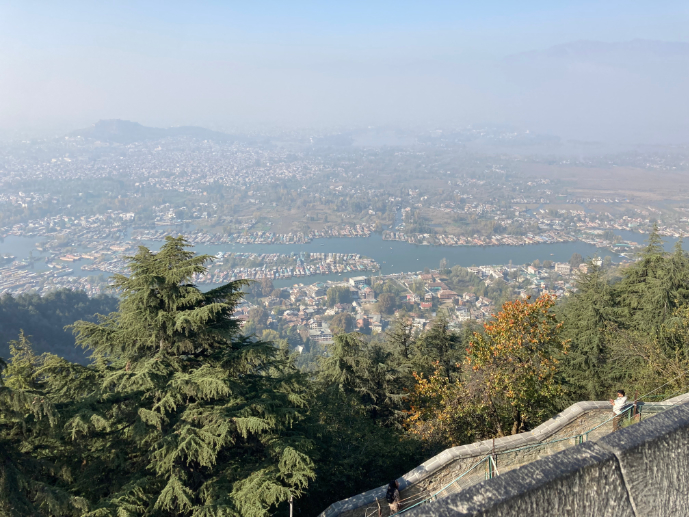
Images from the top of Adi Shankaracharya temple
The Adi Shankaracharya temple is located at the top of a mountain from which a spectacular landscape can be seen, including Srinagar's large lake. To reach the temple you have to climb 240 stone steps. The entrance greets you with a bell that tradition indicates you should ring before beginning the ascent.
Once at the top, the place consists of a hexagonal stone temple inside which there's a Shiva Lingam, and a small attached room known as "the cave" where there's an image of the saint. This cave has fantastic energy for meditation. You enter through a small opening and inside the space allows approximately 6 people meditating simultaneously.
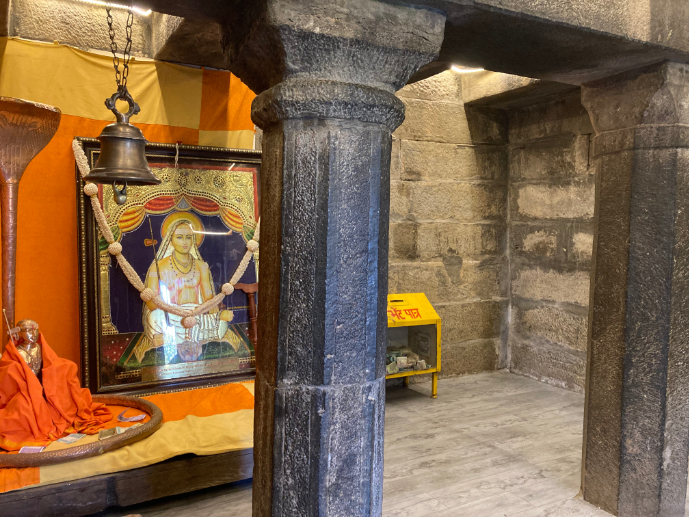
The "cave" for meditation
The experience of meditating in this place is unique. Many visitors report a special sensation after spending time here: deep mental and physical calm, peace, and a particular taste for stillness. It's something that could be described as being "pleasantly subdued" or in a very special active rest state.
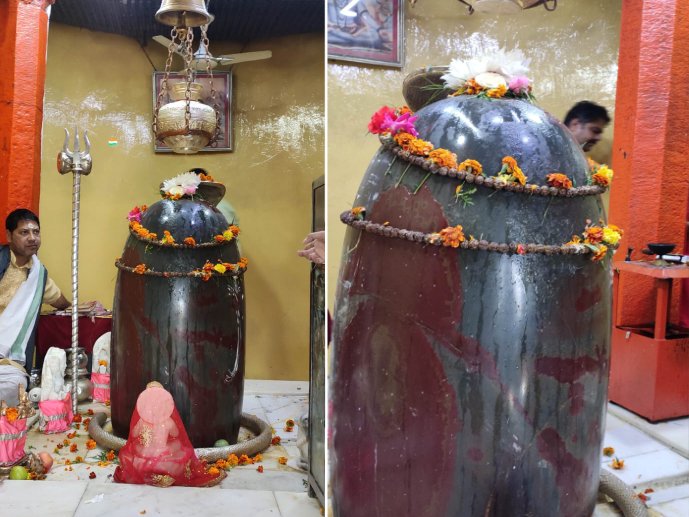
The temple with the Shiva Lingam
What's really important isn't so much whether the saint was historically in this exact place or not, but the spiritual experience the space generates. The energy accumulated by centuries of devotion, combined with the natural beauty of the environment and the visitor's intention, creates optimal conditions for profound experiences that transcend all dimensions of being.
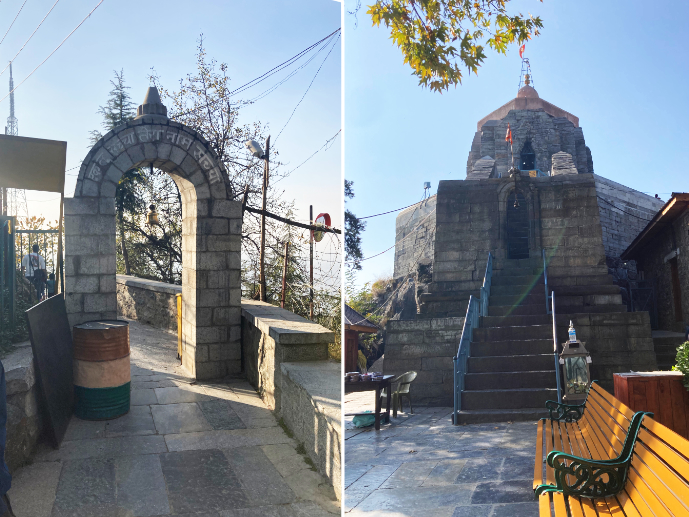
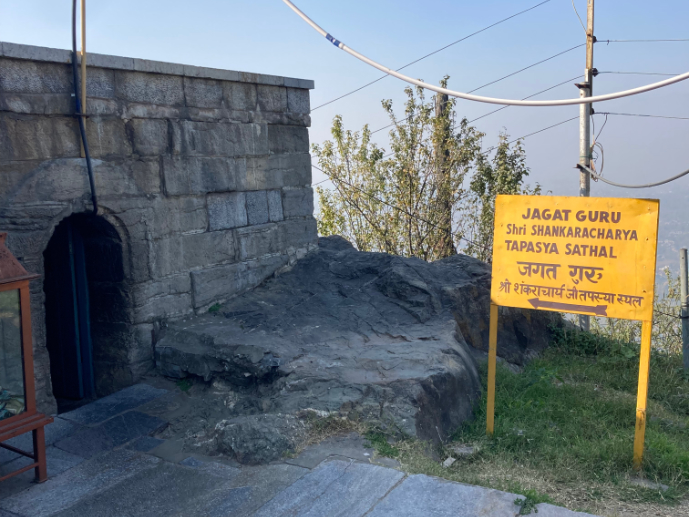
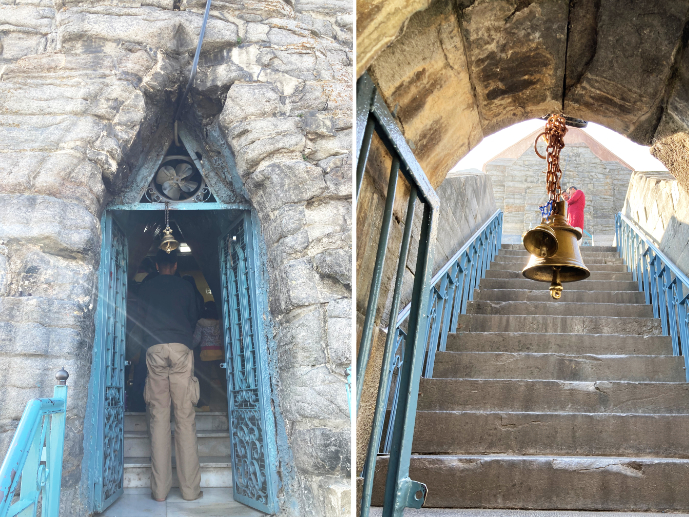
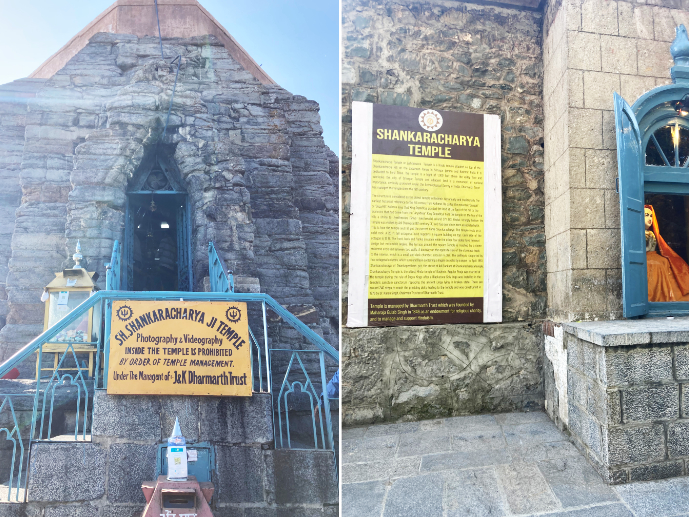
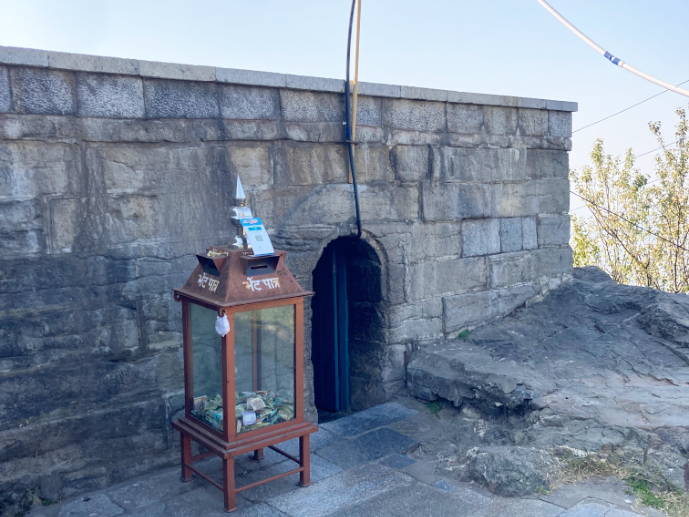
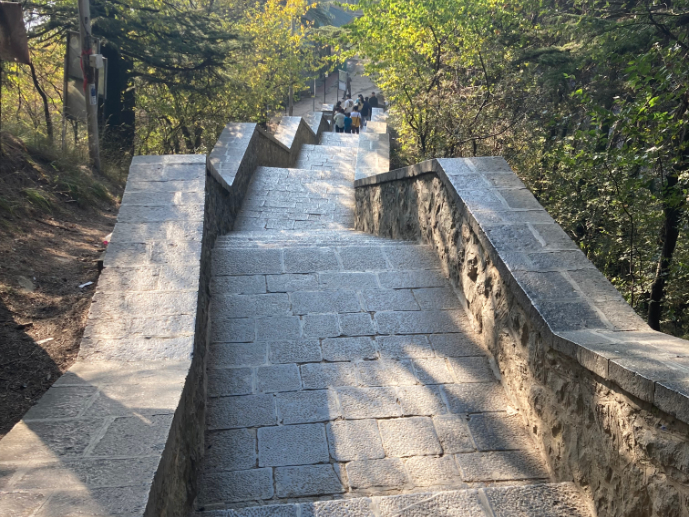
Images of the place
Recommendations for Visiting the Temple:
It's recommended to visit the place at least two days. The first day allows an initial contact: climbing the steps, presenting offerings at the Shiva Lingam, meditating briefly in the cave, and familiarizing yourself with the space. The second day, with greater familiarity with the place, is when you generally have the deepest experiences. You can stay as long as you need until you feel "the boat is full."
The climate on the mountain can be cold, especially in the afternoon and evening, so it's advisable to bring warm clothing. There are comfortable hotels in Srinagar where you can stay, which allows you to rest well between visits to the temple.
Peer Kho Cave Temple - The Underground Shiva Lingam
Another extraordinary place in Jammu is the Peer Kho Cave Temple (also known as Jamwant Cave or Riksharaj Gufa), one of the oldest temples in the city. This underground temple is located 20-30 feet below ground, on the banks of the Tawi River, and is deeply connected with the history of Lord Krishna and Jamvant, the bear king from the Ramayana.
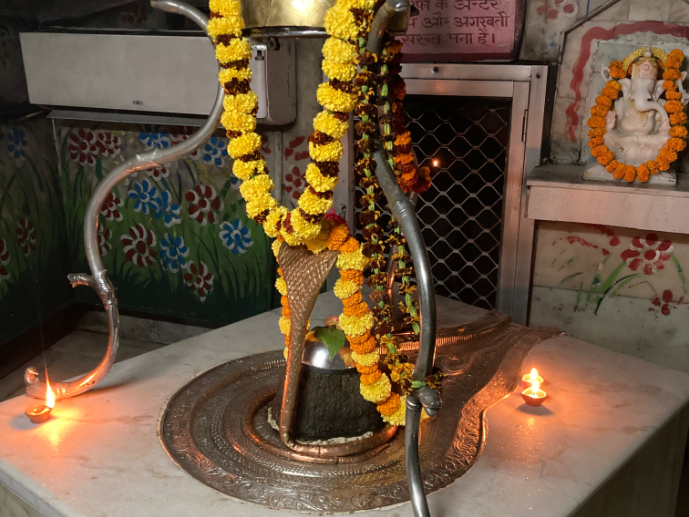
Shiva Lingam in the Peer Kho Cave Temple
According to tradition, after Lord Rama blessed Jamvant with a long life and the opportunity to have darshan (divine vision) of Krishna in the Dwapara Yuga era, he came to meditate in this cave. Later, Krishna arrived at this place in search of the Syamantaka necklace and had to fight with Jamvant, as he had promised in the past.
The temple houses a swayambhu Shiva Lingam (self-originated or naturally occurring) that's venerated with great devotion by locals. It has three caves dedicated to Lord Shiva, Navadurga, and Jambavant. One of the most mystical features of the place is that it's believed there's an underground passage connecting to the famous Amarnath cave, though it's now closed because some sadhus who tried to explore it never returned.
The temple was built in the 15th century during the reign of Raja Ajaib Dev and is considered a special energy portal for meditation. Like at the Adi Shankaracharya temple, the energy of the small corner where the Lingam is located is very pleasant and invites you to stay. The mind sweetens and naturally disposes itself for deep meditation.
Surrendering completely to the experience without fixed expectations is the best advice for visiting these sacred places. Let the space speak to you, allow the energy accumulated by centuries of devotion to work in you, and trust that you're receiving exactly what you need at that moment on your spiritual path.
Connection with the Local Devotee Community
One of the most valuable experiences of visiting the Jammu Kendra is the opportunity to intimately connect with the local devotee community. Unlike the large ashrams where there may be many foreign visitors, in Jammu you have the opportunity to live Kriya Yoga practice as Indian devotees live it in their daily lives.
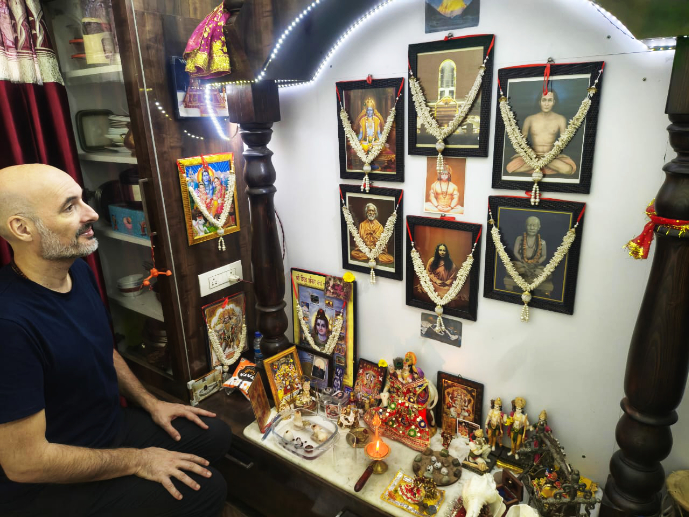
Meditation room in a local devotee's home
If you're lucky enough to be invited to a local devotee's home, take advantage of the opportunity. Many devotee families have meditation rooms in their homes that are true miniature temples, beautifully decorated and full of energy. Being able to meditate in these private spaces, do energization exercises on rooftops, share meals with families, and learn about the rituals they practice in their homes, adds a completely new dimension to your understanding of Yogananda's teachings and how they're lived in India.
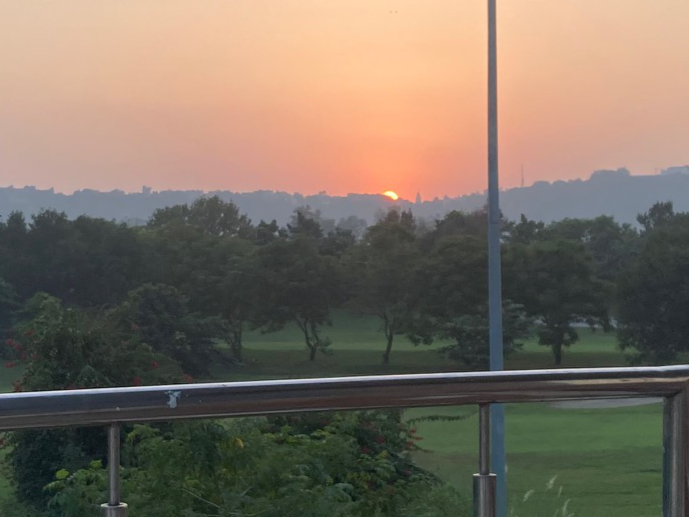
Jammu landscapes
The hospitality you'll find in Jammu is genuine and comes from the heart. Local devotees see serving a visiting devotee as a way of serving the Guru himself. This attitude of selfless service is one of the most beautiful aspects of devotional culture in India and something every visitor should experience and learn.
Is It Worth Visiting Jammu?
Although Jammu isn't as well-known a destination as Ranchi, Dakshineswar, or Puri, it offers unique experiences that can be extremely valuable:
1. Connection with the lineage: Visiting the Adi Shankaracharya temple directly connects you with the founder of the monastic order to which Yogananda and all his masters belong. It's touching the deepest roots of the lineage.
2. Intimate community: The Jammu Kendra offers a more intimate and familiar experience than the large ashrams, allowing deeper connections with local devotees.
3. Little-visited places: Both the Adi Shankaracharya temple in Srinagar and the Peer Kho Cave Temple are powerful places that very few foreign devotees visit, which makes them special.
4. Authentic hospitality: Nowhere else will you experience Indian hospitality in its purest and warmest form as in Jammu.
5. India's diversity: Jammu shows you a completely different region of India from Bengal or Bihar, broadening your understanding of the country's diversity.
However, there are limitations to consider: the Kendra isn't officially open for retreats, security issues related to proximity to Kashmir can complicate practical aspects like getting a SIM, and more advance planning and local contacts are required to organize the visit.
For devotees who have already visited the main places (Ranchi, Dakshineswar, Puri, Dihika) and seek to deepen their connection with the lineage, Jammu is an excellent destination. For those making their first trip to India following Yogananda's footsteps, it probably makes more sense to first focus on the main ashrams.
The Value of Dhyana Kendras
It's a pity that the Jammu Kendra isn't officially available to accommodate devotees, because these small meditation centers distributed throughout India are great for getting in touch with the local devotee community and thus knowing the immense diversity of the country. India is enormous and each region has its cultural, linguistic, and spiritual particularities.
If Yogoda Satsanga Society decided in the future to open more Kendras to receive devotees on retreat (as Dihika, Puri, and Coimbatore already do), it would be a huge blessing. Meanwhile, with appropriate contacts, patience, and flexibility, it's possible to visit some of these centers and have deeply transformative experiences.
Like nowhere else, Jammu offers the privilege of experiencing hospitality in its warmest and most loving version. Once again, we confirm that the master is in everything and everywhere, guiding his devotees toward the experiences they most need at each moment of their path.
Best Time to Visit:
October and November are ideal months for pleasant temperatures. In winter it can be very cold, especially in Srinagar. In summer temperatures are higher but manageable.
Essential Places in Jammu and Surroundings:
CRITICAL - SIM Cards:
Due to security measures in the Jammu and Kashmir region (proximity to conflict zone), it's extremely difficult to get SIM cards for foreigners. SIM cards purchased in other parts of India may stop working when entering this territory. It's strongly recommended to:
Recommendations for the Adi Shankaracharya Temple:
• Plan at least 2 days in Srinagar to visit the temple (first day for familiarization, second day for deep practice)
• Prepare to climb 240 stone steps
• Bring warm clothing, especially in the afternoon
• The meditation cave is small (maximum 6 people), go early if you want privacy
• Bring offerings if you wish to present them at the Shiva Lingam
• Don't have fixed expectations, allow the experience to unfold naturally
• The views from the top are spectacular, dedicate time to contemplate them
Security Considerations:
Although Jammu is generally safe for tourists, it's close to the border with Kashmir, a historic conflict zone. Stay informed about the current situation, follow local authority recommendations, and register your trip at your country's embassy if possible.
Important:
Jammu is a destination for devotees with an adventurous spirit seeking experiences outside the usual circuits. It requires more planning, local contacts, and flexibility than visiting the main ashrams. However, the spiritual rewards can be extraordinary. If you're looking for more general information about traveling through India, consult the sections on practical considerations, vaccines, visas, and other essential details.
Important:
If you haven't yet read the Considerations section, don't forget to do so. In this section you'll find very valuable information that can save you many headaches. In particular, there are details related to credit cards and mobile phone use that are essential.
Would you like to know my complete experience in Jammu? Enjoy my stay in Jammu, with all the details here.
Jammu has an airport, so the most convenient way is to travel by plane from Delhi. The flight has an approximate duration of 1 hour and 15 minutes. You can go from Jammu airport to the Kendra by taxi, but try to arrange it with the devotees at the kendra.
Email: jammu@ysscenters.org
Website: click here.
Best time to visit: October and November are ideal months for pleasant temperatures.
Note about SIM cards: Due to security measures in the Jammu and Kashmir region, it's very difficult for foreigners to get SIM cards. It's recommended to manage this issue beforehand in other Indian cities or have help from local contacts.
Noida
Gateway and Deep Devotion
For most travelers arriving in India from the West, Delhi is the gateway. Indira Gandhi International Airport is one of the largest and busiest in the country, and therefore, the first contact with Indian reality for many. Although Delhi itself doesn't have places directly related to Yogananda, the city of Noida, which is part of the Delhi Metropolitan Area and is approximately one hour from the airport, houses one of the most important Yogoda Satsanga Society ashrams in northern India.
Arrival at Delhi Airport
Arriving in Delhi can be overwhelming if it's your first time in India. The airport is large and bustling, and once you leave the baggage claim area, you face immediate decisions: change money, get a SIM card for your mobile phone, and organize transportation to your destination.
Currency Exchange
There are exchange houses inside the airport. Commissions are usually higher than in the city (they may charge around €7 to exchange €200), but it has the advantage of convenience and security. It's advisable to exchange at least some money at the airport to have cash available immediately for taxi, food, and other expenses. You can exchange more money later in the city at better rates.
SIM Card
Getting a SIM card in India can be more complicated than expected. Although there are supposed to be stores upon exiting the airport, they're not always clearly visible or available. Some are inside certain areas of the airport that you can't re-enter once you've left. You can try to buy a SIM at the airport itself if you find the store, bring an international SIM previously contracted from your country, wait until you reach your destination and buy it there with locals' help, or ask for help at the ashram where some can facilitate the process for you.
Keep in mind that to activate a SIM in India as a foreigner you need to present a copy of your passport and visa, and sometimes photographs. The process can take several hours or even a day to complete.
Transportation from the Airport
The safest option is to use prepaid taxis. There are prepaid taxi counters inside the airport where you pay a fixed price. There's no possibility of negotiation but you avoid surprises and scams. You can also arrange in advance with the ashram or some taxi service to pick you up, though you'll need a way to contact them by phone or WhatsApp. Uber and Ola work in Delhi but you need active mobile data and the app installed beforehand. The least recommended option, especially if it's your first time, is to take a taxi from the street which requires negotiation and there's greater risk of overcharging or problems.
The journey from the airport to Noida usually takes between 45 minutes and 1.5 hours depending on traffic. Delhi has notoriously chaotic and dense traffic, so be patient. The reasonable price is between 800-1500 rupees depending on time and vehicle type.
The Noida Ashram
The Yogoda Satsanga Society ashram in Noida is one of the largest and most active YSS centers in northern India. For many devotees traveling from the West, this is the first Yogananda ashram they visit, and therefore, the first real contact with how Kriya Yoga practice is lived in India.
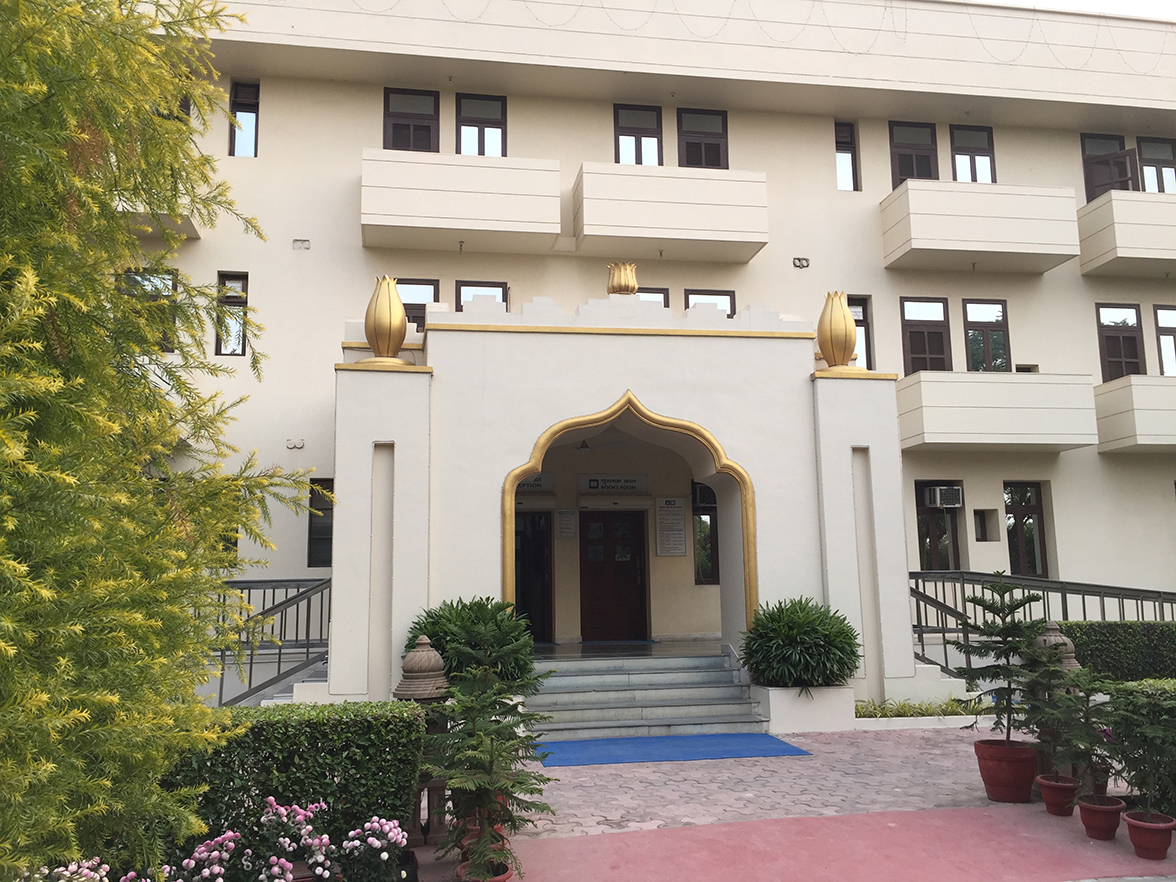
Entrance to the main building of the Noida ashram
The ashram is located in a relatively quiet area of Noida, which is a blessing considering the general chaos of the Delhi metropolitan region. Once you enter the grounds, you immediately feel the difference: there's peace, order, cleanliness, and an atmosphere of spiritual recollection that contrasts markedly with the exterior.
Facilities
The ashram has good facilities for accommodating devotees. Rooms are simple but clean and functional. They don't have heating, which can be challenging if you visit in winter (December-February) when temperatures can drop quite a bit, especially at night. The typical fog of this season also makes the cold feel more intense since the sun doesn't come in. It's advisable to bring some warm clothing if you visit during these months.
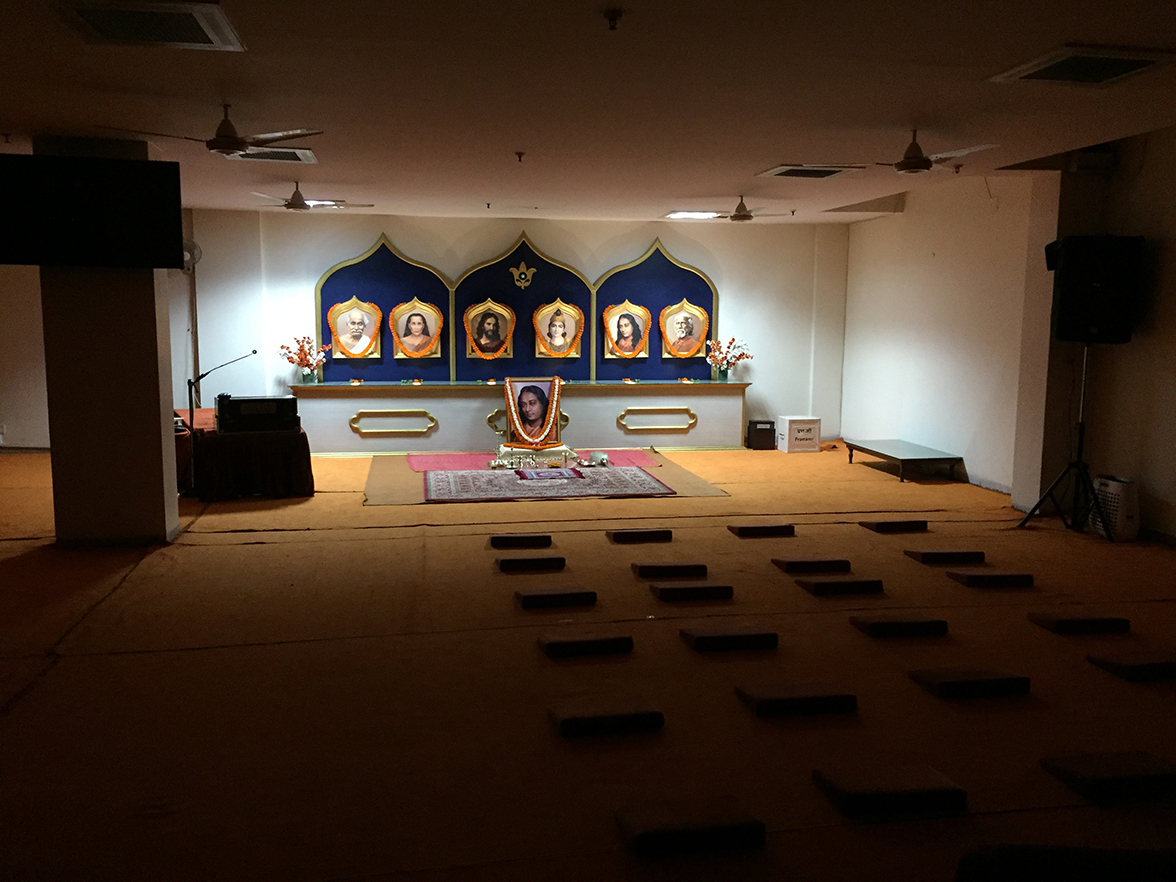
Meditation room of the Noida ashram
The meditation room is spacious and has excellent energy. It's one of those spaces where you immediately feel like meditating. The devotion that's breathed during group meditations is palpable and very inspiring. During important meditations, like Thursday night which is the weekly three-hour long meditation, and especially during special celebrations, they play audios of Yogananda speaking, which adds a very emotional dimension to the experience.
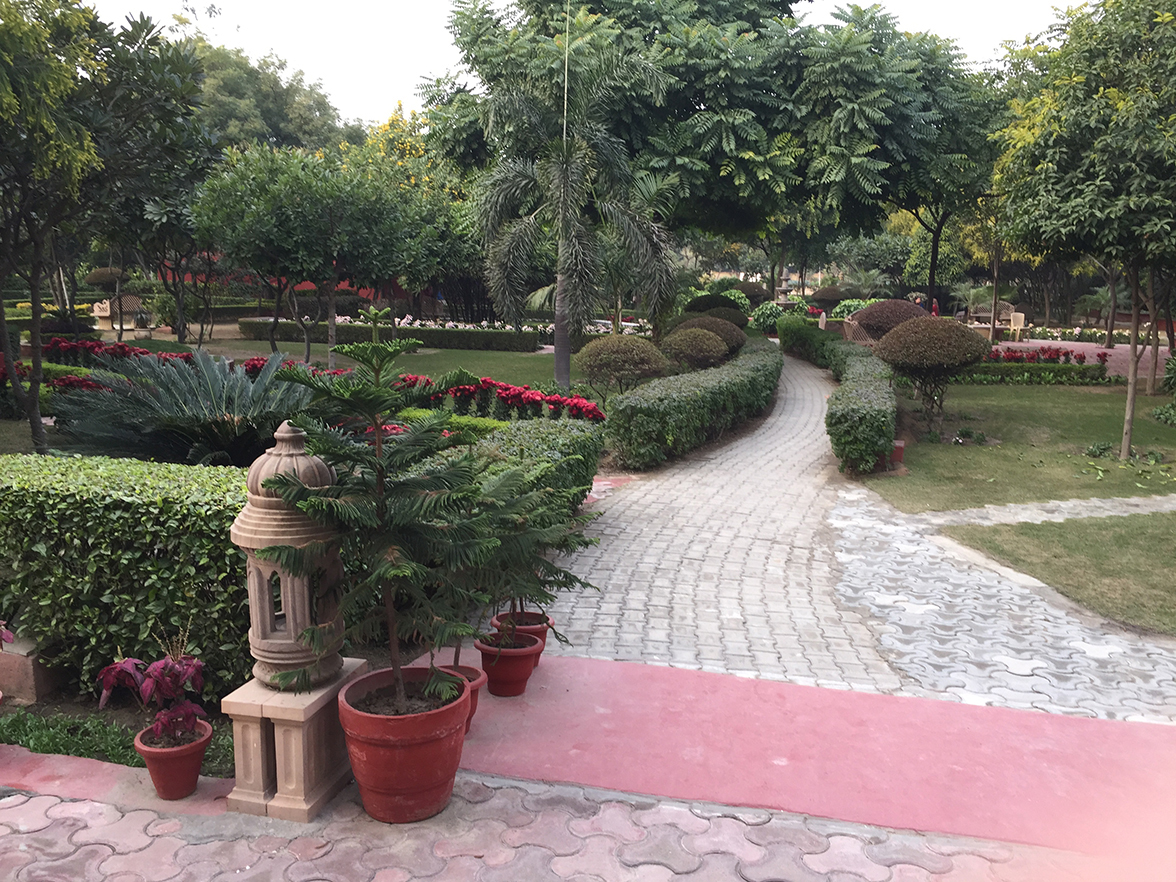
Gardens of the Noida ashram
The ashram gardens are beautiful and offer pleasant spaces for walking, reading, or simply being in silence. The grounds are large enough to have corners where you can withdraw when you need solitude.
The Food
Food at the ashram is vegetarian, as in all YSS ashrams, and is served on aluminum trays with separate compartments. The menu is relatively repetitive: breakfast, lunch, and dinner have similar bases with variations in spices, color, and distribution, but it's well prepared and nutritious. For those not accustomed to Indian food, it may take a few days to adapt, but generally ashram food is among the mildest in terms of spiciness compared to local restaurants.
A practical detail: the food is usually soft, which is convenient if you have any dental problem or, as in some cases, if you wear braces. Often small disguised blessings go unnoticed until you experience them directly.
The Ashram Experience
What makes Noida truly special, like any YSS ashram, isn't so much the physical facilities but the spiritual atmosphere and community. The great devotion to Yogananda, the masters, and God that's breathed is so strong that you really have the experience that the master is present. This is especially notable during group meditations and celebrations.
This is the most important reason to stay in a YSS ashram instead of a hotel: these are unique opportunities that have the ability to make you evolve deeply in your relationship with God and the Guru. The collective energy of hundreds of devotees meditating together, the pure devotion many of them have, and the atmosphere sanctified by years of spiritual practice, create conditions you simply can't replicate meditating alone in a hotel.
Special Celebrations
One of the most valuable aspects of being at an ashram in India is the possibility of participating in the great celebrations. In Noida they celebrate with great fervor events like New Year's Eve on December 31, where the year transition is done meditating, as is tradition among Yogananda's devotees. Generally there are chants before meditation and then you meditate from 11:30 PM past midnight. Yogananda's birthday on January 5 is one of the most important celebrations of the year, with between 800 and 2000 devotees present. The mahasamadhis of Yogananda and Yukteswar from March 7 to 9 are very emotional celebrations. Other events are also celebrated like the birthdays of the other lineage gurus, Janmashtami (Krishna's birthday), and other important dates of the Hindu calendar.
If you can organize your trip to coincide with any of these celebrations, do it. The experience of being present during these events is incomparably richer than visiting on normal days. The spiritual energy multiplies, collective devotion reaches very high peaks, and meditative experiences are usually much deeper.
Practical and Cultural Aspects
The Indian Bathroom
If it's your first time in India, you'll probably have to adapt to the Indian system of personal hygiene. Instead of toilet paper, water is used. All bathrooms have a faucet with a small hose or a container for this purpose. At first it may seem complicated, but it's a matter of practice. It's important to remember that culturally in India the left hand is used for personal cleaning and the right for eating and greeting. A practical solution is to greet with a namaste (hands together in front of chest) which is culturally appropriate and avoids any dilemma.
Water
Never drink tap water. Always use bottled or boiled water. Even to rinse your mouth when brushing your teeth, use bottled water. Water poisoning can ruin several days of your trip. Ashrams generally provide safe drinking water, but ask first.
Climate
If you visit in winter (December-February), prepare for cold, especially at night. Rooms don't have heating. Bring light warm clothing you can layer. In summer (April-June) it's very hot. The best time to visit northern India is October-November or February-March.
Initial Adaptation
It's normal that the first nights it's hard to sleep. You're out of your comfort zone, in a different bed, with different sounds, possibly with jet lag. Give your body time to adapt. Generally after 2-3 days you sleep better.
Language
At the ashram you'll find devotees who speak some English and are willing to help. However, "Indian English" has its peculiarities of accent and expression that may require an adjustment period. Be patient, ask them to repeat if you don't understand, and gradually your ear will adjust.
Connecting with Other Devotees
One of the blessings of being at the ashram is the opportunity to connect with local devotees. Many of them are extremely helpful and will be delighted to help you with practical matters like buying bus or train tickets for your next destination, calling taxis or rickshaws, recommending places to visit, explaining local customs, helping you with the SIM card, and sharing their spiritual experiences.
Don't hesitate to ask for help when you need it. The service culture is very strong among Indian devotees and they're generally very happy to be able to help a spiritual brother or sister who has traveled from so far.
Booking Process
To stay at the Noida ashram you need to make a reservation in advance. The process involves filling out several forms with personal information, copies of passport and visa, and sometimes photographs. It's important to carefully read all emails you receive from the ashram because they contain specific instructions about what documents you need to send and in what format.
The process may seem bureaucratic, but it's necessary due to government regulations related to foreigners. Be patient and follow all instructions to the letter. If you have doubts, ask. It's better to clarify everything before arriving than to have problems at check-in time.
Noida as a Base for Exploring
Although Noida is in the Delhi metropolitan area, the ashram itself is relatively isolated from the urban chaos. However, if you want to explore Delhi, which has multiple tourist attractions like the Red Fort, India Gate, the Lotus Temple, and other historical places, it's approximately one hour away by transport.
From Noida you can also organize trips to other important destinations. Rishikesh is 4-5 hours by bus, there are "luxury Volvo" buses that are more comfortable and cost around 800-1000 rupees. Varanasi is reached by night train of approximately 12 hours. Agra, where the Taj Mahal is, is 3-4 hours by train or bus. Haridwar, near Rishikesh, is another sacred city by the Ganges that's also worth visiting.
Devotees at the ashram can help you buy tickets and organize these trips.
How Long to Stay?
This depends entirely on your goals and time availability. If you only want to use Noida as an initial base to acclimatize to India before continuing to other places, 2-3 days are enough. This time allows you to experience a couple of group meditations and adjust to jet lag. One week allows a mini-retreat where you can participate in several meditations including Thursday's (weekly long meditation), connect more deeply with the community, and establish a practice routine. Two weeks or more are ideal for a serious retreat that allows you to really settle into daily practice, deepen meditation, and completely absorb the ashram's atmosphere.
If your visit coincides with an important celebration, consider staying a few extra days to fully participate in the event.
Final Reflections on Noida
Many travelers arrive in Noida thinking it's just a transit point before going to "more interesting" destinations like Rishikesh or the main YSS ashrams elsewhere. However, Noida can pleasantly surprise you. The ashram has wonderful energy, full of love and peace. The people and atmosphere exude devotion to Yogananda and everything is placid and calm, as it should be in a good ashram.
It's easy to underestimate a place before visiting it, to mentally pre-condition the experience based on expectations that really have no foundation in reality. The lesson here is to arrive with an open mind, without fixed expectations, and allow the place to reveal its value by itself.
For many devotees, Noida turns out to be a much richer and more meaningful experience than expected. The combination of an active devotee community, good facilities, and proximity to Delhi with all its transportation connections makes it an excellent place to both begin and end a spiritual pilgrimage through India.
If it's your first trip to India, Noida is an ideal place to start. It allows you to gradually acclimatize to the country, its food, climate, customs, in a protected and spiritual environment before venturing to more challenging places. The presence and help of other devotees makes the learning curve much less steep.
Best Time to Visit
The months of October-November and February-March are ideal. December-January can be cold since there's no heating in the rooms. April-June is very hot and can be uncomfortable.
Important Celebrations in Noida
New Year's Eve is celebrated on December 31 with meditation for the year transition. Yogananda's birthday on January 5 can gather between 800-2000 devotees. The mahasamadhis of Yogananda and Yukteswar are celebrated from March 7 to 9. The weekly long meditation is on Thursday nights and lasts 3 hours.
Connections from Noida
To reach Rishikesh it's 4-5 hours by bus with an approximate cost of 800-1000 rupees on a "luxury Volvo" bus which is recommended for its comfort. Varanasi is a night train of approximately 12 hours. Agra is 3-4 hours by train or bus. Haridwar is near Rishikesh and is also accessible.
Critical Practical Aspects
Never drink tap water, only bottled or boiled, even to rinse your mouth. Getting a SIM card is difficult and you need passport, visa, and photographs. The process can take hours or a full day. Consider an international SIM or ask for help at the ashram. Exchange some money at the airport for immediate expenses and look for better rates in the city later. Clothing should be modest at the ashram, covering shoulders and knees. If you visit in winter, bring warm clothing because there's no heating. The bathroom system uses water instead of toilet paper, using the left hand for cleaning and the right for eating and greeting. It's normal not to sleep well the first 2-3 nights due to jet lag, give your body time to adapt.
Required Documentation
You need valid passport, Indian visa, completed ashram forms, copies of documents, photographs as required by the ashram, and travel insurance is recommended.
General Recommendations
Arrive with an open mind and no preconceived expectations. Connect with local devotees who are very helpful. Participate in all group meditations you can. If it's your first trip to India, Noida is perfect for gradually acclimatizing. Try to coincide your visit with an important celebration. Read all ashram documentation carefully before arriving. Be patient with the adaptation process as it's completely normal. Take advantage of the gardens for meditative walks. Don't underestimate this ashram because it can be more significant than you expect.
Important
Noida is frequently the first contact of Western devotees with India and YSS ashrams. Although it may seem like just a transit point, it offers a rich and valuable experience. The combination of an active devotee community, good facilities, and deep spiritual atmosphere make it an excellent place to begin or end a pilgrimage through India. If you're looking for more general information about traveling through India, consult the sections on practical considerations, vaccines, visas, and other essential details.
Important:
If you haven't yet read the Considerations section, don't forget to do so. In this section you'll find very valuable information that can save you many headaches. In particular, there are details related to credit cards and mobile phone use that are essential.
Would you like to know my complete experience in Delhi? Enjoy my stay in Delhi, with all the details here.
You can arrive in Delhi by plane. Once in Delhi, the Yogoda ashram is on the outskirts, in Noida. Arrange in advance with the ashram for them to send a taxi to pick you up at the airport.
Email: noida@yssofindia.org
Website: click here.
Recommended donation: 1200 rupees/day.
Stay: Initially 6 days. Extension can be requested once on site.
* The airport is the perfect place to buy the SIM for your mobile phone.
Coimbatore
A Refuge of Peace in the Heart of South India
Coimbatore is not a city that appears in conventional tourist guides to India, but it houses one of the most welcoming and quiet ashrams you can find in the south of the country: the Yogoda Satsanga Dhyana Kendra. This center, part of the YSS organization (Yogoda Satsanga Society), founded by Paramahansa Yogananda, is a true oasis of calm where the noise of the city simply disappears.
The kendra isn't very large, but that's part of its charm. It's located within Coimbatore, an important industrial city in the state of Tamil Nadu, but incredibly you don't hear anything from outside. Upon entering the reception, the first thing that catches your attention is a large photograph of Master Yogananda that commands respect and transmits deep peace.
The facilities are simple but very well-maintained, with that special touch that places designed for meditation and spiritual retreat have. The gardens are well-kept and there are enough quiet spaces to find your corner of stillness. It's the kind of place where you realize you don't need much to feel comfortable and at peace.
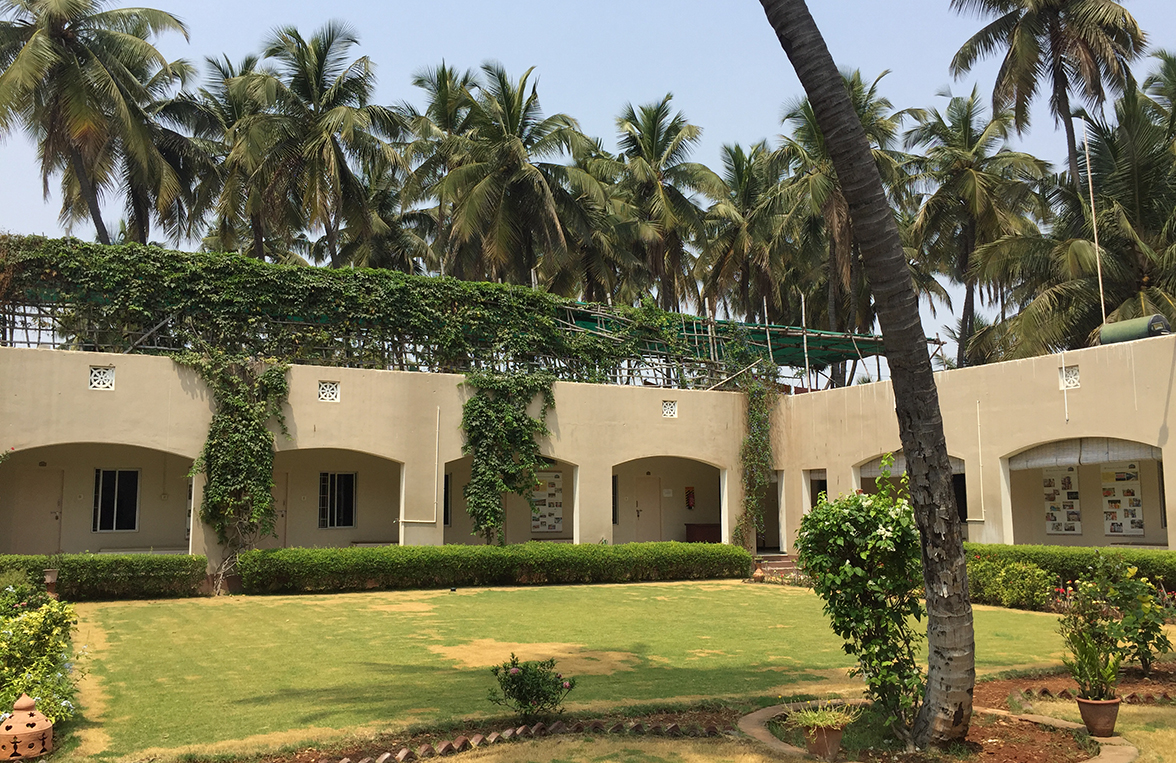
YSS Ashram in Coimbatore
The kendra is designed for those seeking a serious retreat, away from distractions. In fact, it's common for visitors to spend entire days without leaving, dedicated completely to meditation and introspection. The place's routine is peaceful: meditations, readings, walks in the garden... nothing more, and believe me nothing more is needed.
An interesting thing about this kendra is that it's part of a network of YSS centers throughout India. If you're planning a spiritual trip through the country, you can combine stays in several of them: Chennai, Ranchi, Noida... each has its personality but all maintain that atmosphere of devotion and simplicity that characterizes the organization.
Something you might wonder is: what exactly do you do in a place like this? Well, that's the point. It's not so much about "doing" as about "being." It's curious how in our daily lives we go from one activity to another without stopping, and rarely do we give ourselves the space simply to be with ourselves. A kendra like this gives you that time, that silence that's so hard to find day to day.
It's important to mention that YSS organizes special celebrations during the year, like the mahasamadhis (death anniversaries) of Sri Yukteswar and Paramahansa Yogananda. These are very special moments where devotion is lived intensely and beautifully.
Coimbatore itself is an interesting city. It's quite modern and industrial, but is very close to beautiful natural places. An hour and a half away is the famous Isha Yoga Center of Sadhguru, which also deserves a visit if you're in the area. The combination of both places makes Coimbatore a perfect destination for those seeking profound spiritual experiences.
As for logistics, getting to Coimbatore is relatively simple. It's well connected by night buses from other cities in south India, and although the journey may be a bit bumpy (Indian buses are what they are), it's worth the effort.
Things to Visit in Coimbatore
Besides the kendra, Coimbatore offers other interesting options. There's an excellent ayurveda clinic where you can receive ayurvedic massages and medical consultations with doctors specialized in this ancient Indian medicine. Highly recommended to complete the wellness experience.
The Arya Vaidya Pharmacy, AVP
1381-1382, Trichy Road
Opp. Stanes Motors, Coimbatore - 641 018
Ph: 0422 - 4394883, 4392545 Mob: +91 73958 93999
Near Coimbatore there's also the Isha Yoga Center, one of the largest and most well-known ashrams in India, and the Nilgiri Hills (Blue Mountains), perfect for a nature escape.
Important:
If you haven't yet read the Considerations section, don't forget to do so. In this section you'll find very valuable information that can save you many headaches. In particular, there are details related to credit cards and mobile phone use that are essential.
Would you like to know my complete experience in Coimbatore? Enjoy my stay in Coimbatore, with all the details here.
Coimbatore has an airport, so the most comfortable way is to travel by plane from your place of origin. In my case, when I plan to go to Coimbatore I usually come from Tiruvanamalai, so I usually take a bus that takes about 6 hours but is very economical.
Recommended donation: 1200 rupees/day.
Stay: Initially 6 days. Extension can be requested once on site.
Chennai
An Ashram Surrounded by Nature
On the outskirts of Chennai, completely isolated from the city's bustle, is one of the most special ashrams of Yogoda Satsanga Society organization in south India. This place, which has recently gone from being a simple Kendra (meditation center) to becoming a complete Ashram with resident monks, is experiencing a transformation that promises to make it one of the most important spiritual destinations in the region.
The ashram consists of two buildings that house the rooms, chapel, and dining hall, all in the middle of a thick field of very well-maintained vegetation. A beautiful lake with varied fauna, right next to the grounds, completes a dreamlike setting. The atmosphere is one of absolute silence; during the night you only hear crickets, and the path from the dining hall to the rooms is full of frogs crossing your path.
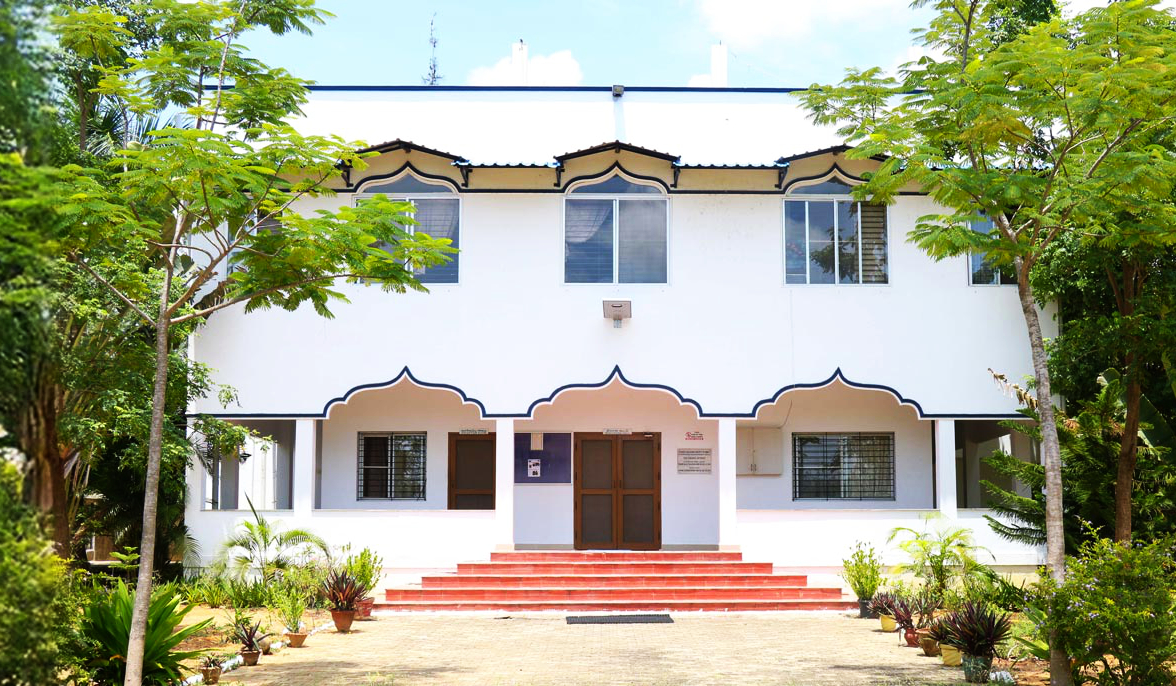
YSS Ashram in Chennai
What makes this ashram special is precisely its moment of transition. Currently there are plans underway for a major renovation that will completely transform the facilities. According to available information, the project includes a large meditation building that could be completed in about 3 years, and devotee accommodation modules that would be completed approximately 2 years later. That is, at best, it won't all be finished for 5 years. The project images are really spectacular and promise to make Chennai a focal point of attraction for devotees throughout the region.
One of the jewels of the place is the meditation lookout, which was the first structure built in the ashram. With views of the serene Mannur Lake, this space has become a sacred place for meditation. It was recently renovated, expanding both in height and size, and offers a perfect refuge for contemplative practice with privileged views.
Lake lookout
An Ashram in Full Evolution
The fact that it has gone from being a Kendra to becoming an ashram has already had its impact on current facilities. The meditation room is now a true proper meditation room, well-equipped and very welcoming. Additionally, the presence of three resident monks adds a special dimension to the place, as it's possible to meet with them easily at any time to receive spiritual guidance.
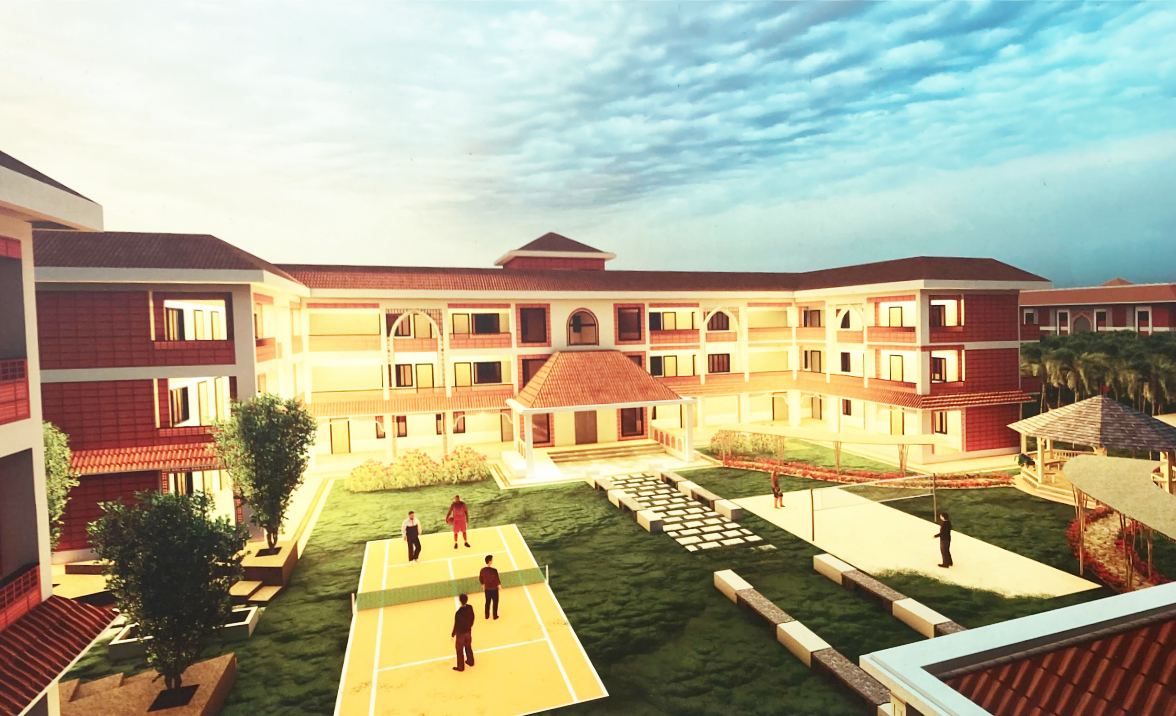
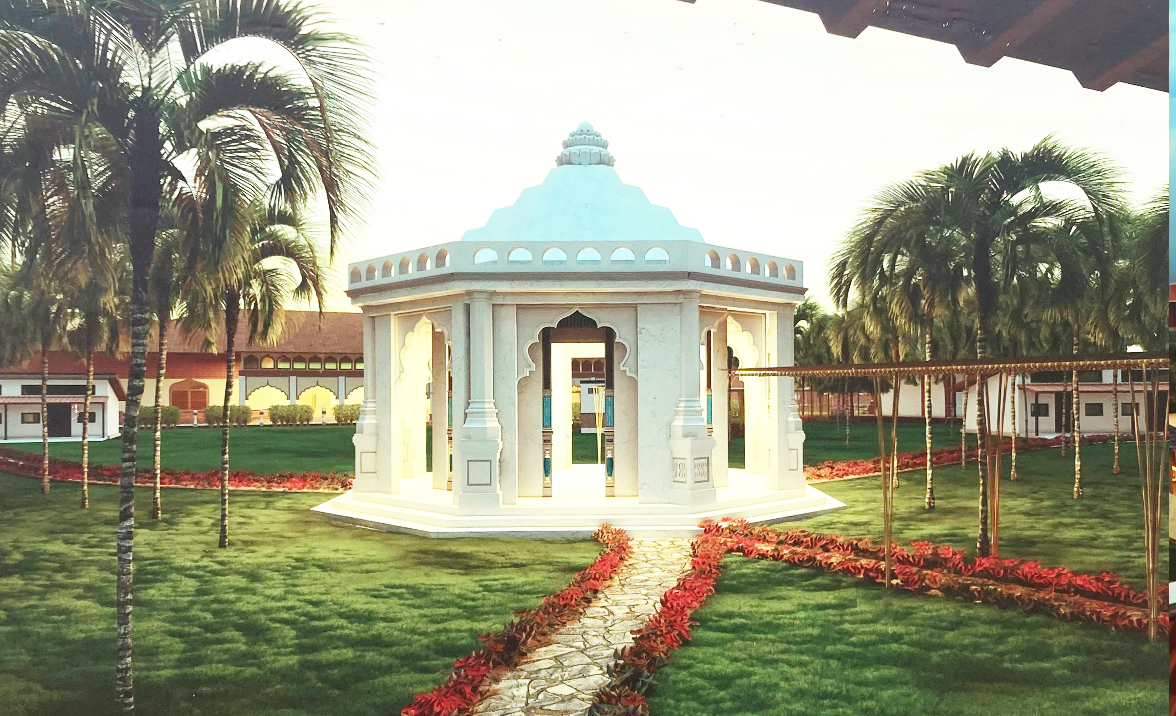
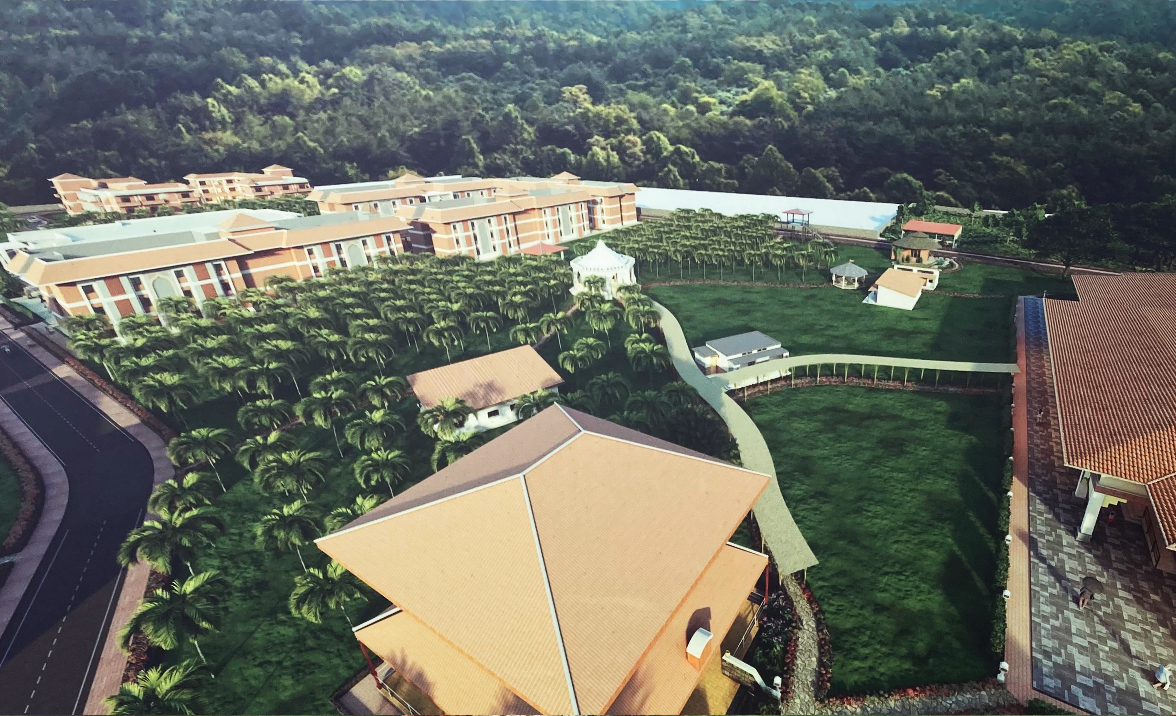
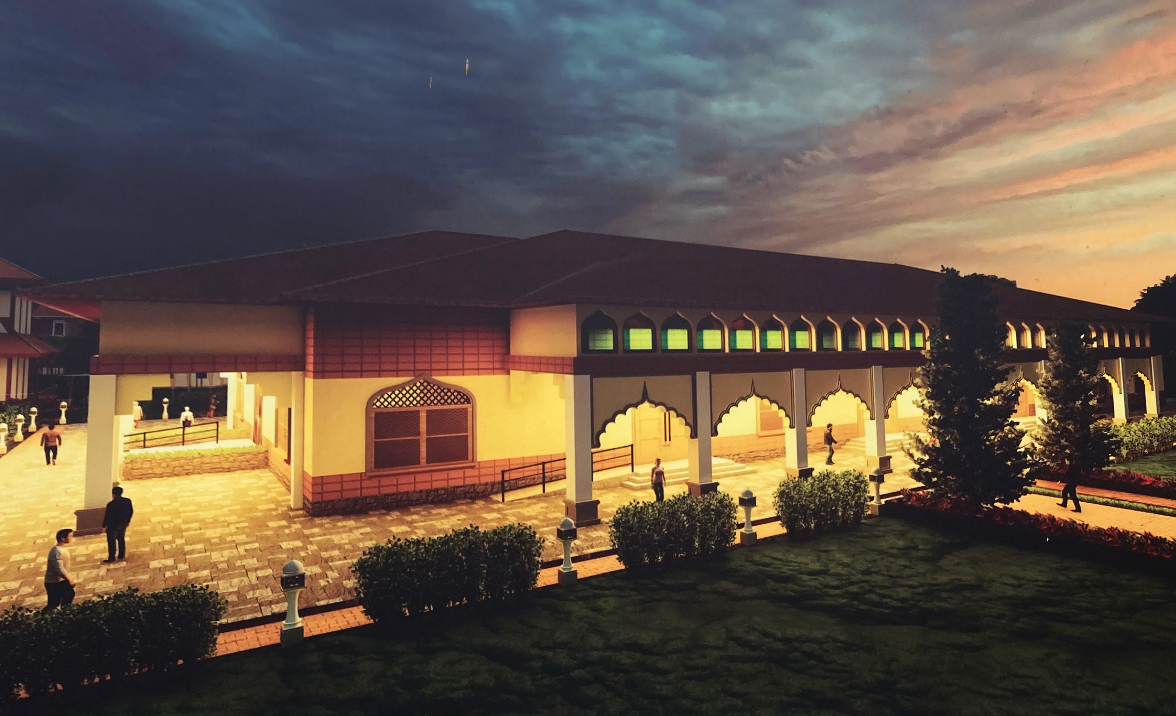
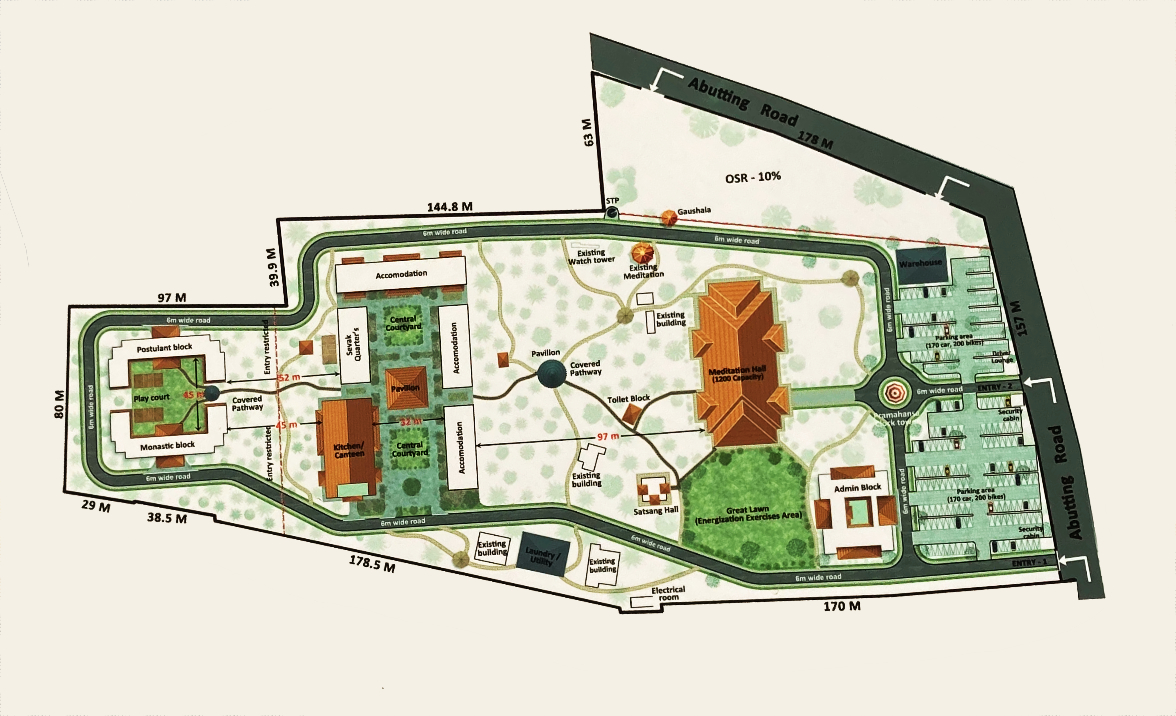
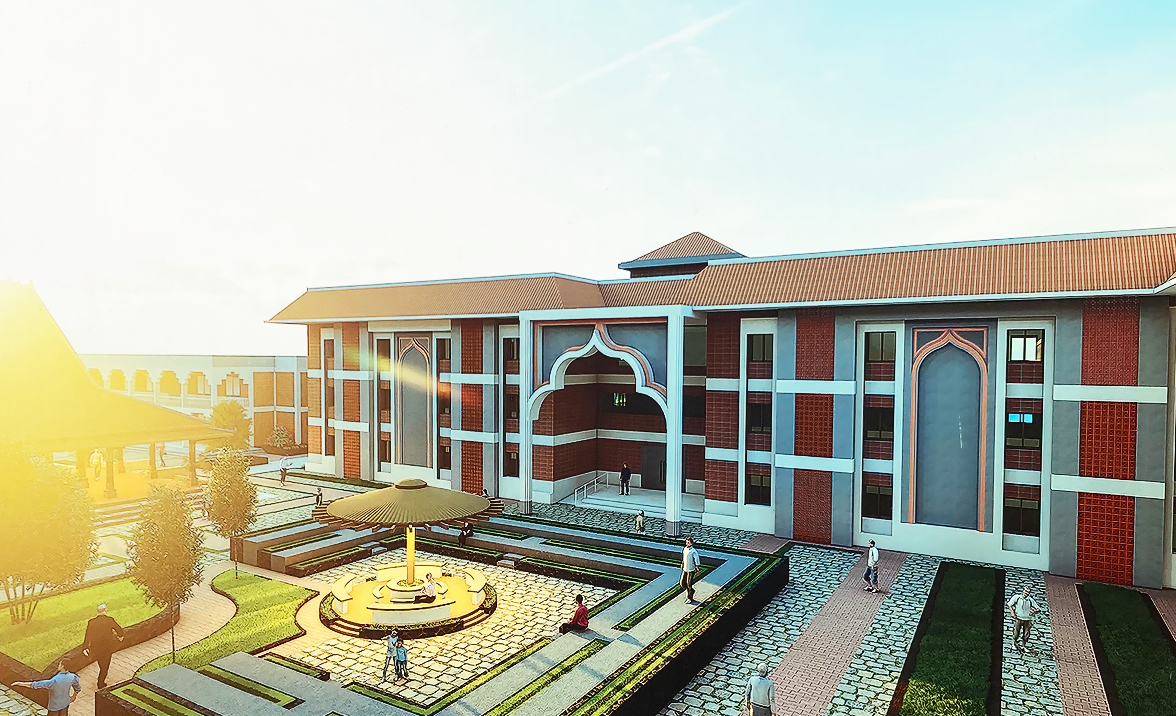
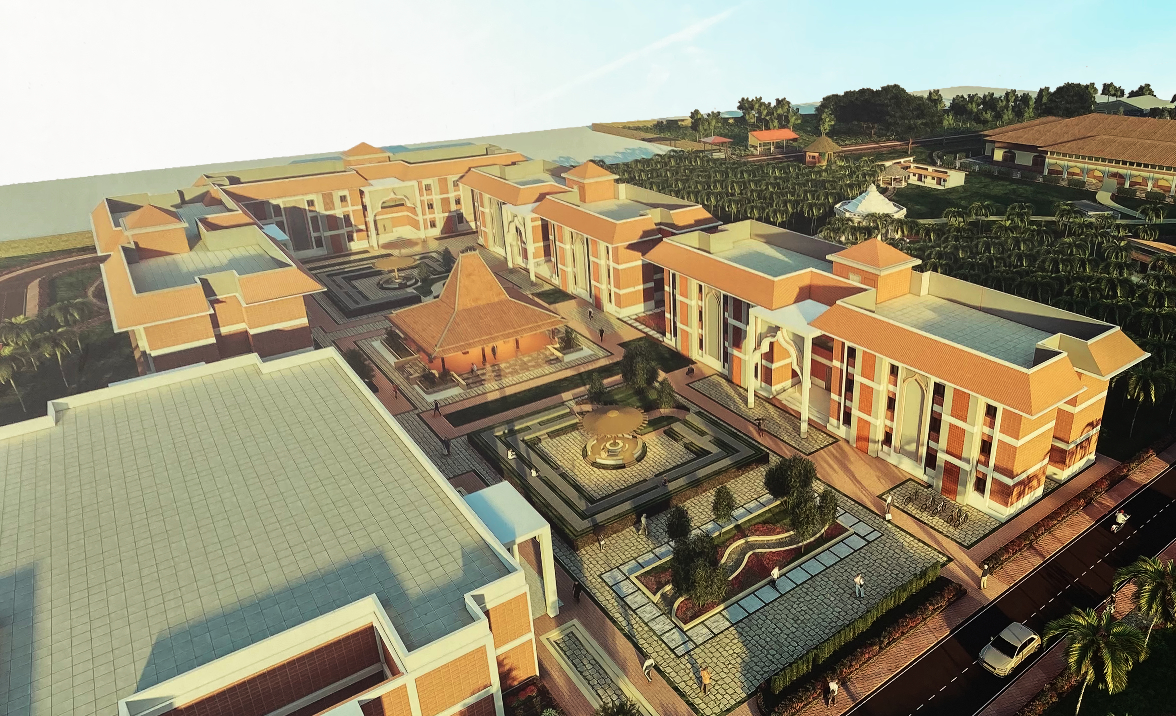
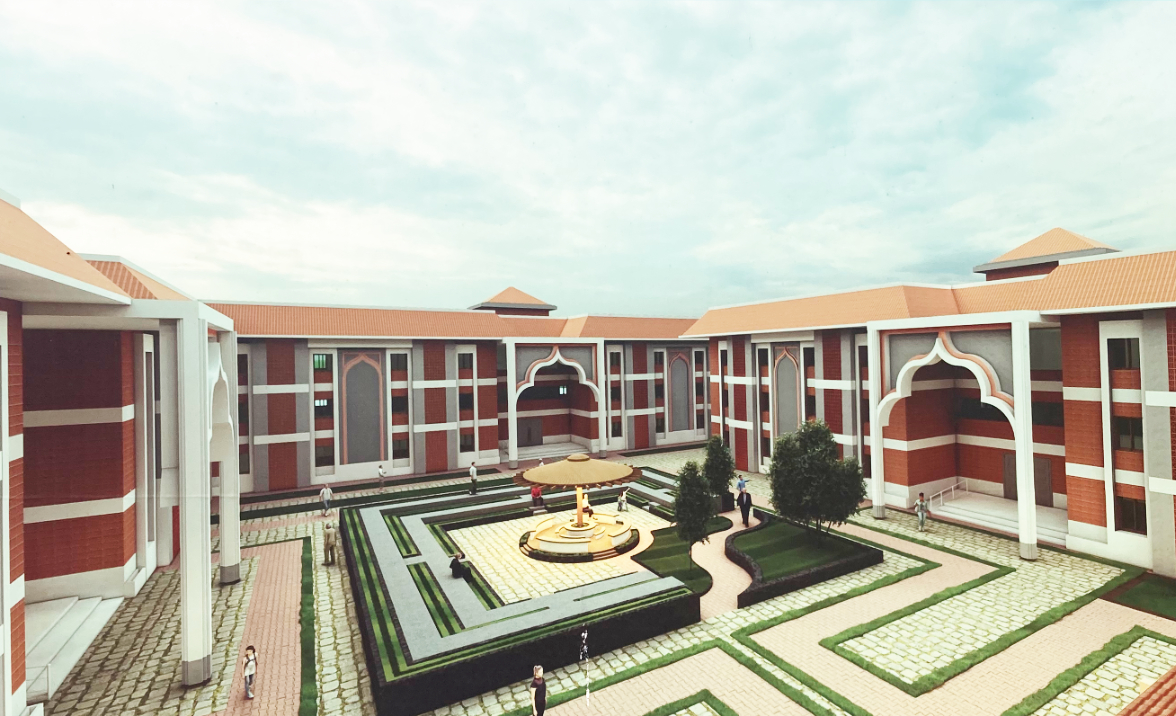
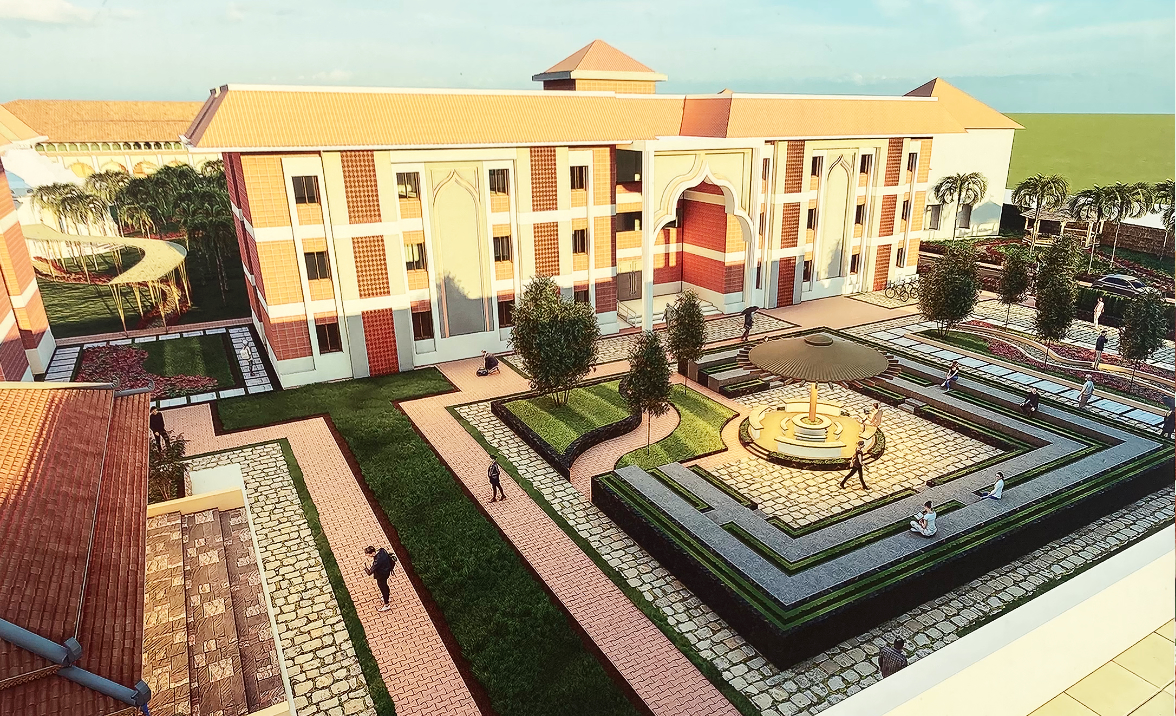
The new Ashram project in Chennai
A charming detail of the ashram are the signs distributed everywhere with quotes from Master Yogananda. While walking in silence through the gardens, you can receive inspiration from his wisdom and advice, which adds a special dimension to contemplative walks.
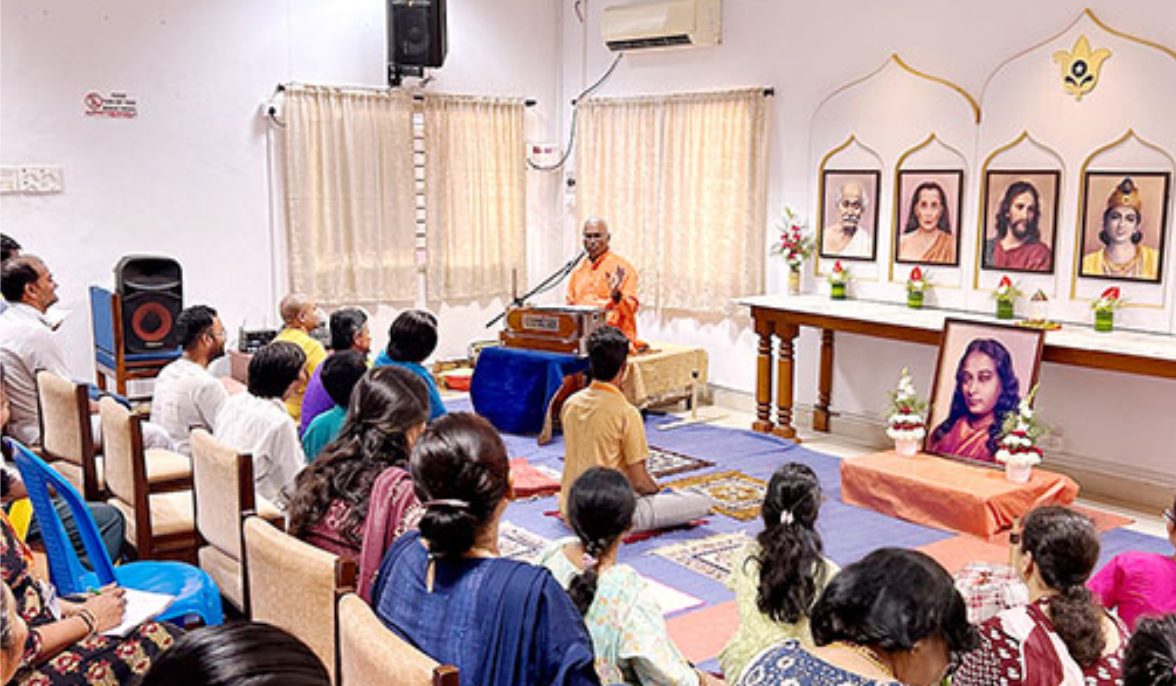
Meditation room
The Natural Environment
The ashram is immersed in a jungle-like environment that's part of a natural bird reserve. The grounds have several places that help connect with nature and deepen meditation. These include an altar in the garden, a gazebo, and a lotus pond. The place houses a great variety of coconut and mango trees, many varieties of flowers, and a vegetable garden. With strategically distributed benches, this environment allows you to relax in body, mind, and spirit.
In November, at the end of the monsoon rains, the climate feels with the typical stuffiness of tropical areas. Nights can be a bit heavy and there's a presence of mosquitoes, something normal in this type of jungle environment. The ashram burns incense to drive them away, although given the size of the place, it's inevitable to encounter some.
The environment can surprise you with the occasional appearance of monkeys, pheasants, or dragon lizards. There are also cows at the ashram that visitors can feed, a simple activity but one that connects with the Indian tradition of reverence toward these animals.
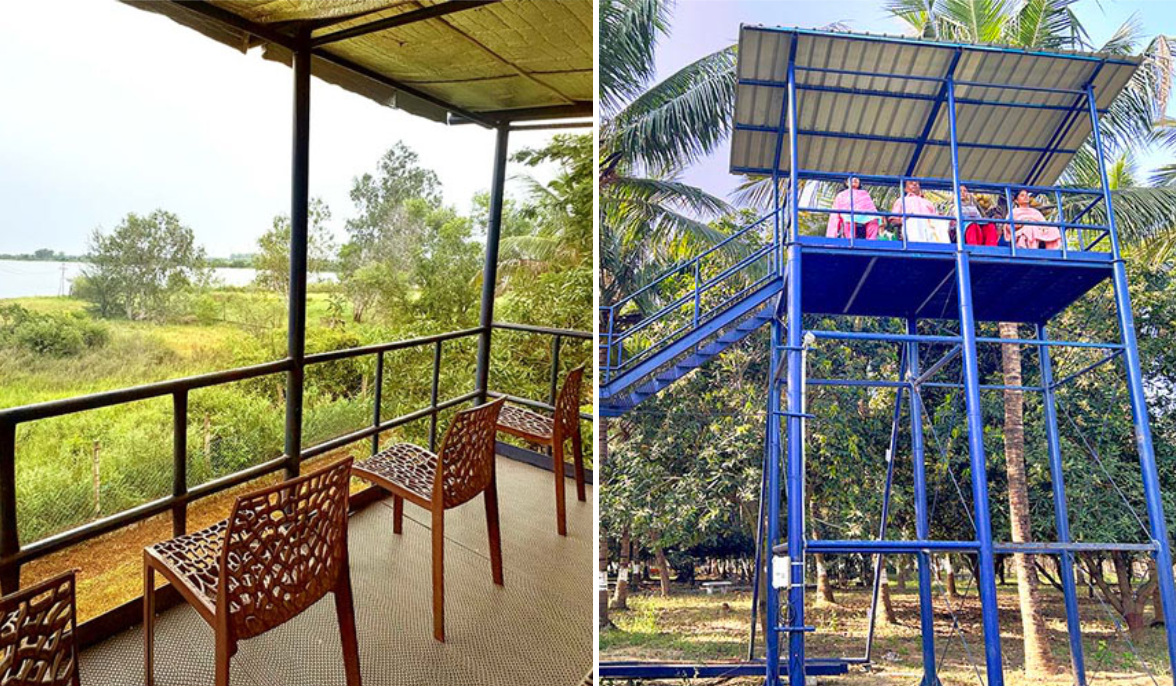
Renovated lookout
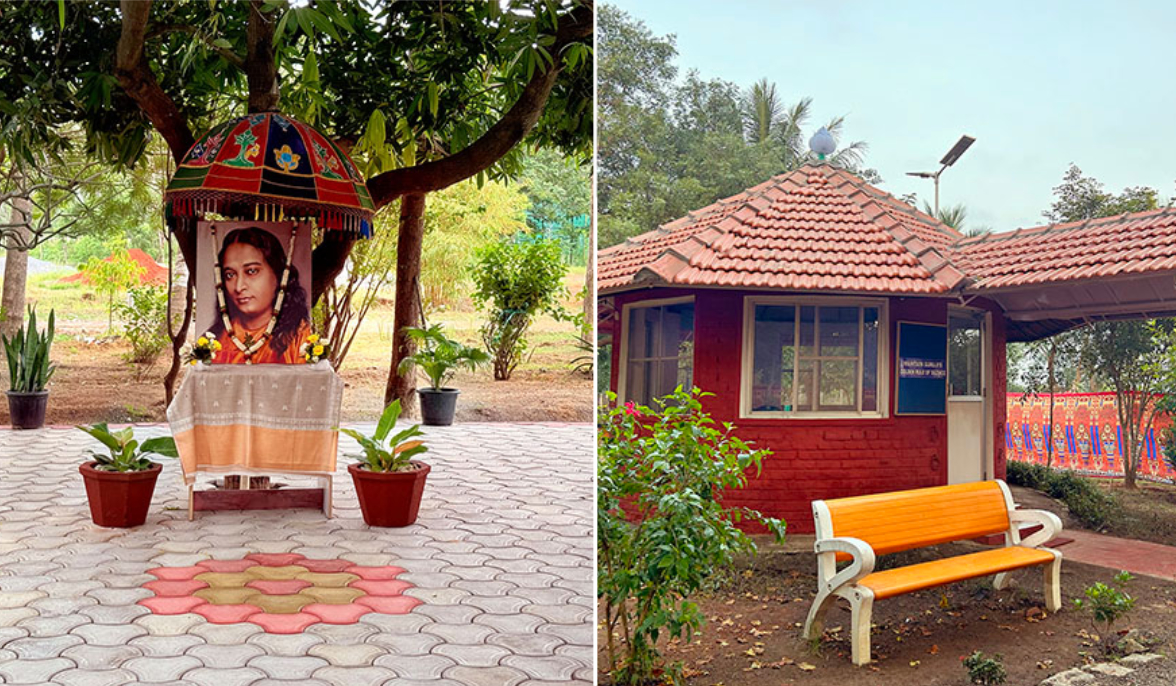
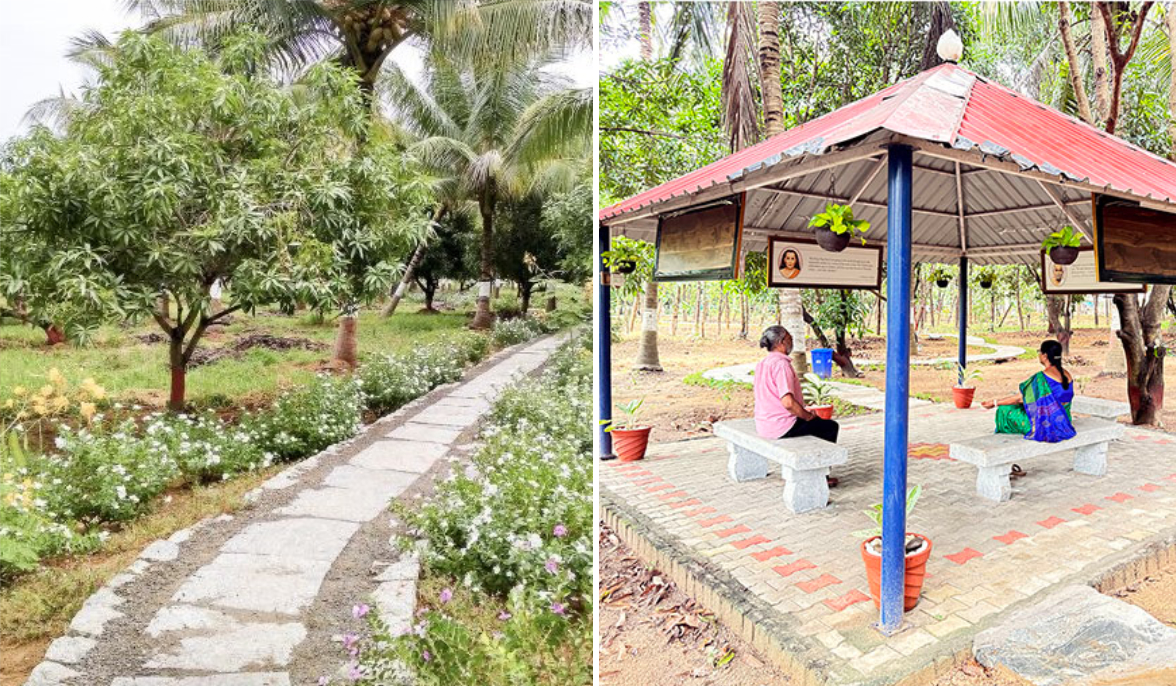
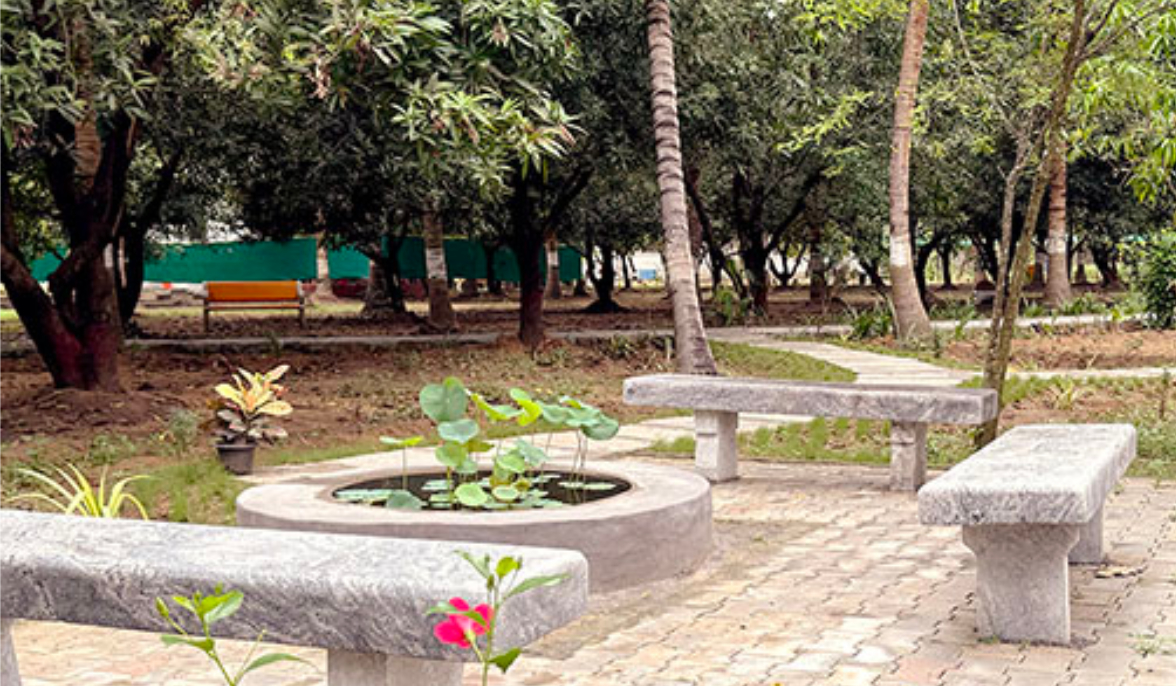
Meditation spaces and gardens
How to Get There and Get Around
Getting to the ashram from Chennai airport can be a bit complicated. The address is not known by local taxi drivers and when you use Uber to indicate the route, some taxi drivers reject the ride. At the airport, it's necessary to take a small shuttle that takes you to the taxi pickup point.
The taxi journey from the airport can cost around 2,500 rupees and take approximately an hour and a half, especially if you travel during rush hour when Chennai's traffic jams are monumental. It's advisable to be patient and, if necessary, show the exact address to the driver using Google Maps.
To leave the ashram, you can take a taxi to Chennai's bus station (about 45 minutes and 1,200 rupees approximately). From there buses constantly leave for different destinations in south India. It's easy to find the bus you need; you just have to ask and people will direct you. For example, a bus to Tiruvannamalai costs about 200 rupees (2 euros) although the journey is about 6 hours, a good option if you prefer to save money over a taxi.
An Ideal Place for Retreats
The Chennai ashram is perfect for those seeking to do a serious spiritual retreat. Most visitors spend their days between meditations, readings in their room, walks through the gardens, and visits to the lookout. It's a place where you can really disconnect from the outside world and dedicate yourself completely to your spiritual practice.
Interestingly, there are quite a few people doing retreats here, even more proportionally than in other better-known places like Ranchi or Dakshineswar. The atmosphere is one of welcome and connection among devotees, which adds value to the experience.
The ashram staff is extremely kind and helpful. In fact, it's not uncommon for them to offer to help you buy train and bus tickets online for your next destinations, something of incalculable value when traveling through India as a tourist.
Is It Worth Visiting Now?
Although the place still has 5 years to go before being what the project proposes, today it's a fantastic place for retreat. The atmosphere in the meditation room and walks through the extensive gardens embrace you in an extraordinary way. For anyone traveling to south India seeking spiritual experiences, Chennai is an almost obligatory stopping place.
When the works are completed, the Chennai ashram will undoubtedly become a must-visit place and probably an important focal point of attraction for devotees throughout the region. It will be exciting to see the finished project, but meanwhile, the current ashram already offers an authentic and profound experience for those seeking to connect with their spiritual practice in an exceptional natural environment.
The main attraction is spiritual retreat: meditations in the room or at the lookout, contemplative walks through the gardens, bird watching at the lake, feeding the ashram cows. It's a place to completely disconnect and dedicate yourself to inner practice.
Keep in mind that the environment is tropical with mosquito presence, especially during monsoon season (June to November). Bring insect repellent. Clothing should be modest and respectful of the ashram environment. It's advisable to bring light cotton clothing due to the humid and warm climate.
Important:
If you haven't yet read the Considerations section, don't forget to do so. In this section you'll find very valuable information that can save you many headaches. In particular, there are details related to credit cards and mobile phone use that are essential.
Would you like to know my complete experience in Chennai? Enjoy my stay in Chennai, with all the details here.
Chennai has an airport, so ideally you should travel by plane from your place of origin. Once you leave the airport, a recurring shuttle, right at the exit, will take you to the taxi point where you should arrange an Uber to take you to the ashram. It will take an hour and a half and the cost is about 2500 rupees.
Email: chennaiashram@yssi.org
Website: click here.
Recommended donation: 1200 rupees/day.
Stay: Initially 6 days. Extension can be requested once on site.
Conclusion
The Network of YSS Ashrams and Kendras in India
The network of ashrams and Dhyana Kendras of Yogoda Satsanga Society in India offers a unique infrastructure for the spiritual devotee. Each place has its special character and offers different opportunities. Ranchi is the heart of YSS, ideal for initiations and major celebrations. Dakshineswar is the perfect starting point for exploring Yogananda's life in Calcutta. Dihika offers an intimate connection with the master's beginnings. Puri allows veneration of Sri Yukteswar by the sea. Jammu provides devotional hospitality and access to Adi Shankaracharya. Noida is the gateway with deep devotion. Coimbatore offers tranquil and focused retreat. Chennai presents jungle-like nature and a growing project.
All these places share an atmosphere of deep devotion, exceptional cleanliness and care, nutritious vegetarian food, opportunities for deep meditation, and a welcoming devotee community. Planning a trip through these places allows the devotee to completely immerse themselves in the master's energy, deepen spiritual practices, and experience Yogananda's India firsthand.
Doing pre-pilgrimages of a month or twenty days touring the ashrams and Dhyana Kendras of Dakshineswar, Ranchi, Dihika, and other places can have a huge impact on your spiritual progress. If you also take advantage of the trip to coincide with some event, like a mahasamadhi or a birthday, the experience will be even deeper. This is the best investment one can make with one's life; everything that happens here is of incalculable value, and it's forever and ever.
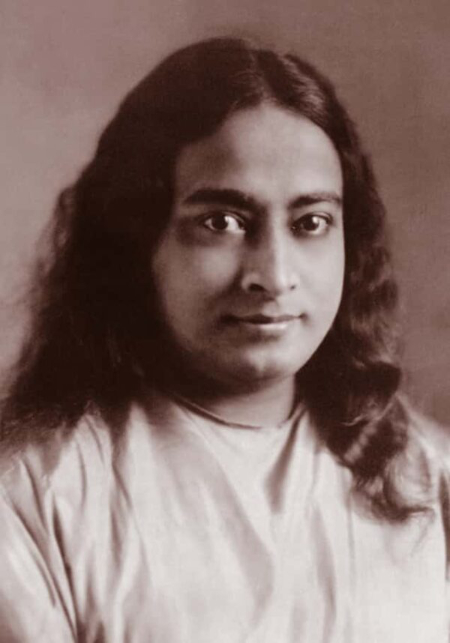
You serve the Guru, the Guru is the guide, the Guru responds