Kriyaban
Travel log by a Yogananda devotee

Better readingon large screen:www.kriyaban.es
If you want to visit the YSS Kendra in Jammu, "the city of temples", you should know that it is not set up to host devotees in retreat mode, as are the ashrams or other Kendras. It only has two rooms to receive the monks when they visit the place and need to stay during the celebrations.
I have been fortunate that one of the devotees, Vikas, is a friend of mine, and he has pulled strings so that I can stay in one of these rooms exceptionally during my stay in Jammu. It seemed like tremendous luck to me since, in my enthusiasm to know the ashrams and Kendras in India, I wanted to visit this place without knowing beforehand if it was possible. My only purpose in visiting Jammu was to know the Kendra and its devotees, and thanks to the master who has led me here it has been possible; "you serve the Guru, the Guru is the guide, the Guru responds."
The Kendra and its devotees
The Jammu Kendra is large, even larger than some YSS ashrams in India. For those who don't remember what a Kendra is, I leave the definition at the bottom of the page.
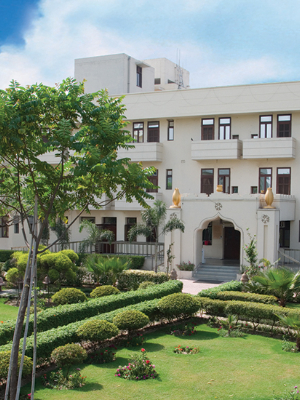
When I entered the premises, the facade of the main building—the meditation hall—with its lawn area right in front for doing the energization exercises, is really beautiful. It gives you the feeling that you have arrived at an important place. I liked the number of pictures hanging around the premises, on its periphery, with images of the master's life. Many of them were already familiar to me; however, some were new to me and I enjoyed it very much. I love discovering new things about the master's life.
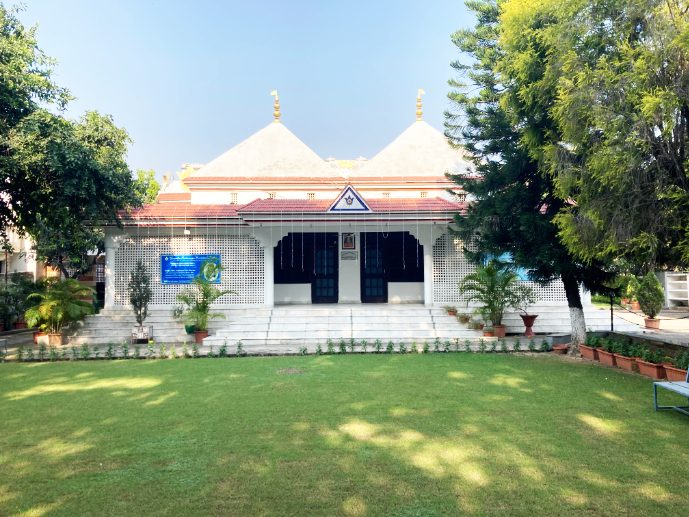
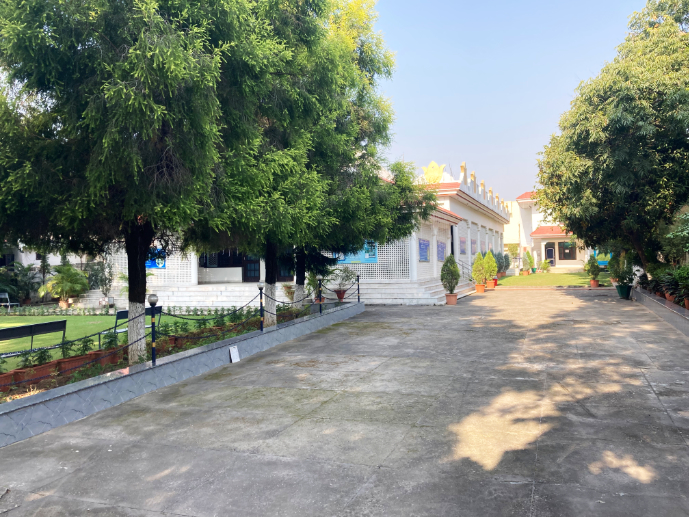
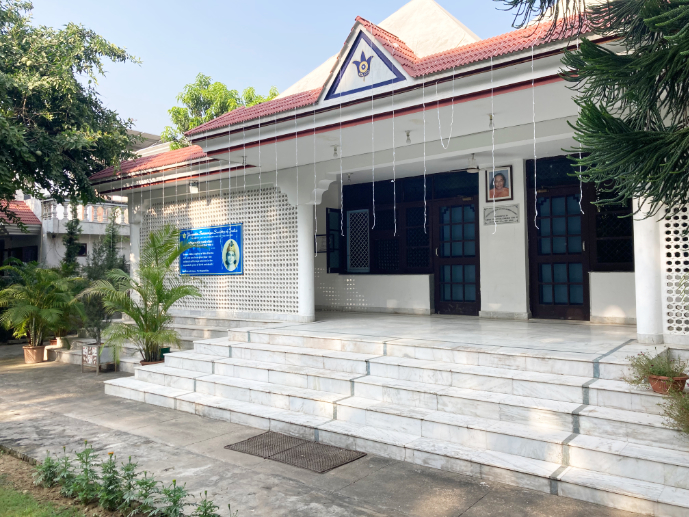
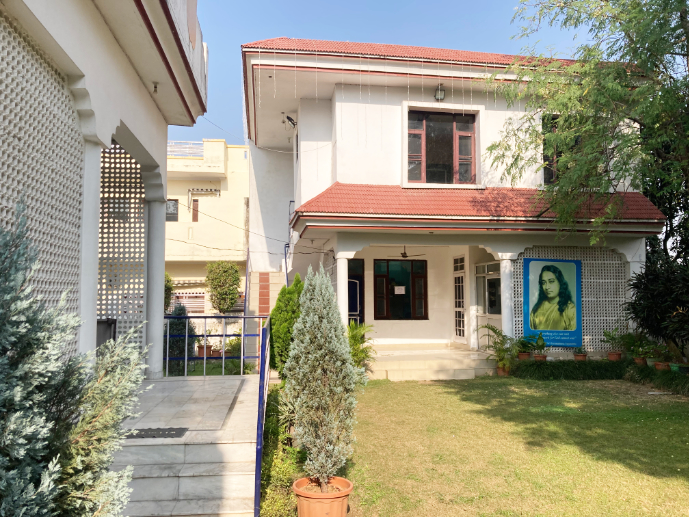
Images of the Jammu Kendra
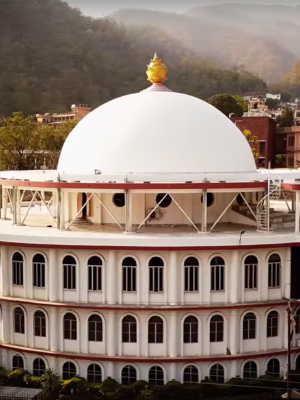
Once inside the main building, the meditation hall is huge and with very good energy; you really feel very good in it, wanting to meditate without interruption. I love the ritual they carry out before starting the meditation session, in which with a candle in front of the masters they make a movement in the air drawing an infinity symbol and then they sound a seashell... it's really amazing.
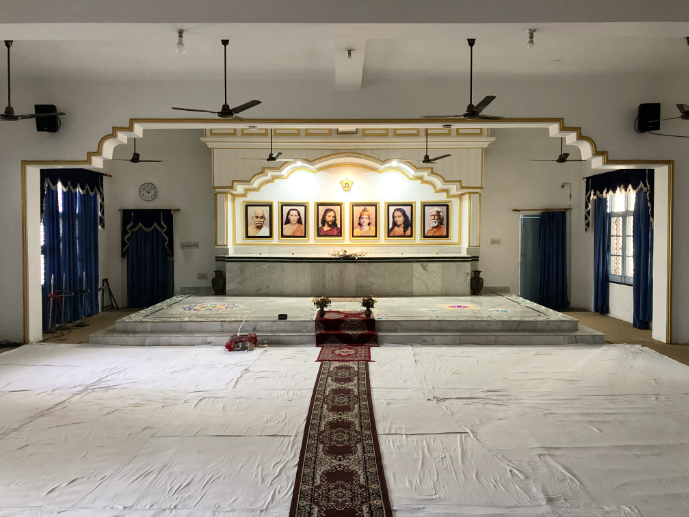
Image of the meditation hall
In my first meditation with a large group of devotees, I was mentioned as a visiting Spanish devotee and it made me happy, because this is something that I have always experienced in reverse and now that it was my turn to be introduced I found it fun. At the end of the meditation, some devotees came to greet me and to be interested in my stay at the Kendra. I liked it a lot; it's something that generates a very good feeling of welcome.
During my stay I have been able to interact with some devotees and it has been beautiful. Those with whom I have had the most contact have completely devoted themselves to helping me and making my stay the best possible; "you serve the Guru, the Guru is the guide, the Guru responds."
The daughters of Maya, the elderly lady, and herself, who in turn are residents at the ashram and take care of it, carried me on their shoulders and I ended up becoming very fond of them. With none of them could I communicate in English, so with sign language with our hands we understood each other. Sometimes, when Maya, the elderly lady, spent minutes telling me things, I ended up laughing at how comical the situation was in which all I could do was nod while she told me everything as if nothing was happening; they are really charming.
Thanks to all of them I have learned a lot about true hospitality, that which is done with the heart and in an act of service.
My room turned out to be a very cozy place, a space that became the ground zero of my comings and goings during the ten days that my visit to Jammu lasted. Thanks to the weather at that time of year, I was able to enjoy being able to sleep well without being cold or hot, so I can say that October and November are good months to drop by here.
The icing on the cake was put by a water kettle and some coffee sachets that allowed me to have moments of lost gaze at the garden with a very hot cup in my hands, and the master thinks of everything.
How events are celebrated in Jammu
From the first time I visited India in 2020, I realized that devotion in this country is lived in a different way: more intense, manifest and respectful. The country has a religious and spiritual tradition that permeates its culture and its people. This is reflected in the fact that, during events tied to the celebration of special days, devotees pour themselves in with incredible love and dedication—because for them, everything is an act of service, love, and surrender to God and the Guru.
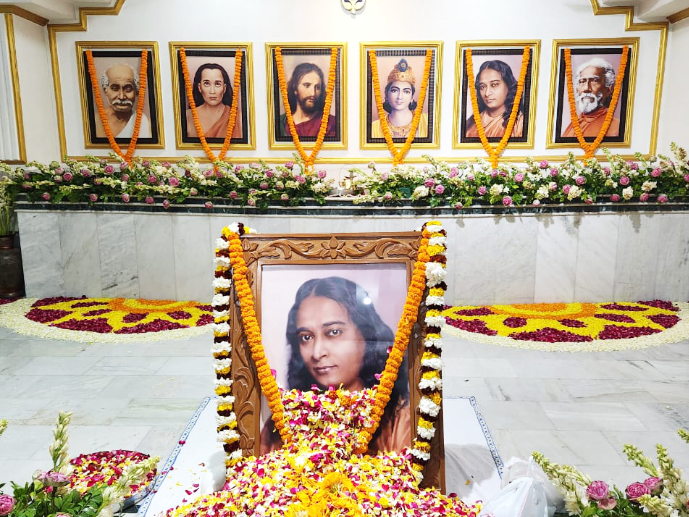
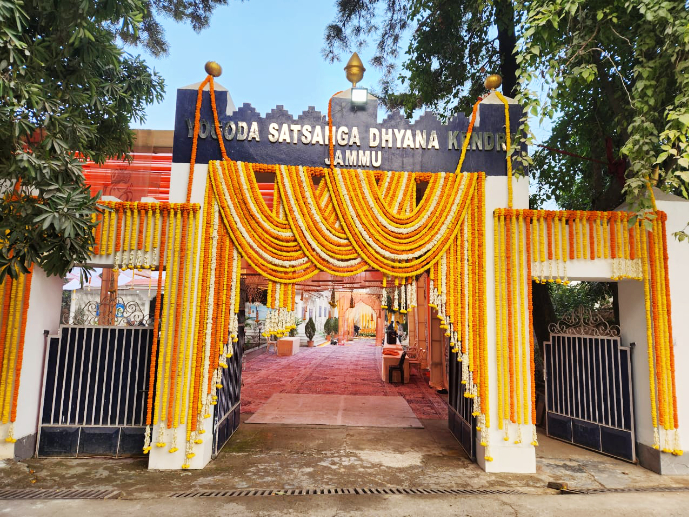
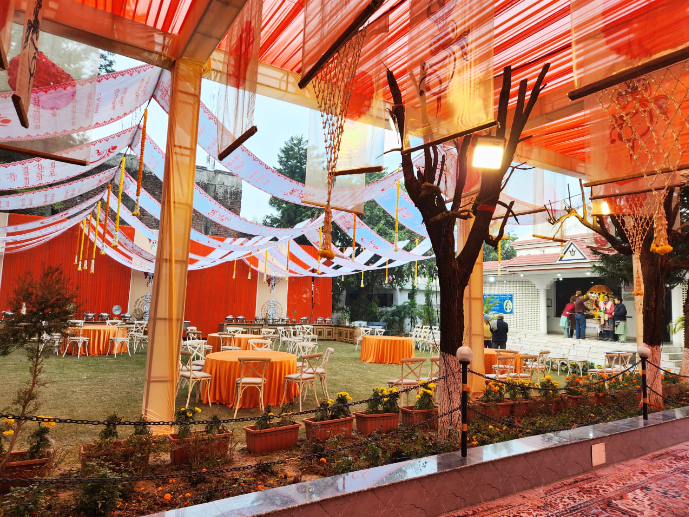
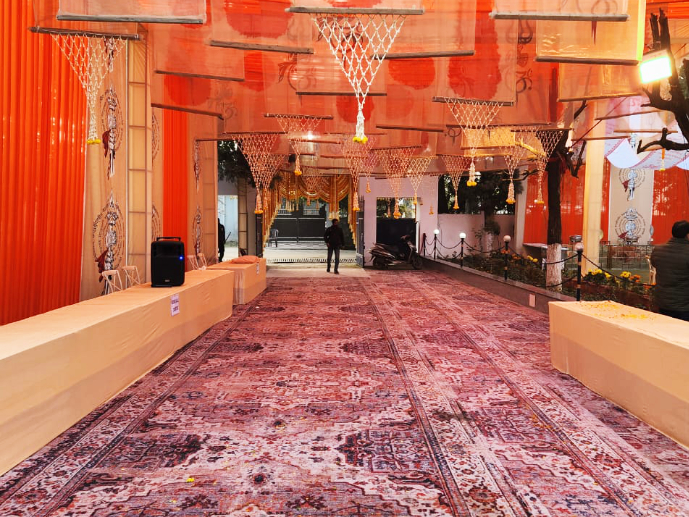
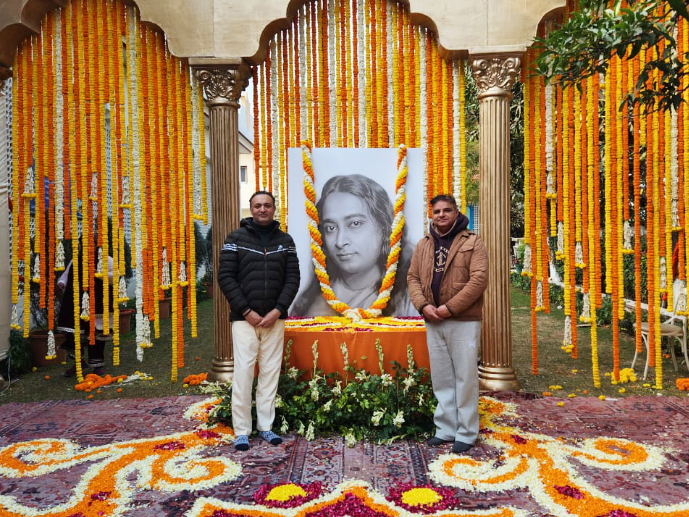
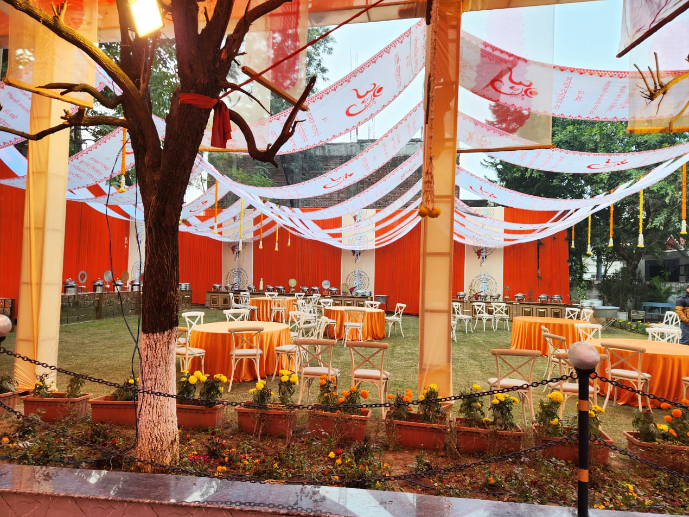
Celebrations at the Jammu Kendra
My arrival in Jammu
I arrived in Jammu from Delhi, after having spent a few days in Vrindavan. The Jammu airport is very small and as soon as you get distracted you are outside the premises in the middle of the street negotiating a taxi with a group of turbaned Sikhs. The Sikhs are followers of Sikhism, a monotheistic religion founded in the 15th century in the Punjab region (northern India) by Guru Nanak and therefore very present in this region.
While we were figuring out how to get to the Kendra and facing a price always on the rise for being a tourist, in the end I had to give in by raising my hands to the sky saying "oh well, what can you do", to which everyone chorused with me something I couldn't decipher but which made them laugh. And the thing is that on this trip I have decided not to be bothered by the issue of money and costs; in the end we are talking about a few euros and it's not worth it to me to enter into bloody negotiations. This attitude, it must be said, does not help those who come after, but this is my fourth trip to India and I deserve it!
The SIM card
What headaches on this 2025 trip with the mobile phone SIM card. As a result of some terrorist attacks in the Indian part of Kashmir at the beginning of the year, security measures have been tightened and among them it has made it very difficult for foreigners to buy SIM cards for mobile phones. Only at some airports or through contacts or tricks is it possible to solve this issue.
I, thanks to the Guru, met a guy in Ranchi who offered to help me with this, buying a SIM card for himself and giving it to me for my use. Imagine what a wonder. Having to be connected to the internet for work issues, for me this matter is vital and having been able to solve it gives me life.
However, and as a result of the national security problems mentioned, upon arriving in Jammu, already at the airport itself I discover that my SIM card stops working and I begin to suspect that, since Jammu is 50 km from the border with Kashmir, this region must have a tougher regime in these matters, and so it is. So much so that my card purchased in Ranchi does not work in this territory of the country. Without a SIM card I have no data and without data I can't tell the taxi driver where he has to take me, so imagine the situation that lies ahead. At the Jammu airport I discover a shop where they sell SIMs, but after an hour of queuing the guy doesn't want to take care of my case and dismisses me without consideration. In that situation I manage to rescue from my WhatsApp an image sent previously by my host with the address of the Kendra, and that's what I use to make myself understood with the taxi driver. Luckily, the taxi driver types the address into his Google Maps and voilà, we have a destination!
Once at the Kendra and having met with my host Vikas, so that I don't remain orphaned of internet connection during the twenty days of my stay in Jammu, he lends me one of his SIMs. Again the master is in everything; "you serve the Guru, the Guru is the guide, the Guru responds."
Vikas, the host
Vikas is a beautiful and living testimony of the action "you serve the Guru". All his action as a host from the first moment is in serving the Guru, and his constant help and attention to me is an act of surrender and love to the Guru, which I enjoy: thanks to the Guru. Finally it's a very beautiful circle.
My plan in Jammu is simple: to be at the Kendra enjoying the tranquility, reading, writing and meditating in the beautiful hall. But Vikas comes with a desire to make me dance and has it in his head to take me out to see things, all religious and spiritual of course. I don't oppose and I flow, and from everything he proposes to me what I finally want to highlight is the visit to a Shiva Lingam related to Krishna in a cave and my three-day trip to Srinagar, a place where the founder of the order of Swamis, Adi Shankaracharya, was, since it is known that he visited the Kashmir region; something I will narrate next.
Returning to Vikas, my fantastic host, it fills me with joy to have had the opportunity to meet his family, and I have felt very loved and well received by all of them. I will always remember the beautiful hugs that his father, already elderly, gave me, and the talks with his children about their university careers. I even had the opportunity to meditate with Vikas in his meditation room, which is simply amazing; it's like a temple but small.
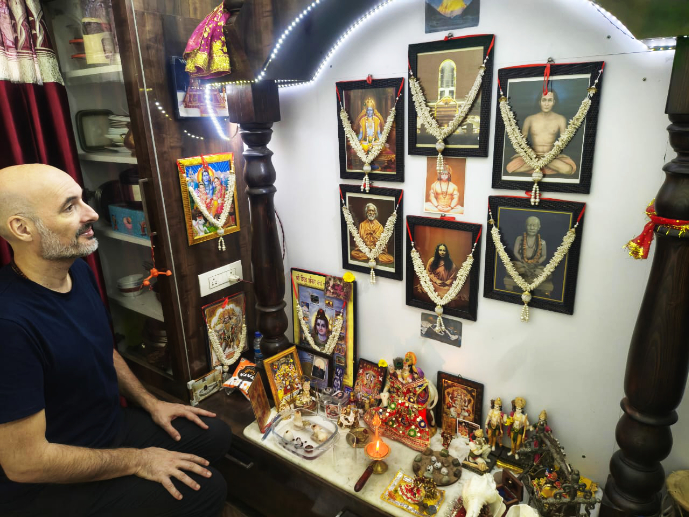
Meditation room at Vikas's home
Right there, he taught me the details of the lamp and shell ritual, and also accompanied me to buy the same lamp to do the ritual myself at home.
At Vikas's house I meditated, I was with his children, with his parents, we did the energization exercises on the roof, I stayed overnight and the next morning his wife took me back to the ashram, a moment we took advantage of to continue talking about India, religion and her profession.
I spent my birthday in Jammu. When Vikas found out that it was my birthday that same day, he changed plans to take me to spend the afternoon, as a birthday gift, to one of his favorite places: an extensive and protected area, full of beautiful vegetation and with a welcoming peace and silence. There we spent part of the afternoon until sunset.
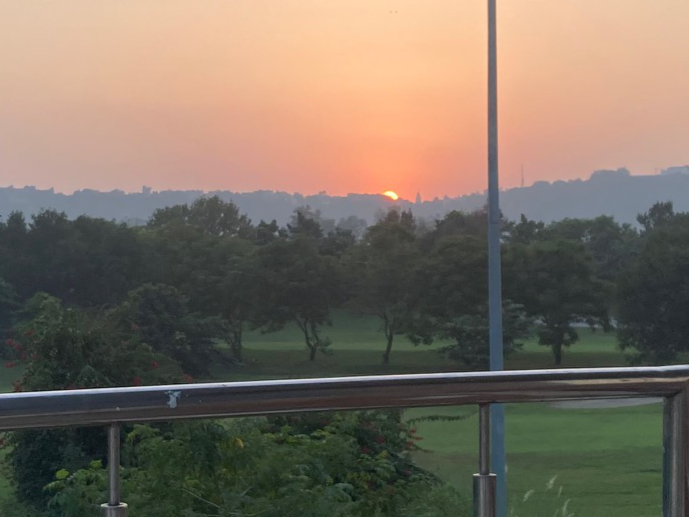
Sunset on my birthday
One thing I love about Vikas is that relationship he has with nature and animals. For example, whenever he arrives home he carries in his hand a packet of cookies to give to the dogs that may be on the street, and he always has some small plate with water so that the birds can drink. There is something cultural in this, and that is that in India, in many places, garbage is left piled up on the street and is not collected immediately, thus allowing dogs, cows, etc., to eat from it and not die of hunger. After a few days, the remaining garbage is collected or burned right there.
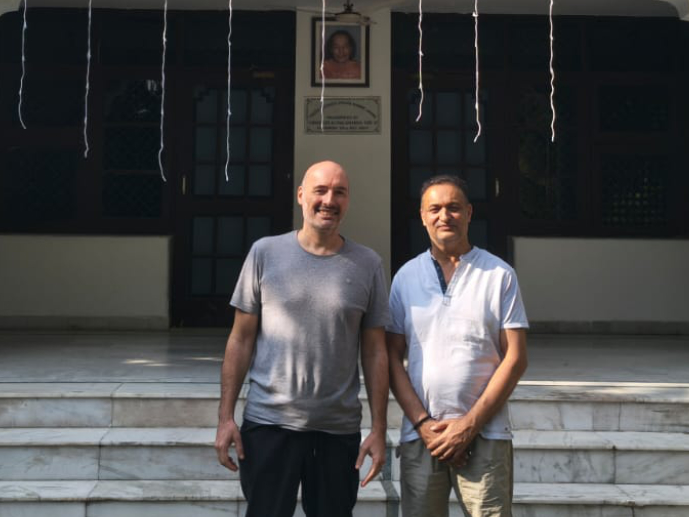
Vikas and I
Srinagar and Adi Shankaracharya
Vikas insisted and was especially determined that I go to Srinagar to visit the place where it is known that Adi Shankaracharya, the founder of the order of swamis, was. He was there and wanted for me the same experience he had. I barely knew anything about the saint's life and after having been to the place I still don't know much more, but that's not what's important. What's important is the experience; "the messenger is not what's important, what's important is the message".
I leave below a very brief explanation of who Adi Shankaracharya was and his relationship with Paramahansa Yogananda.
Adi Shankaracharya was a Hindu philosopher and spiritual reformer who lived in the 8th-9th century AD (788-820 approx.). He is known for having founded the monastic order of the Swamis (Dashanami Sampradaya), establishing four main monasteries in the four corners of India. He traveled extensively throughout the country debating and revitalizing Hinduism, consolidating the Advaita Vedanta philosophy or non-dualism: the idea that the individual soul (Atman) and the Supreme Reality (Brahman) are one and the same thing.
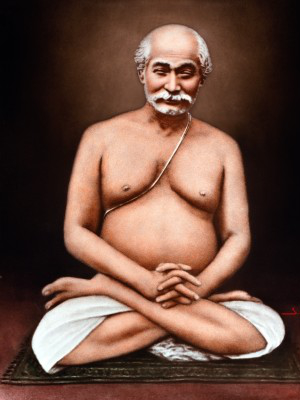
The relationship of Adi Shankaracharya with Paramahansa Yogananda is direct and deep. Yogananda and his masters (Sri Yukteswar, Lahiri Mahasaya and Babaji) belong to the Swami order founded by Shankaracharya more than 1200 years ago. Both share the same philosophy of non-dualism: the unity of the soul with God, which Yogananda expresses as "realizing that we are one with God". The Swami order implies renunciation of the world, something that Yogananda practiced as a monk throughout his life. In summary, without Shankaracharya the Swami order to which Yogananda belongs would not exist; he is the founder of his monastic and philosophical tradition.
So said and done. Vikas organized everything for me: transportation and hotel, and the next day I was traveling to Srinagar 6 hours away in a shared car. A trip on roads under construction and a lot of dust in the air, but good in the end. I arrived in time to drop my backpack at the hotel and take a rickshaw to take me to the famous place: the temple of Adi Shankaracharya. This place is a temple on top of a mountain from which you can see a great landscape, as well as the large lake.
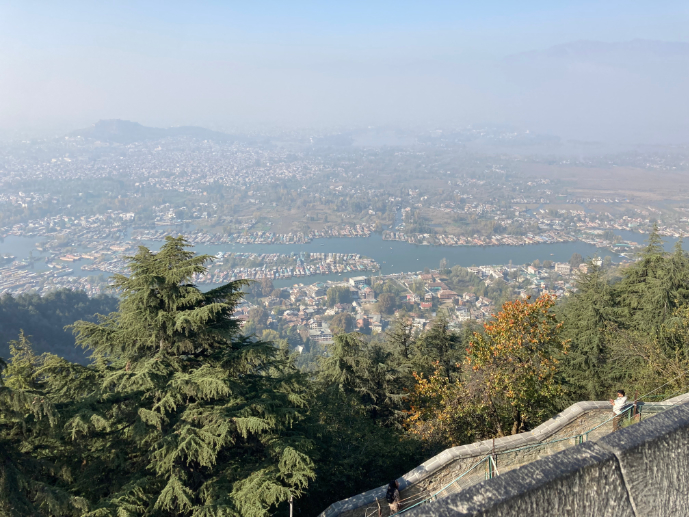
Images from the summit
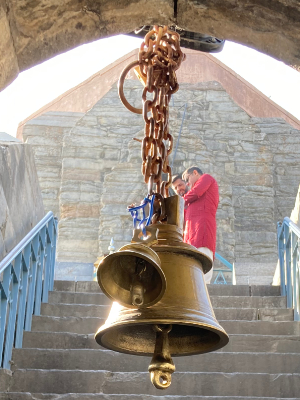
The temple is accessed by stairs with 240 stone steps, where the entrance welcomes you with a bell that you have to ring because otherwise you don't have blood running through your veins. Once at the top, the place consists of a stone temple with a hexagonal shape inside which there is a Shiva Lingam and attached a small room, "the cave" where there is an image of the saint and a fantastic energy to meditate. You enter through a small opening and inside the space is for 6 people maximum meditating. I quickly discovered a wooden bench on my left as soon as I entered in which to sit and surrender to the experience.
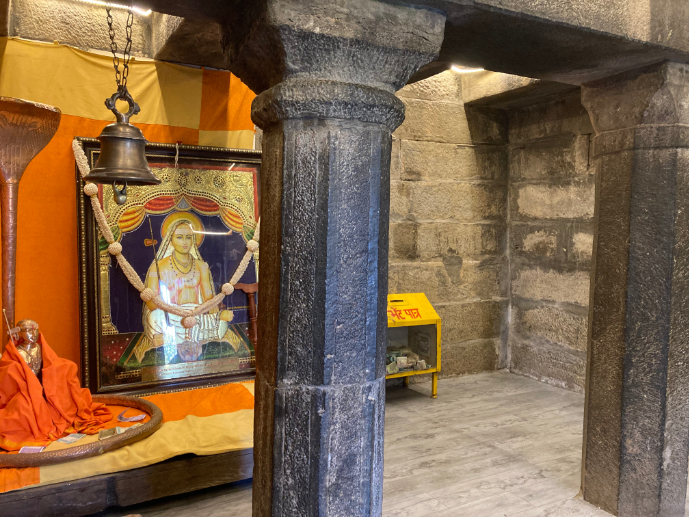
The "cave" where to meditate

On my first day, the first contact in this little corner was pleasant, nothing more. Then I approached the Shiva Lingam to make my offering and offer my prayers.
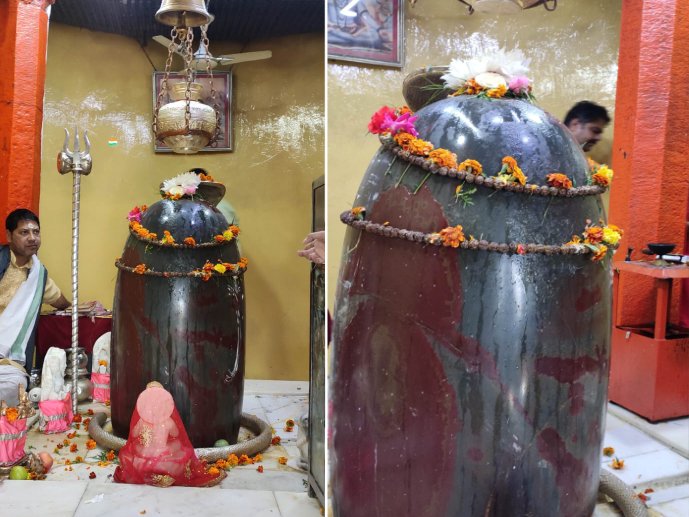
The temple with the Shiva Lingam
Finally, a little walk around the place enjoying the views and back to the hotel before the cold began to make itself felt. So on my first day that was all. With no more pretensions than these, I retired to the hotel to enjoy being collected and very comfortable, after coming from sleeping in rather hard beds.
The next day my plans were clear: go to the temple again to meditate and be there until I got bored. Again the 240 steps, my offerings, prayers to the Shiva Lingam and to meditate.
And on this occasion something changed. I wasn't there especially long, only until I felt something like "that's it", like when you fill a jar with water and once it's full everything you pour into it overflows. I then left the cave and sat on a bench to let myself be warmed by the sun. Sitting on the bench the feeling was the same as when I visited Encinitas for the first time; a mental and physical calm, peace and taste for stillness very special. I could see that there were other people with the same feeling: something that could be defined as "being pleasantly dejected".
Talking with Vikas on my return, the two of us agreed that, what does it matter if the saint was there or not, what's important is that experience that stays with you forever and that surely crossed all the dimensions of my Being surely doing me much, much good.
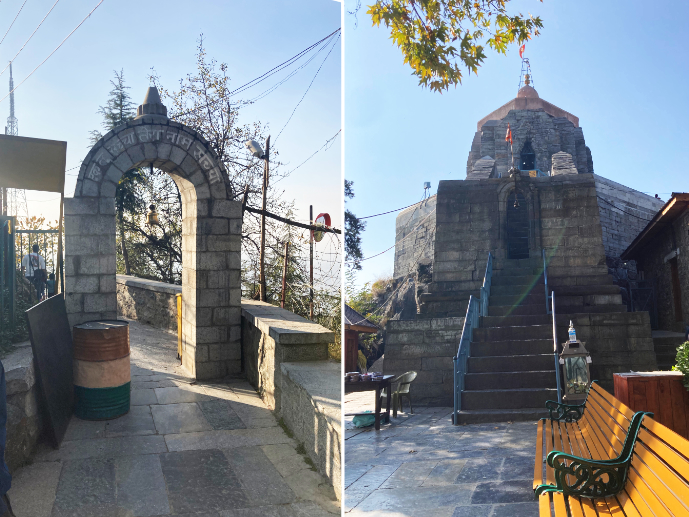
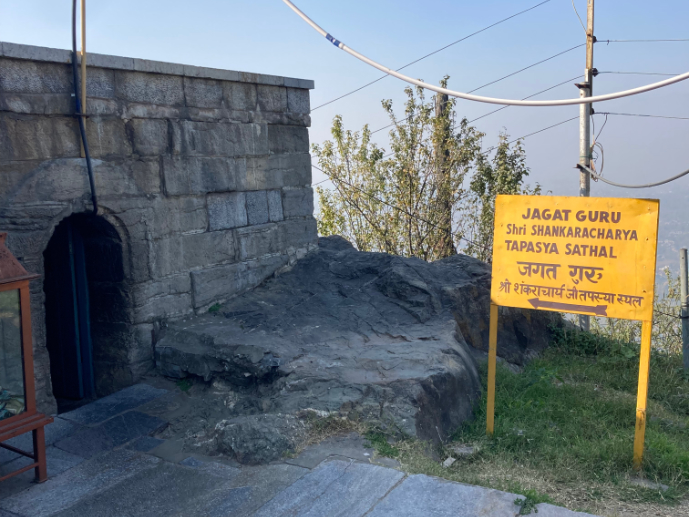
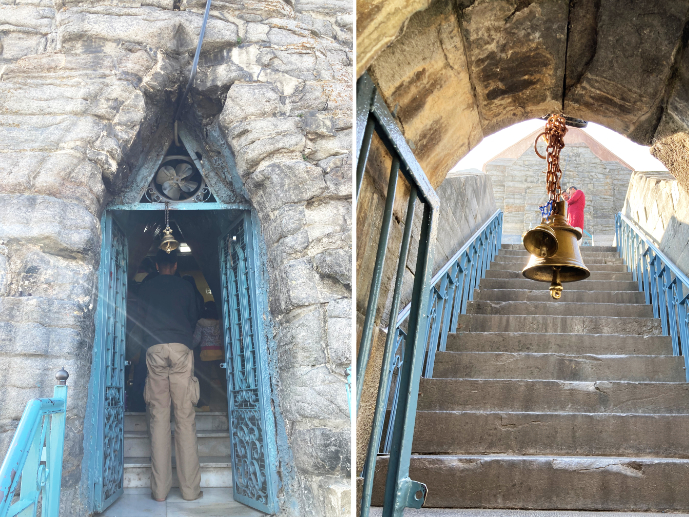
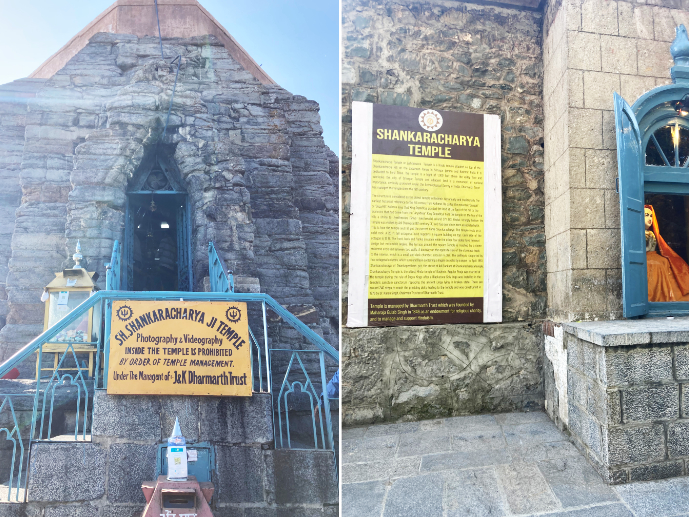
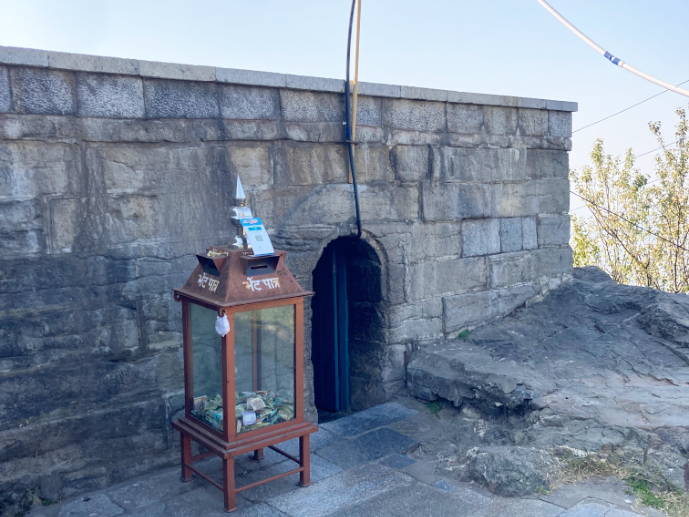
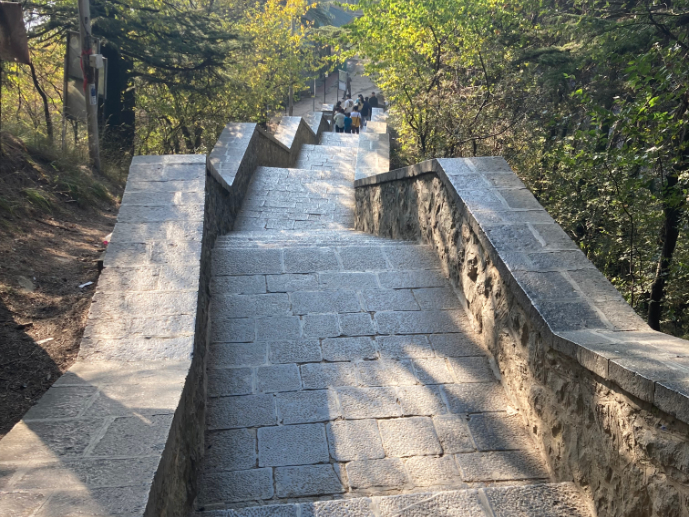
Images of the place
The Shiva Lingam
To put the icing on the cake in my days in Jammu and just the day before leaving, Vikas takes me to the last place he thinks necessary for me: an underground Shiva Lingam accessed through a cave and which is related to Krishna's existence in the place; something I did not expect just about to close in Jammu.
Peer Kho Cave Temple (also known as Jamwant Cave or Riksharaj Gufa), one of the oldest temples in Jammu, located on the banks of the Tawi River. This underground temple, located 20-30 feet underground, is deeply connected to the story of Lord Krishna and Jamvant, the bear king from the Ramayana. According to tradition, after Lord Rama blessed Jamvant with a long life and the opportunity to have darshan of Krishna in the Dwapara Yuga era, he came to meditate in this cave. Later, Krishna arrived at this place in search of the Syamantaka necklace and had to fight with Jamvant, as he had promised in the past. The temple houses a swayambhu (self-originated) Shiva Lingam that is venerated with great devotion by the locals, and has three caves dedicated to Lord Shiva, Navadurga and Jambavant. One of the most mystical features of the place is that it is believed that there is an underground passage that connects to the Amarnath cave, although it is now closed because some sadhus who tried to explore it never returned. The temple, built in the 15th century during the reign of Raja Ajaib Dev, is considered a special energy portal for meditation.
Again, the place also moved me and I could feel that the energy of the small corner where the Lingam is located is very pleasant and invites you to stay. The mind in this place becomes sweet and is disposed to meditation. In all these places, surrendering to the experience is the best advice I can give.
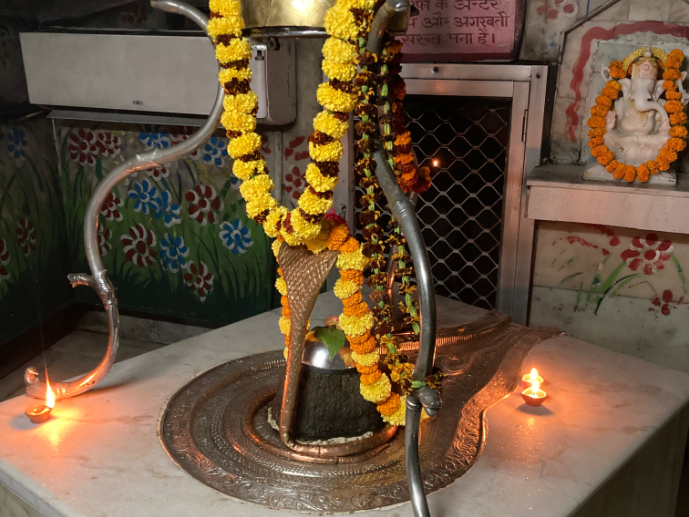
Shiva Lingam
To finish, I must say that it is really a shame that the Jammu Kendra is not officially available to host devotees, because these small meditation centers or Kendras are great for getting in touch with the local community of devotees and thus getting to know the country, which is enormous, diverse and different in each of its regions. As nowhere else, I have had in Jammu the privilege of experiencing hospitality in its warmest and most loving version. Again the master is in everything and everywhere.
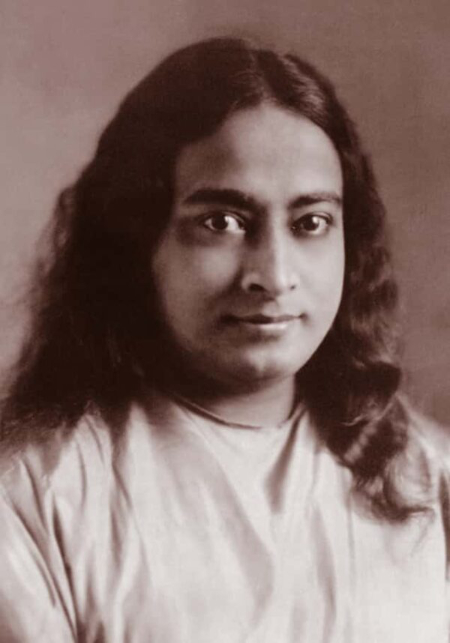
You serve the Guru, the Guru is the guide, the Guru responds
What are the Dhyana Kendras?
The Dhyana Kendras of Yogoda Satsanga Society are meditation and spiritual meeting centers founded by Paramahansa Yogananda. These centers are dedicated to the practice of meditation, specifically Kriya Yoga, and to the teaching of the spiritual doctrines promoted by Yogananda. The Dhyana Kendras offer a space for group meditation, yoga classes, satsangas (spiritual meetings) and community activities.
In addition to promoting individual spiritual growth, the Dhyana Kendras also engage in charitable activities, such as medical camps and blood donations, to support local communities. Devotees and practitioners can participate in daily meditations, study programs and special events designed to strengthen their spiritual practice and their connection with the YSS community. At this link you can consult all the Dhyana Kendras, ashrams and retreat places in India of Yogoda Satsanga Society. As you can see, there are many and they are spread throughout the country.
Information of Interest
Transportation:
Flight from Delhi to Jammu; approximate duration: 1 hour and 15 minutes. From Jammu airport to the Kendra by taxi; approximate cost: 1500 rupees.
Accommodation in Jammu:
The Jammu Kendra is not officially available for devotee retreats. It only has two rooms for monks on special occasions. It is recommended to contact local devotees in advance if you wish to visit the place.
Kendra contact: jammu@ysscenters.org
Best time to visit:
October and November are ideal months due to pleasant temperatures.
Note about SIM cards:
Due to security measures in the Jammu and Kashmir region, it is very difficult to get SIM cards for foreigners. It is recommended to manage this issue previously in other cities of India or have the help of local contacts.
Important:
If you haven't read the Considerations section yet, don't forget to do so. In this section you will find very valuable information that can save you many headaches. In particular, there are details related to credit cards and mobile phone use that are essential.