Kriyaban
Travel log by a Yogananda devotee

Better readingon large screen:www.kriyaban.es
This blog entry is about my visit to Amma's ashram in Amritapuri in 2024. This place was not on my itinerary during my first trip in 2020, and it was in March 2024 when I decided to visit it for the first time. It is really worth knowing about this place because if you ever come to India, you must visit here. You will be very well received. Here, the possibility of staying indefinitely is available. For short reservations, you will not have any problems, except during some special event dates. Even so, this place is huge and can accommodate many people. So, you will be very comfortable here for as long as you want, it's truly incredible.
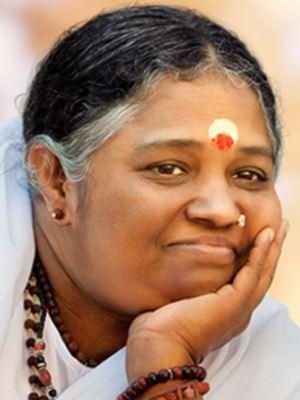
This ashram is essentially Amma. And Amma is love, love, love, and love. Therefore, I find it hard to understand this place without her. The day she is gone, I don't know what will become of this place, because she is the center of all this. The beautiful thing about this place is that, with her being here, that spirit is present in the atmosphere, and even more so in the daily ceremonies. We will talk about all this in detail now, but above all, I will focus on the two most remarkable aspects, which are: that this ashram is her, and that she is pure love.
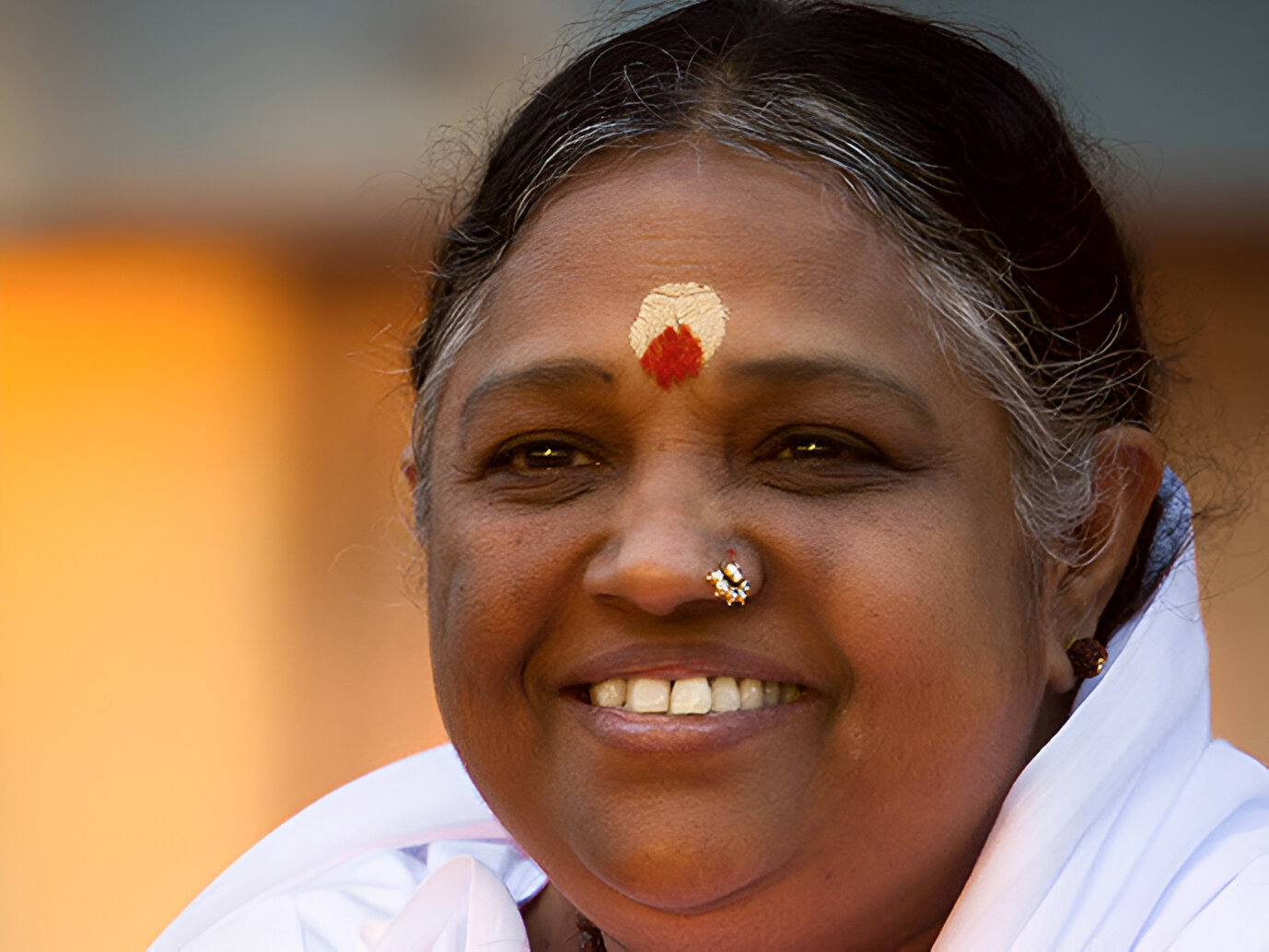
Amma
Let's start talking about the place. This place is like a small village, with tall buildings, not luxurious like New York or Barcelona and things like that. It has tall buildings to accommodate the many people who are here as visitors or residents. It's hard to understand that an ashram has buildings, right? But they are very well integrated. So, it is like a small village where you have no need to explore the area. In fact, they recommend that you don't go out. I have been here for many days and have not had any need to leave; there is even a pool for you to cool off during the sweltering heat periods. An ashram with a pool? Yes, there is a pool, an ATM to withdraw money, shops to buy clothes, incense, and all that, a supermarket, a fruit shop, a place to make juices, a place where they open a coconut for you on the spot and give you delicious coconut juice. In short, there is everything and more. The place is quite large and is by the beach, immersed in the middle of a jungle, a jungle made up of palm trees.
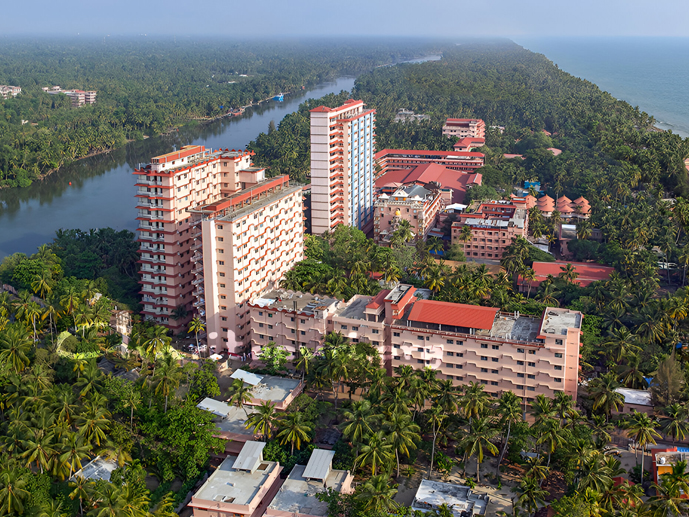
Aerial view of Amma's ashram

When you first arrive here, it's logical to join in helping, which is known as seva. I couldn't find the time to do it, which is a way of saying I didn't feel like it much, but let's say I couldn't find the time... One day, I was having breakfast quietly with my book and enjoying my coffee, and suddenly a guy comes up to me and says, "are you strong?" and I answer, "why do you ask?" and he says, "because I have a truck full of coconuts that need to be unloaded." And I was thinking, what do I do? Do I tell him I have to go because I have a commitment, or do I accept the invitation? So I think, you know what? In the end, the seva I was avoiding came to me in another way, so let it be what God wills. It may have been a tougher seva than I might have chosen if I had picked it myself, but in the end, I said yes, and a few of us went to unload the whole truck of coconuts. And God doesn't miss a beat, nothing escapes Him...
This place is by the beach, immersed in a jungle full of palm trees. It's really beautiful. As I said, it's like a village. It has everything; you don't need to leave. I am convinced that people who have been here for months haven't left the place, except for some imperative occasion. Because here, you are very comfortable. They don't tell you to leave. As long as you have a visa and help, you can stay as long as you want. It's wonderful. There are people here who have been here for years. I spoke with a nun who has been here for more than twenty years, and surely there are people who have been here longer. It is a beautiful, welcoming, and very peaceful place.
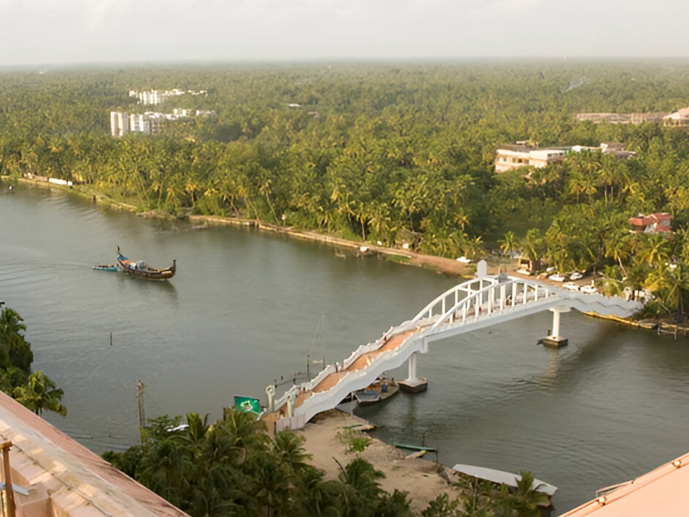
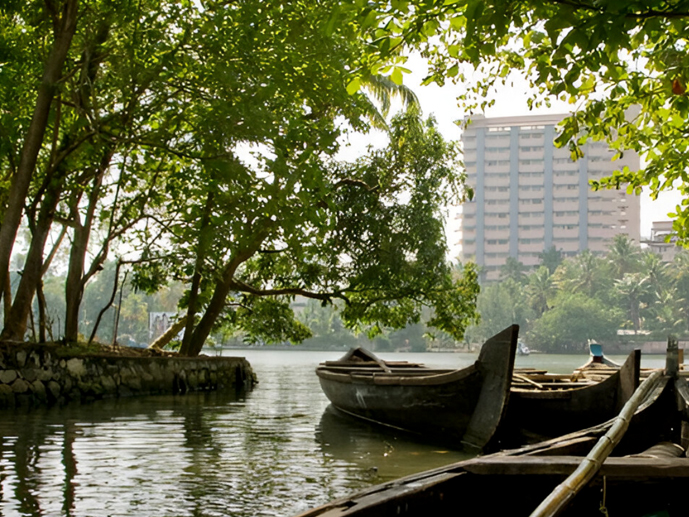
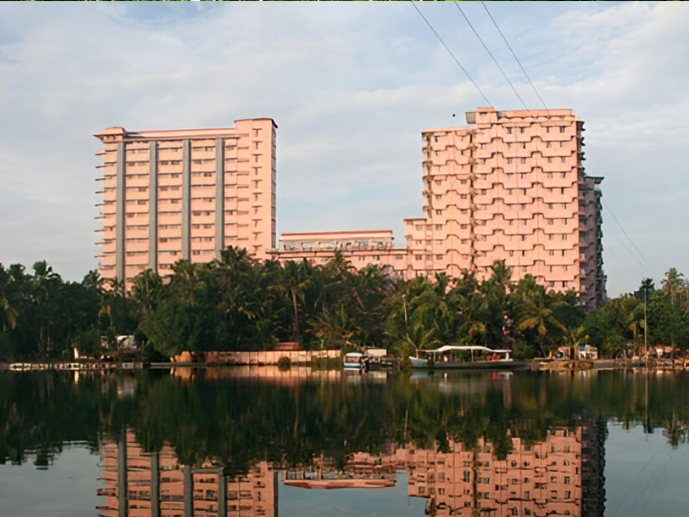
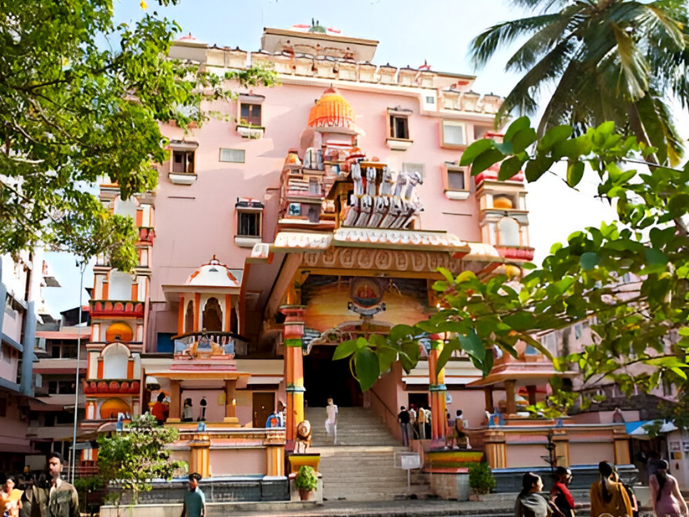
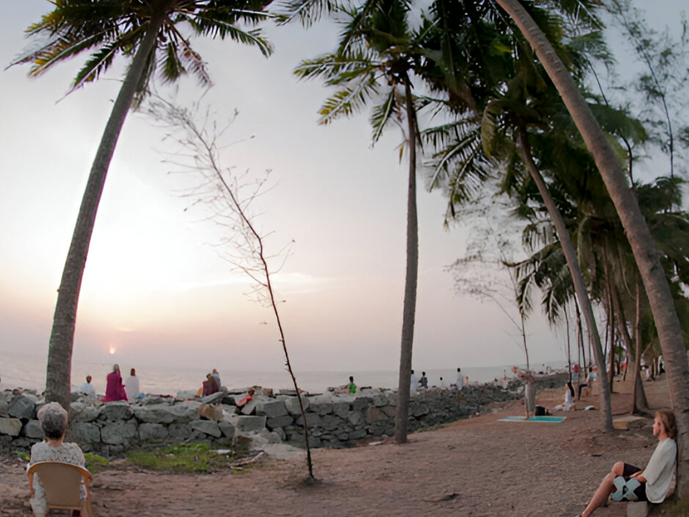
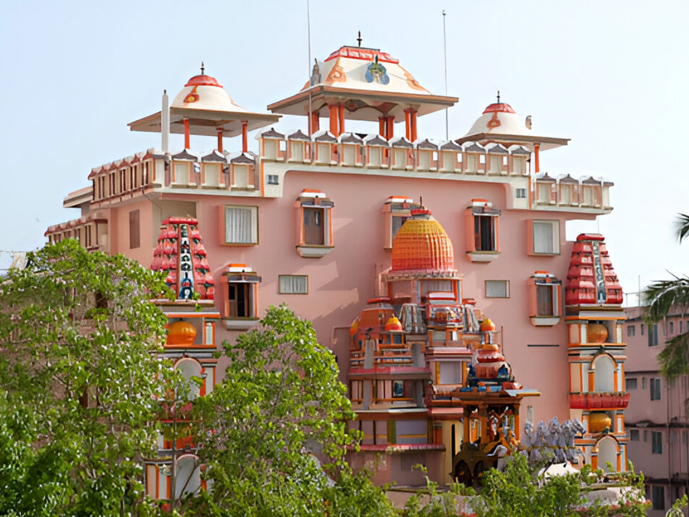
Images of the ashram
It's fantastic, you have to come here to know it and add contrast to what you have been visiting earlier in India. If you come from the north, with all the hustle and bustle, suddenly you arrive here, and this is an oasis. This place is by the beach, immersed in a jungle of palm trees and separated by a water canal where barges transit. There are no cars honking like in other places. Here the atmosphere is very healthy. In terms of noise, you don't hear anything but what might be happening in the place. It's fantastic. For me, this place will be like the final point in my future trips.
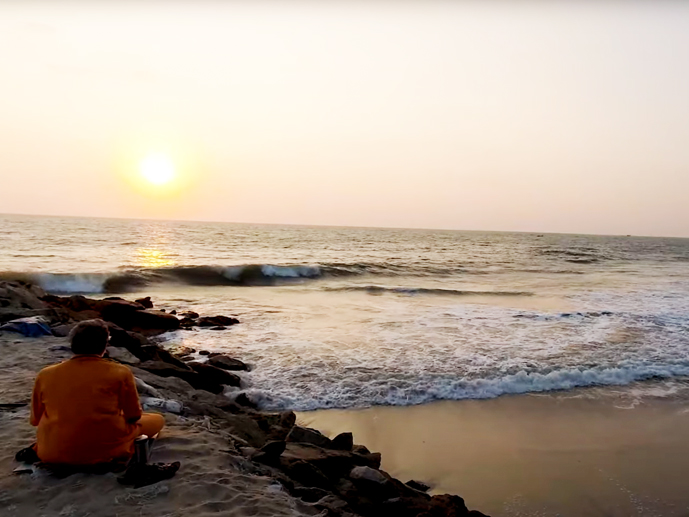
Beach at the ashram
Also, you have the privilege of being close to Amma every afternoon for more than five hours and receiving her hug up to three times if you stay for a month. Everything about this place is wonderful. By the way, it is very unlikely that Amma will do the world tours she used to do. Since the pandemic, she hasn't left here, and people say they don't think she will again because she is older and those types of tours are probably no longer on the agenda. If you are a devotee of Amma, take note, because I believe the only way to be close to her will be to make the effort to come here, which by the way, you will love. There are many advantages in that sense.
The organization.
Think of this as a village with a multitude of services. Here, service is provided
to all the people who come like me, for a week, a month, three months, etc. For that, many resources are
needed, both human, in the form of volunteering, and economic, and everything is under meticulous
organization that has been honed and perfected over the years. If it weren't for the volunteers, this
place, as large as it is, would be completely unsustainable. I don't know what will become of this place
when Amma is no longer here, because she is the center of all this, and many people come because of her.
This place without her makes no sense. When she is no longer here, what will happen?
One thing that impresses me is how people like Yogananda or Amma manage to create so much from absolutely nothing. What Yogananda built and what Amma has done, and everything they do around the world and in India, all that from nothing, is very impressive. Obviously, behind it is the hand of God, but it impresses me to see it and experience it. When someone really wants to work for God and for God, when that will is one hundred percent sincere and with an open heart, God disposes infinitely. We see it, and this is another example. Yogananda's devotees are familiar with this, but here when you see Amma and have contact with everything she has done and continues to do, it is really impressive.
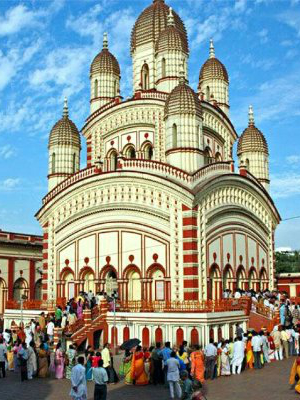
There is a temple with the deity of Goddess Kali, just like in Calcutta. In Calcutta, there is the great temple of Kali. Here there is a small temple, and it is lovely. It's super beautiful and cozy. Almost every day I go there for a little while, and I love it.
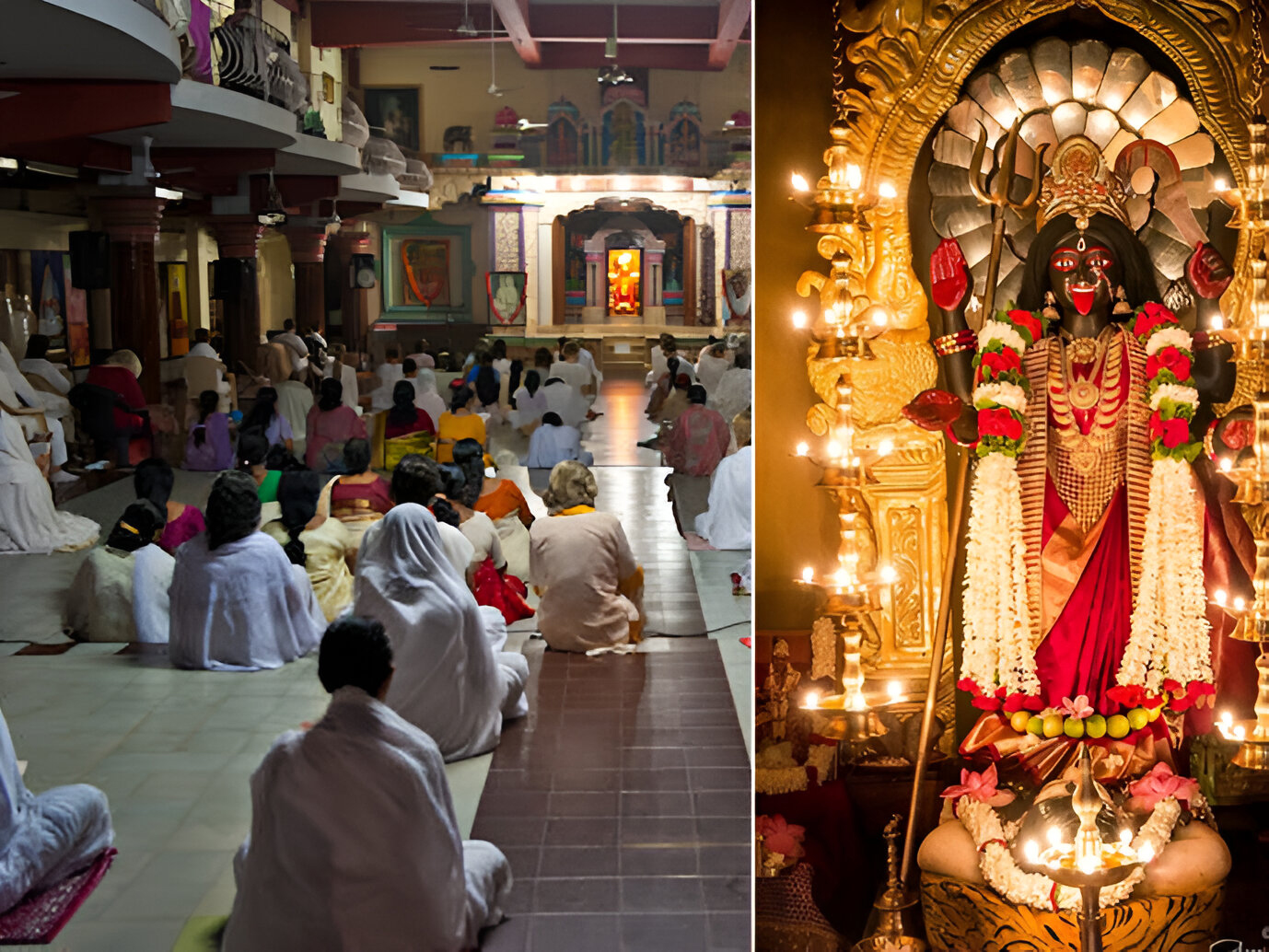
Kali Temple
Amma has her residence right here. Every afternoon, when she goes out to the ceremonies, a period starts
from five to eight-thirty, where she speaks, a short meditation is done, and then bhajans are played
with a kirtan. Amma's kirtan is incredible; I have never heard bhajans and a kirtan like that in my
life. Anyone would love them, whether you are connected to this topic or not, because they are
amazing.
Every day, from five to eight-thirty, she does all this that we have discussed. After the
bhajans, the ceremony closes, and she starts giving the hug, and that can keep her busy until
one-thirty. It's crazy. She has an incredible level of dedication, and she does it every day as if it
were the first. Her house is here, and every afternoon she goes to the great hall, which is a huge space
where everyone gathers, and where everything we have mentioned takes place.
Amma's hug.
"Amma's hug" refers to the hugging practice offered by Mata Amritanandamayi, known as
Amma, which means Mother. Amma has hugged millions of people worldwide, and her hugs are considered a
gesture of love and compassion.
Meaning and Experience.
Love and Compassion: Amma offers her hugs
as an act of unconditional love and compassion towards all human beings, regardless of their origin,
religion, or personal situation.
Healing: Many people report feeling a deep sense of peace, comfort,
and healing after receiving a hug from Amma.
Spiritual Connection: For many followers, Amma's hug is
a significant spiritual experience that connects them with their own inner divinity.
Amma travels
around the world holding events where she offers hugs, spiritual discourses, and community service
activities. These events are known as "darshan," which in Sanskrit means "vision" and refers to the
opportunity to see and be seen by a sacred being.
Amma's hug is more than just a simple gesture; it
is a symbol of her mission to spread love, compassion, and selfless service around the world.
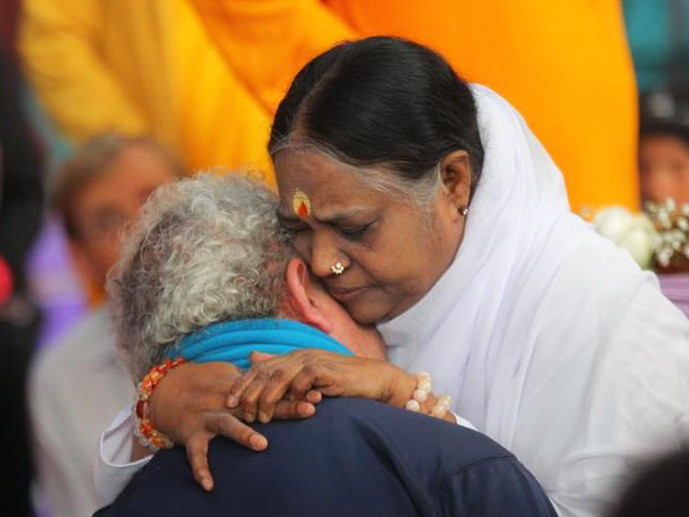
Amma's hug
In this fantastic place, there is also a pool! Everything is so well thought out. To go to the pool, since there is gender segregation, you have to get a ticket to ensure availability and in the men's schedule.
For a while, since I arrived here, in one particular spot, they were building a large shed. Every time I passed by, I thought, what will this be? And suddenly, the next day, I see an elephant inside. His name is Lakshmi. But what is an elephant doing here? I still don't know. But it is very beautiful, relatively young, and spends all day eating palm leaves. One day, they had to do a small reform inside the shed, and they took it outside. I got close and spent half an hour a meter away from it, stroking its trunk and feeding it. It is really a wonderful animal; I love it.
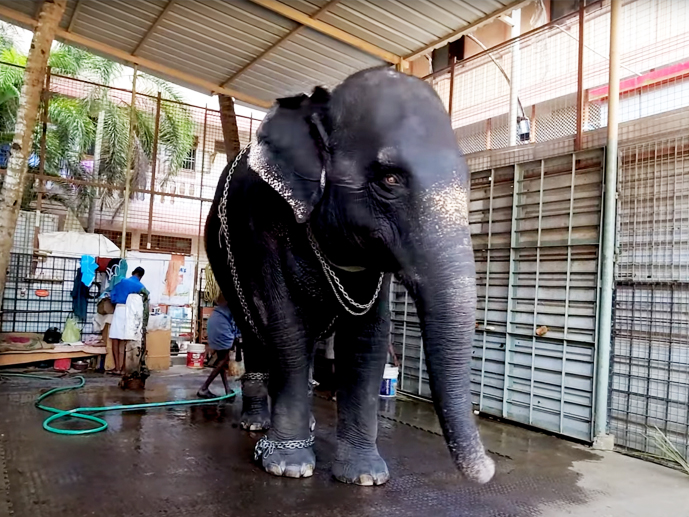
Lakshmi
There are different levels of volunteering. The volunteering adapts to the time you stay. The degree of
responsibility and what you are proposed to do depends on the time you will be staying at the ashram and
also on your skills.
Reading in a book by Sadh Guru, I read that the word responsibility, in English,
"responsibility," is the sum of two words: "response" and "ability." Responsibility is the ability to
respond. The responsible person is the one who has the ability to respond, who possesses the qualities
of being competent and committed. And the people who volunteer here must have this quality, and you
realize that everything works very well because the people who fit that volunteer role are competent and
committed.
The day after I arrived here, after eight hours by bus, they came to pick me up and said, "do you want a guided tour of the ashram?" And I said, of course, because this place is so big that without a prior tour, there is no way. Every day, guided tours are scheduled by volunteers, according to languages, and it's great because without that, you would miss things. Suddenly, they explain everything to you, and it is fantastic.
During the time Amma is performing the activities in the afternoon in the "big hall", from five to eight-thirty, when the bhajans come, you can see how she sets the rhythm with a stick. She leads the bhajans and sings at the same time. The bhajans are like mantras, and in the last song, there is a "crescendo" where she raises her hands and looks to the sky while calling God's attention in such a way that it gives you goosebumps. It reminds me of when Yogananda, in a long Christmas meditation session, called the Divine Mother in a particularly moving way. She, with that gesture, in my opinion, is asking God to pour His blessings on those present; it is very, very beautiful.
During the bhajans, she is constantly invoking God. Every day she carries out all these activities, and
she does it in such a way that every day seems new and renewed; by the way, a characteristic of those
who are in communion with God. It is known that on one occasion, to a devotee, when she went to give
Amma the hug, she said, "I am Yogananda." Personally, I don't know if it means that Yogananda, in his
new reincarnation, is Amma, or that Amma, being in communion with God, is Yogananda as well as any other
realized saint; this is the intuition I have.
When someone is in contact with God, they are
completely renewed every day. That complete renewal of her will, her desire, and her commitment to all
this and to the devotees, is what Amma breathes.
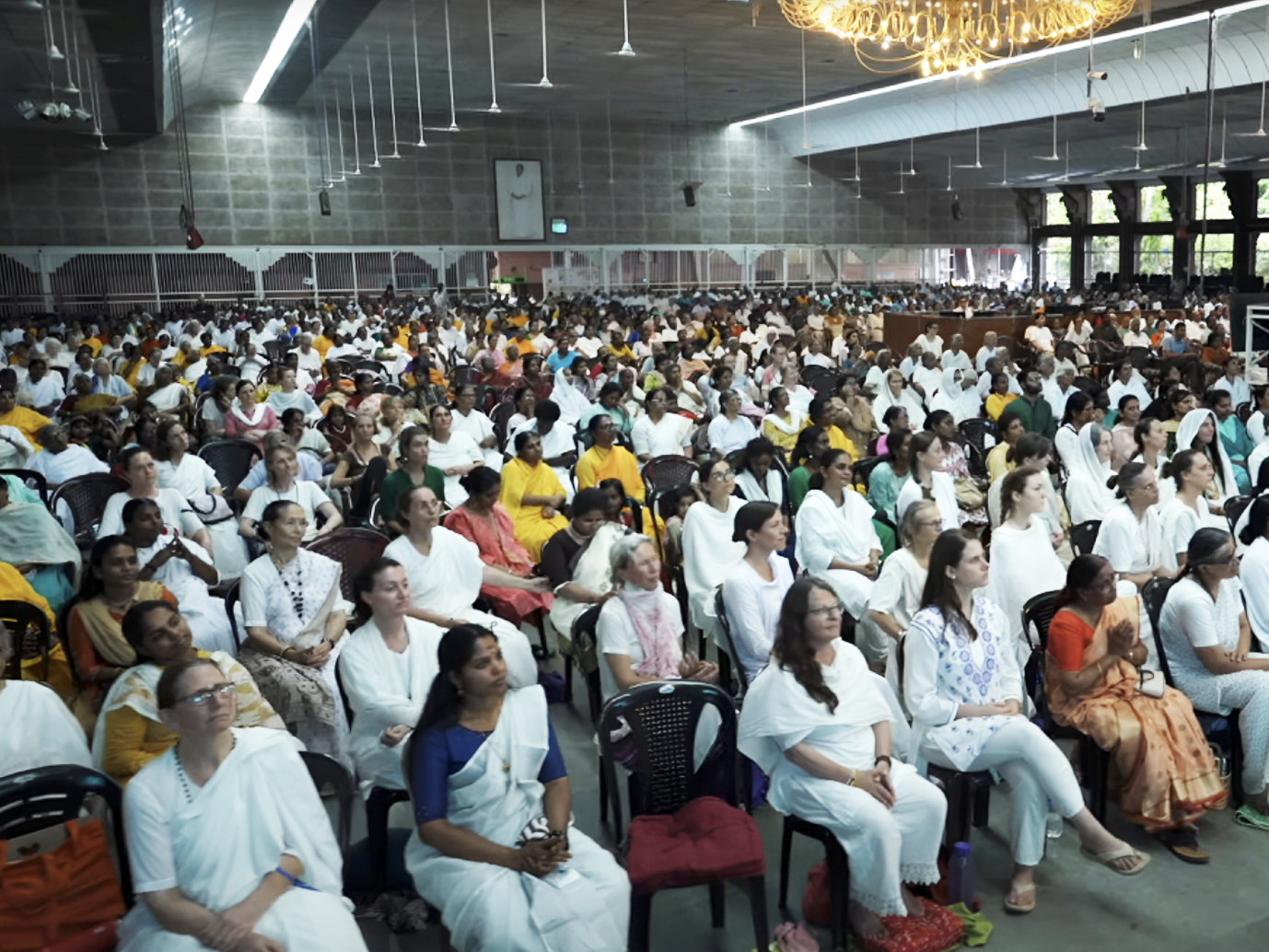
The "big hall", where the activities took place
My daily routine here is somewhat what I have been doing until now during the trip; carrying out my
sadhana and my meditations. But I have also had the opportunity to do some particularly special things.
Some I have completed, and others I haven't. You can receive Amma's hug, go to an astrologer for a birth
chart reading, and go to an Ayurvedic clinic for an Ayurvedic study based on your dosha.
There are
people here who come with thousands of different purposes, and it is amazing the number of people
residing in the place.
My encounter with Anandamayi.
I was fortunate enough to meet Anandamayi, a nun who has been residing
in the ashram for more than 20 years. She invited me to her room, and we had a precious conversation. At
the beginning of our conversation, I felt we didn't understand each other. She thought I had come to
India to find God, and that's not entirely true. I come to India to pilgrimage to special places because
of their strong connection with realized saints or spiritually stimulating natural elements, and in each
of them, I practice approaching God through my practices. Since she had her own preconceived idea, at
first, I felt we didn't connect. I was trying to say one thing, and she was pushing for the other side.
In the end, things softened, and we got in sync. I started asking her about her life, how she got here,
her relationship with Yogananda, her children, where she was from, and we had a very pleasant
conversation. She is very old, uses a wheelchair, and hardly moves from the room. She is counting the
days to go, literally, and says it with great joy because she knows perfectly where she is going. In her
state of health and knowing what awaits her on the other side, I can understand why she is eager to say,
this is as far as we go.
She is a very approachable, calm, and simple person. She is a devotee who embraces all saints. Along with images of various saints from Yogananda's lineage, she also has Pope Francis, which I loved because I also love Pope Francis. In the last years of her life, she has been practicing Lahiri Mahasaya's Kriya Yoga, having also practiced Yogananda's Kriya Yoga previously.
A very cool thing to mention is that on my first trip in 2020, I had the chance to meet a very devout Argentine guy, who one afternoon, talking about everything and nothing, mentioned interesting books to read and told me about one in particular called "The Way of a Pilgrim." I took note of it, thinking that when I got home, I had to read this book no matter what. In the end, I had an overbooking of books and didn't get to it. Being in Anandamayi's room, I saw she was reading that same book, and then I got the hint, so this time I thought about buying it without delay, understanding that it was a hint from the universe. This book, "The Way of a Pilgrim," seems very interesting to me. Both Sergio, the Argentine guy, and she highly recommend it, and it's also an easy read. The book focuses on the practice of the presence of God in the daily life of the devotee.
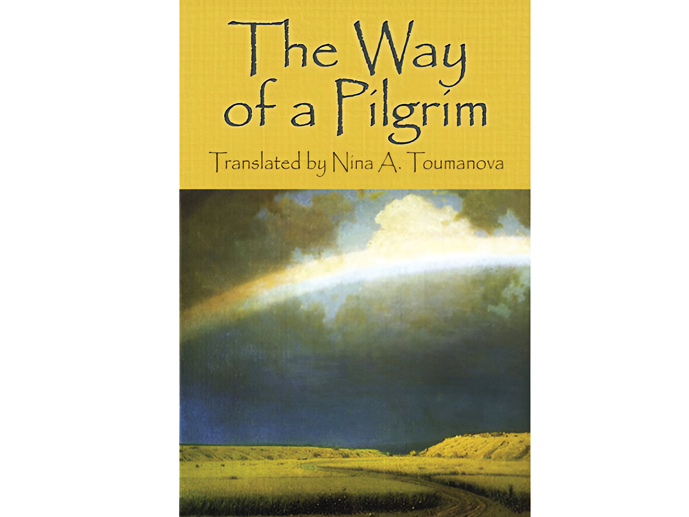
The book. The Way of a Pilgrim
Anandamayi is a person with a lot of personality and character. A lover of all saints, her room is like a cell. I said to her, "this is like a cave for you, right?" To which she replied, "no, it's like a cell." She prefers the definition of a cell rather than a cave; more in the Christian style than the yogic one, to define a small place destined for the practice of communion with God.
Anandamayi asks me, "why don't you become a monk?" This is not the first time I have been asked this. Why don't I become a monk? Because it doesn't call me. It's that simple. Now, if we start pulling the thread, why doesn't it call me? Because there are still many things in mundane life that I don't want to give up. And I think that, following Lahiri Mahasaya's style, I want to have a life with demanding and committed sadhana, and at the same time face everything that mundane life proposes and offers me, always with moderation, awareness, and judgment.
Another aspect has to do with the freedom of movement. When you are a monk, the vows of renunciation involve giving up the freedom to do what I am doing now, for example. Or the possibility of having a partner. A partner who is like-minded to me, someone I adore infinitely and who also shares my spiritual journey one hundred percent with me. That is a plan that fascinates me. I am fascinated by the opportunity to live that experience in life, and I am very happy that the chance to live it has arisen.
It's fantastic to be able to walk to the beach almost without leaving the place. The cantina with the juices is also fantastic. Everything is so well thought out that they have two kitchens, one serving Indian food and the other serving food for Westerners. After my experience of many days eating Indian food, when I arrived here and saw that this option existed, I decided to switch to the Western cantina without hesitation. And everything, even though it has a cost, unlike the Indian menu, which is free, is very comforting to me.
This ashram, for everything it has and offers, is a compilation of all the good things from the previously visited places. It has a bit of all of them, which makes it perfect as the end of the trip. I am very impressed by how devotees love their volunteering. The longer they have been here, the more they love it. There are moments in those periods from five to eight-thirty, where they have a moment to talk about their experience with Amma, and that's when you discover their passion for her.
Everything done here is serious; here yoga is done seriously, everything, and it is tinged with a sometimes more festive or jovial experience. In Yogananda's ashrams, everything is very formal, very serious; devotees enter the chapel, meditate, attend the readings, the session ends, and they leave in silence. Everything has that more serious air. Here, in that period from five to eight-thirty, the bhajans bring a more festive air. The bhajans are a space of communion with God through devotional singing. At no time does anything done stray from being serious, but at the same time, it is done with a more relaxed spirit, and it makes it very comfortable.
Many devotees insist on the importance of having a living guru like Amma, and sometimes I wonder, what will they do when she is no longer here? They will possibly have to embrace what we, Yogananda's devotees, say, which is that regardless of whether a guru is alive or not, he continues to take care of your path to God. In fact, from the astral world, they have more possibilities to do for you than being here. That discourse will be one they will have to embrace all those who now refuse anything that does not involve having a living guru. That moment will inevitably come.
Why do I think it is important, in my view, to know other gurus or other masters like, for example, what I have been doing on this trip with Ramana Maharshi, Amma, or Sadh Guru? Because having been in communion with God and having the level of realization they have, the fact that they have been alive, or are, means they have karma. That karma is karma they voluntarily choose not to burn because if they burned it, they would disappear because karma is what keeps them alive. So, to stay alive, all of them have to retain a bit of their active karma, and when you have active karma, it is something that stands between you and your divinity. All the realized living gurus are not, in my view, one hundred percent perfect, because they contain a bit of karma that, in some cases, may make them not be 100% precise in what they say or even make mistakes or not see a particular issue clearly enough because that karma is playing its role as a veil.
Why then is it so important to know how different gurus think? Because suddenly one tells you one thing about a topic, and another tells you something slightly different. That is where you detect that, being both realized, shouldn't they say exactly the same thing about a particular topic? Why in some cases do they say different things? Here lies the importance of knowing them because the sum of their different visions can end up giving you a clearer idea of the subject in question.
To wrap up...
You have to come to this ashram to stay, because staying for a week gives you time to do all the things
it offers and gives you time for your heart to get comfortable with this place. As your heart gets
comfortable, you start to feel the peace of the place and what it has to offer. You cannot miss it,
please, those coming to India must come to Amma's ashram, the heart of the south.
Information of interest
Transport:
My trip to Amma's ashram was by bus from Coimbatore. This is a journey of almost eight hours. I did it this way because I didn't organize well, but I could have shortened the trip by two or three hours if I had planned correctly. In any case, people arrive from various places, so everyone must find the best option. One interesting thing to know is that there is an airport two hours from the ashram (Cochi Airport), which allows you to come by plane from anywhere in India. Once at the airport, you can coordinate with the ashram for a trusted taxi to pick you up. This can cost between 1200 and 1400 rupees, and you can enjoy the trip with air conditioning, which is always appreciated. Although I made the trip by bus for eight hours, I enjoyed it because the weather was bearable and it was fun to watch the landscape.
Accommodation:
Contact and reservations: internationalvisit@amritapuri.org
Website: https://www.amritapuri.org/ashram
Price: 600 rupees/day, Western-style food not included.
In this ashram, like in many others, you have to fill out forms for check-in, so you must read the
response email after the accommodation request carefully to determine precisely what you need to provide
to make the reservation correctly.
Below, I provide you with a link where you can access the document they are
providing with the rules and uses.
Important:
If you haven't read the Considerations section yet, don't forget to do so. In this section, you will find very valuable information that can save you many headaches. In particular, there are details related to credit cards and mobile phone use that are essential.