Kriyaban
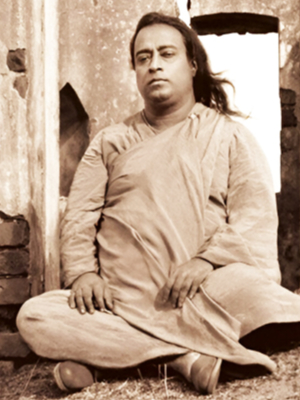
The only way to find God's Love is to surrender to Him.
So master your mind that you may offer it to Him.
So master your mind that you may offer it to Him.
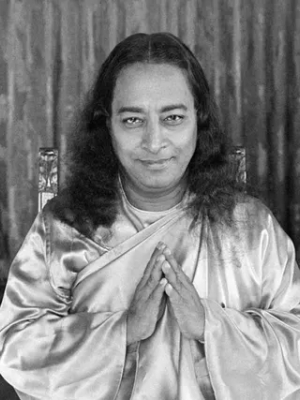
"Paramahansa Yogananda"

Better readingon large screen:www.kriyaban.es
The journey is long but comfortable. I've spent €40 on a taxi and this time I don't think I'll have to share the
bar of soap...
Just as we're about to arrive, the landscape changes. Hills with large
rounded stones
and rice fields capture my attention. Everything starts to resemble the videos I watched months
earlier on
the internet.
As soon as I relax and lean back against the taxi seat headrest, I'm surprised again. Through the front window I spot a large nipple-shaped mountain: the "hill of Arunachala," the mountain I had desired to see for so long and about which I had dreamed so much. That image gradually combines with the vision of the large towers of the city's great temple. They're amazing, everything creates a dreamlike scene, especially if you've waited so long for this moment. How far away this seemed when I was in Rishikesh just recently.
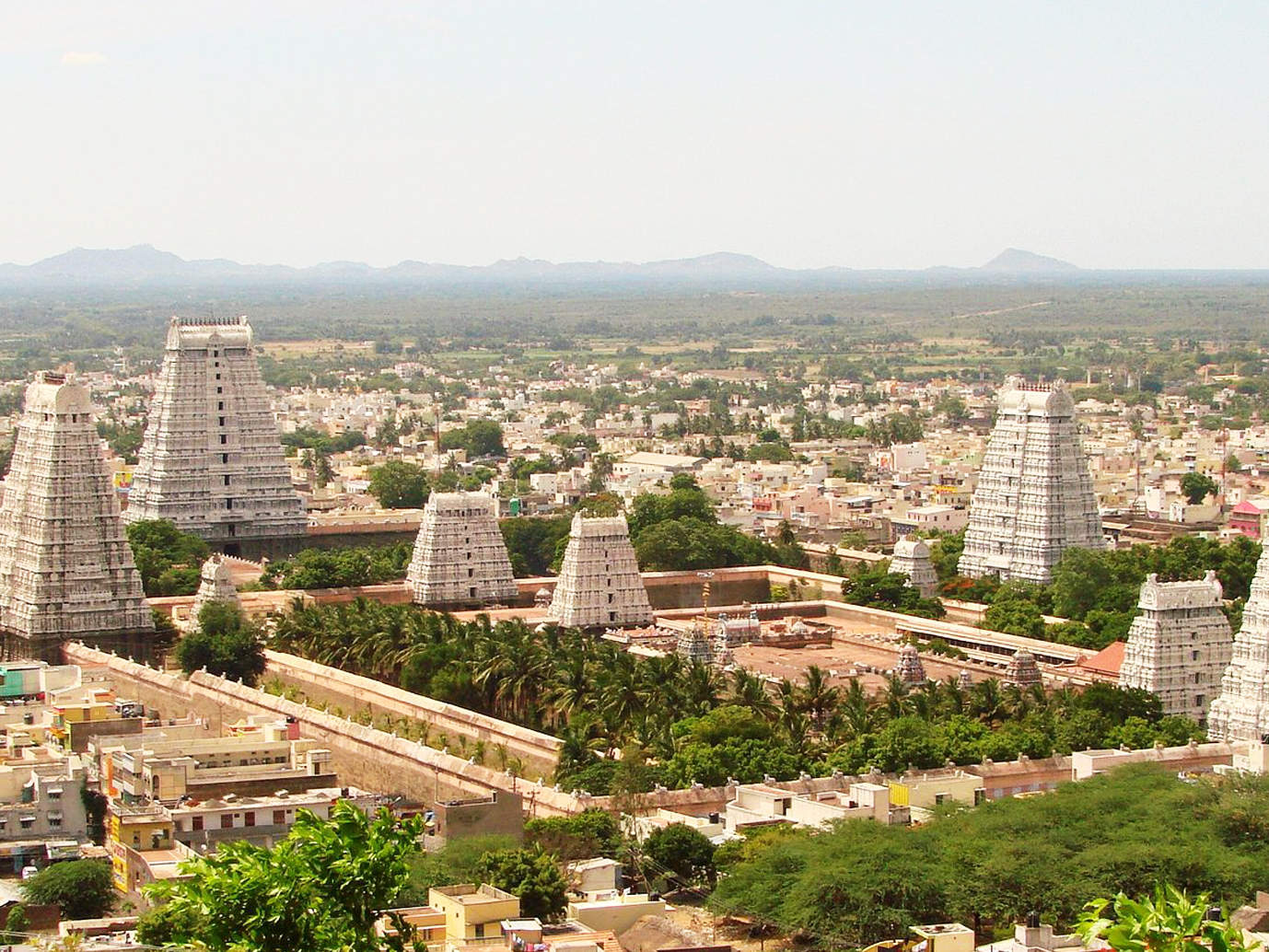
Arunachala Temple
Now that I'm approaching the heart of Tiruvannamalai, I start to see Amma's posters, and I find it amusing the relationship between being here and knowing the person appearing on the posters, since Amma is only about 300 km away.
I realize that the days in Puducherry and Chennai have created a sort of "gap" between the sensations of Puri, Dakshineswar and Ranchi, in the sense that these were very intense in terms of meditations and the relationship with the masters, and that's very noticeable. Now, here in Tiruvannamalai, although there's nothing that reminds me of the masters, whether an altar, a Yogoda meditation chapel, etc., the strength of Ramana Maharshi, the saint of the place, is so strong that I recover the intensity of the good sensations from previous days. Somehow, I "reconnect." We must not forget that I've been traveling through this country for more than 40 days and it's quite a challenge to remain balanced and connected with all the things that happen. The constant flow of energies you interact with catapults your devotion and other times confuses you and you don't know where things are coming from. The fact is that everything together makes a cocktail worthy of respect.
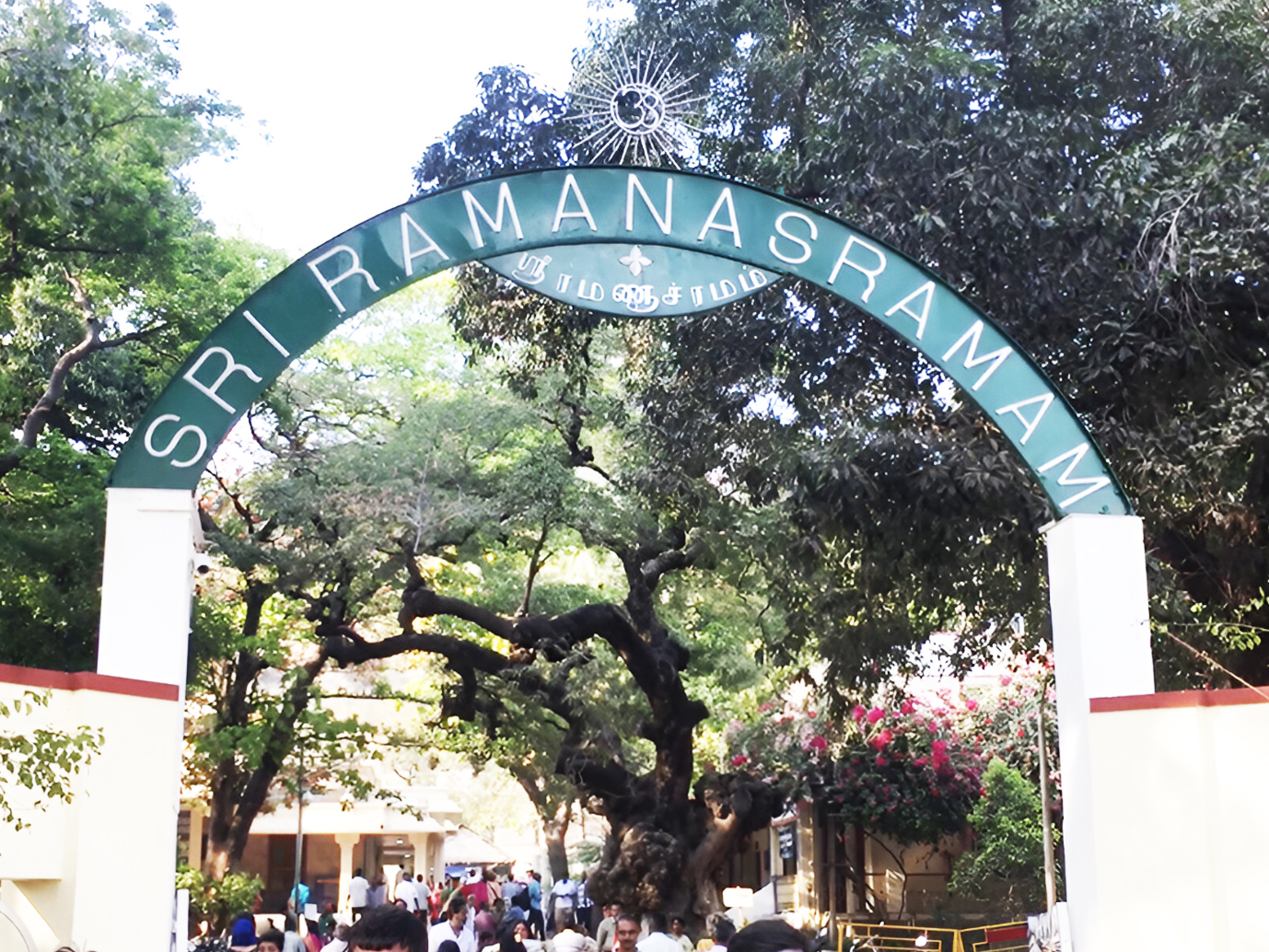
The first two days I stay in a fantastic hotel, exactly in front of Ramana's ashram and 10 minutes walking from the great temple complex of the city, the Arunachala Temple. Since I arrived early, I have time to visit Ramana's ashram.
This place is fantastic. Broadly speaking, it consists of the residential area, a very well-stocked library and three important spaces: a temple, the large meditation hall and the room with Ramana's bed. All in a large space with very good energy, where many visitors pass through, but you never have the sensation of being in a place where the crowd is uncomfortable; everyone is very much in tune with the environment. People sit anywhere simply to "be," soaking up the good vibes that inhabit the place.
The large meditation hall has impressive energy and the crowd spreads out everywhere to meditate on the cool ceramic floor. You can perceive how comfortable people feel in the place.
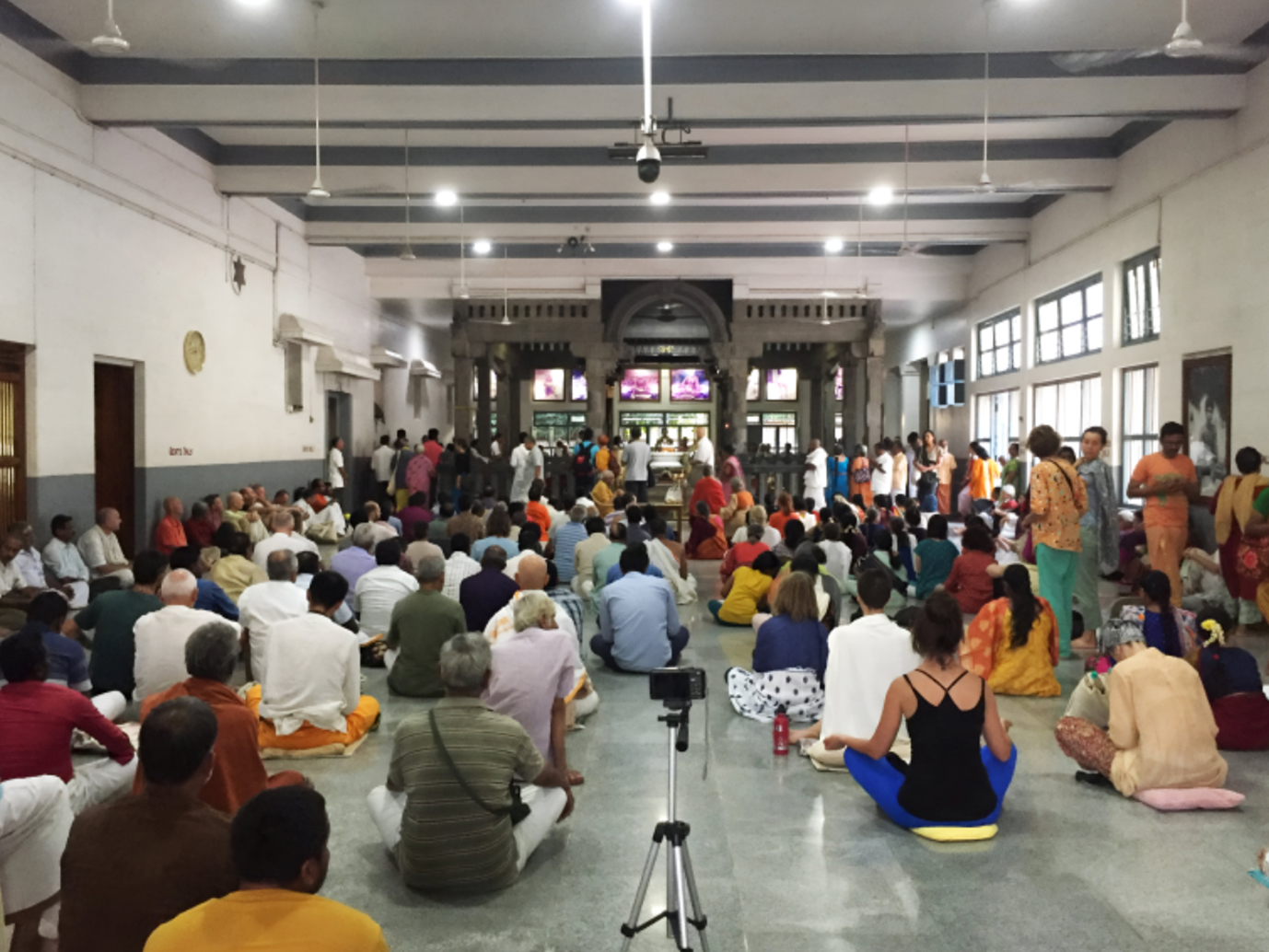
Ramana Maharshi's Samadhi

The library has many books by Ramana, in many languages and at ridiculously low prices. I couldn't help it and I bought 8 books, four of them in English.
From the ashram itself you can begin the fantastic cobblestone path that leads you through the magical mountain of Arunachala to the house where Ramana Maharshi lived and where you can meditate for hours, since the energy there is amazing. You can also visit the cave where he spent many years.
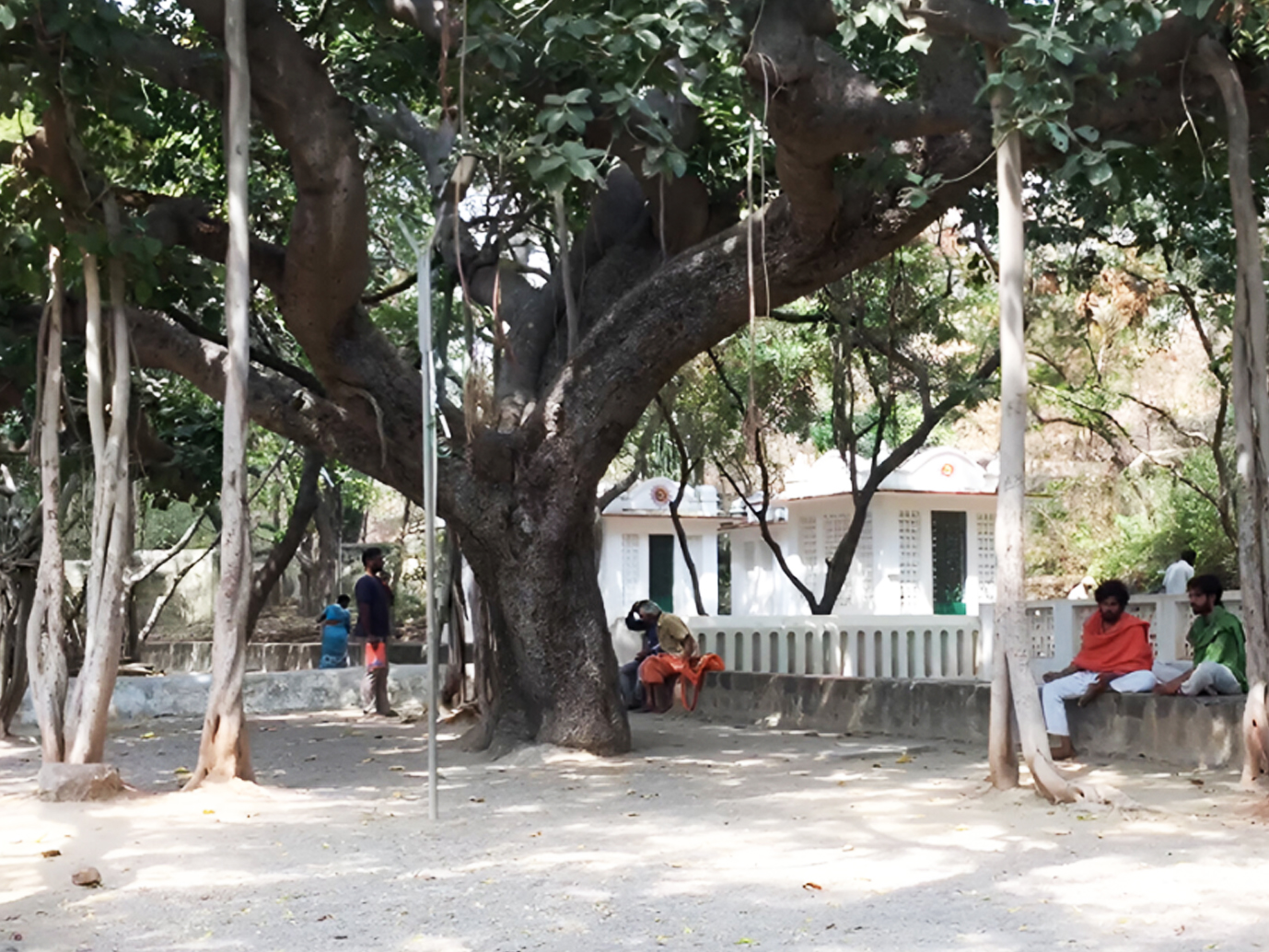
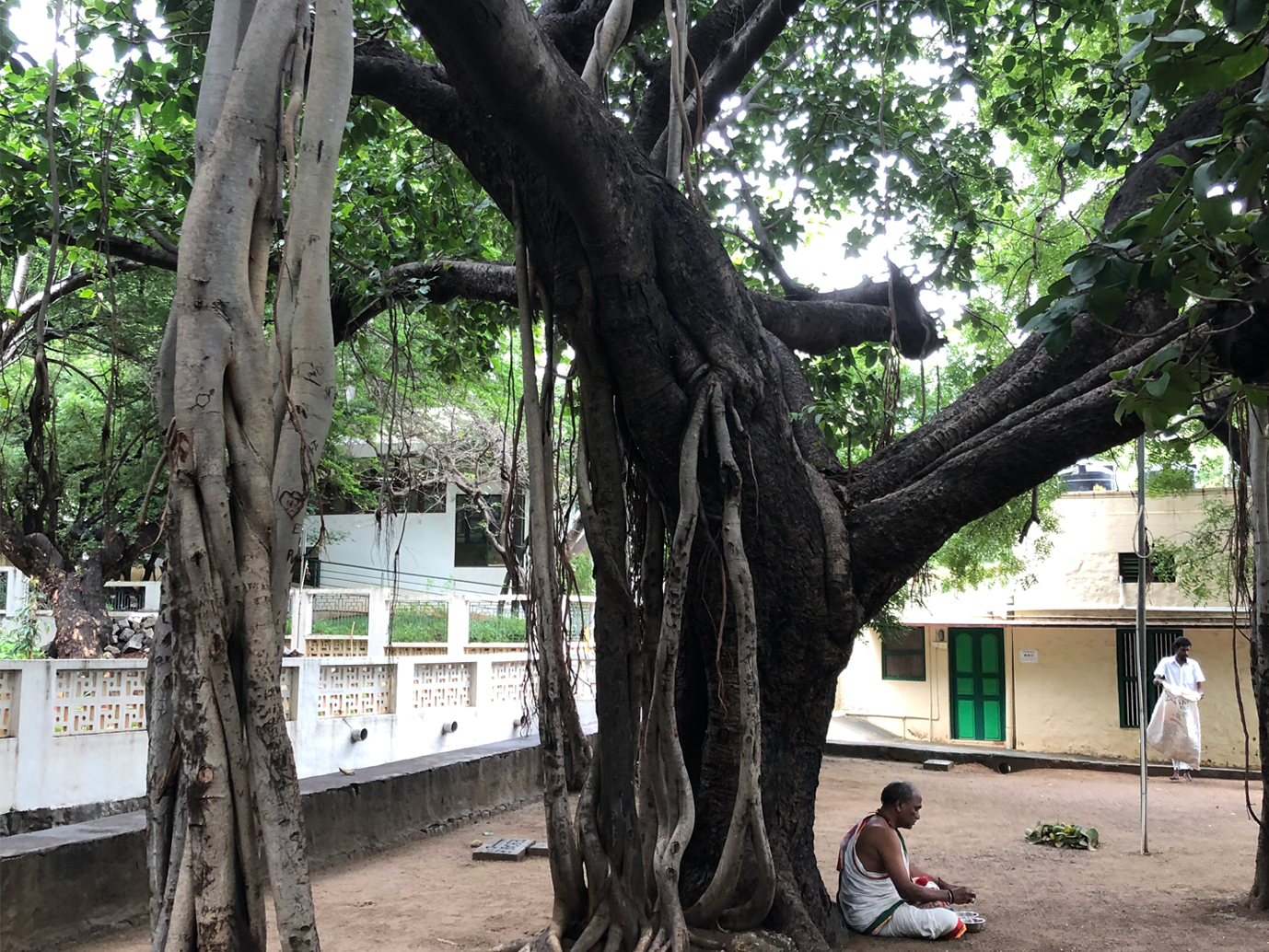
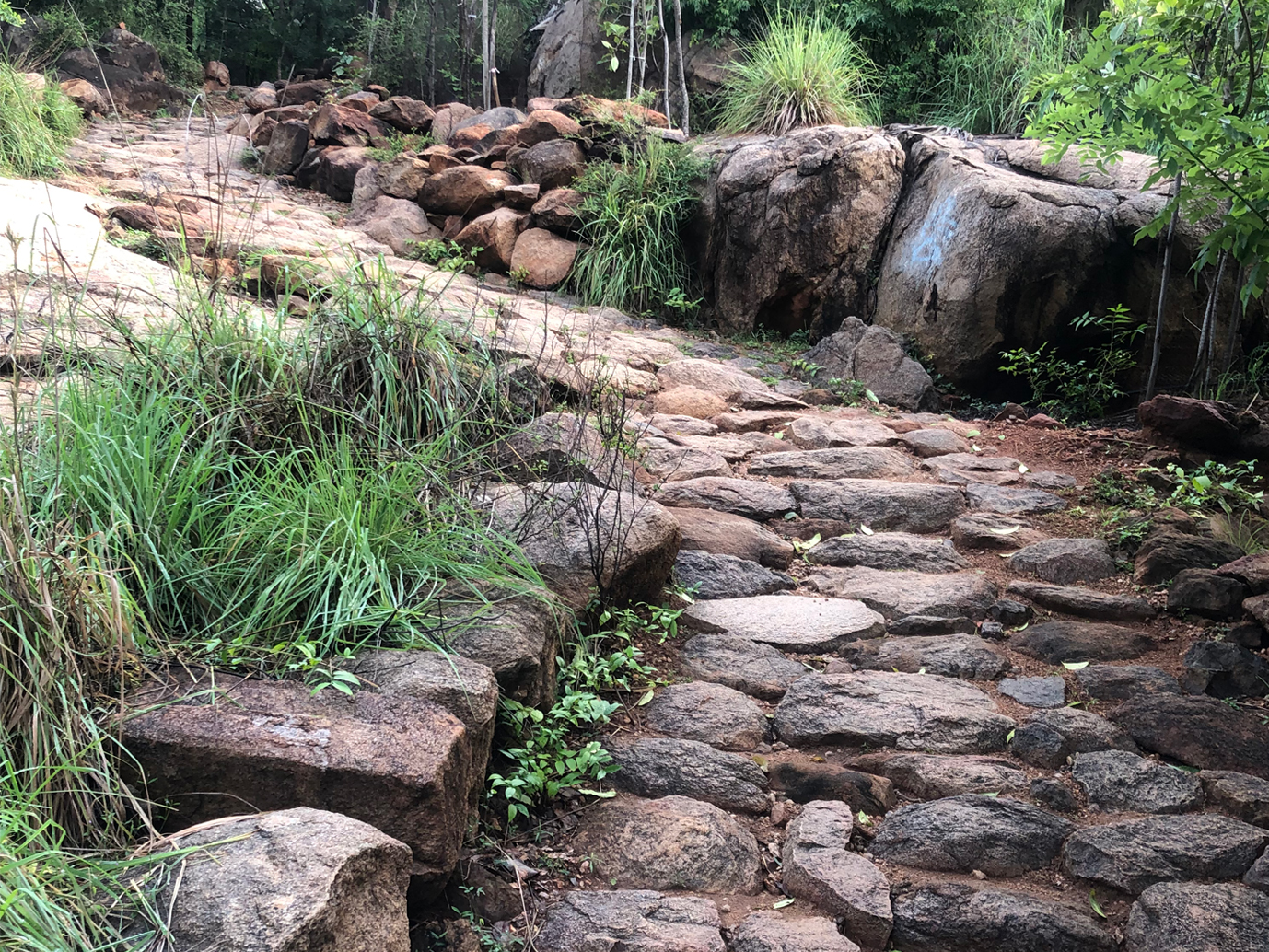
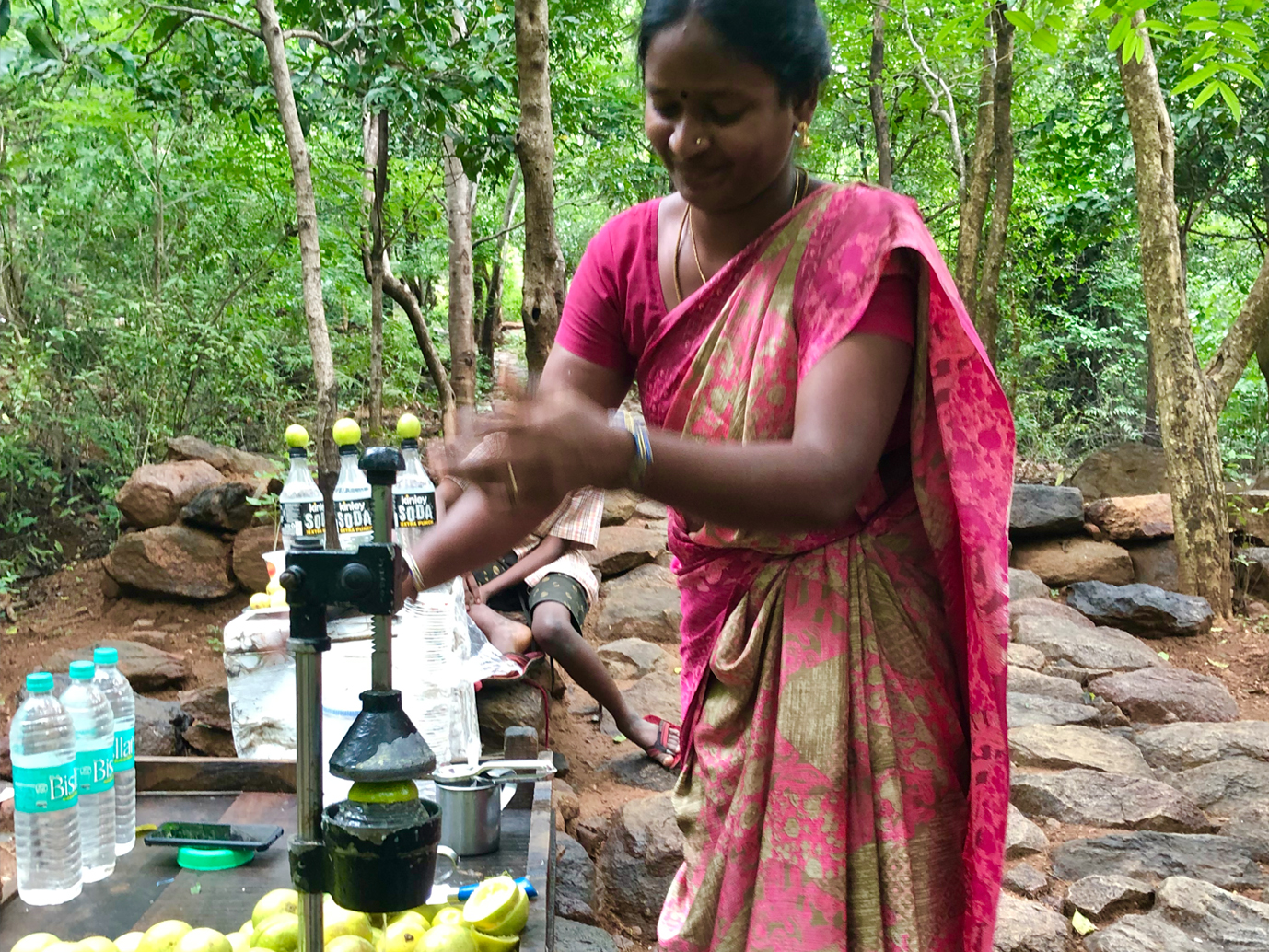
Ascent to Ramana Maharshi's house on Arunachala
If you come to India and travel to the south, this place should be marked on your "Spiritual Agenda" as a mandatory place to make retreat. I say "make retreat" because I believe that the magic of the places I've traveled through on this journey permeates you better if you decide to reside in them for a minimum of three to four days. I think "tourist visits" leave another type of memory and sensations, but this is a very personal opinion.
Ramana Maharshi's Ashram
The next day, I get up early, have breakfast and make my first visit to the mountain. Throughout my walking, barefoot, I invoke God and try to stay in the present, feeling each stone I step on. Finally, I discover to my surprise that the path ends with a visit to Ramana's house, where there are already several people meditating in all corners; it's simply amazing. During the ascent of the mountain, the views of the great temple complex in the center of the city are spectacular.
I've already found a nice routine for my days here, which consists of meditating randomly in the different places of the ashram, a daily ascent to the mountain early in the morning, and dropping by any corner of the place during the day, reading or simply contemplating... sounds good, eh?
My descent from the mountain ends on the road, and I return barefoot to the ashram to collect my shoes. This moment is almost magical, because the experience I carry with me, product of all the experience on the mountain, combines with the sensation of going barefoot through the street (and remembering at all times how well I did in getting vaccinated against tetanus...).
Next, I really want to show an excerpt from one of the books I bought, which briefly narrates some interesting things about Ramana. I hope you enjoy it.
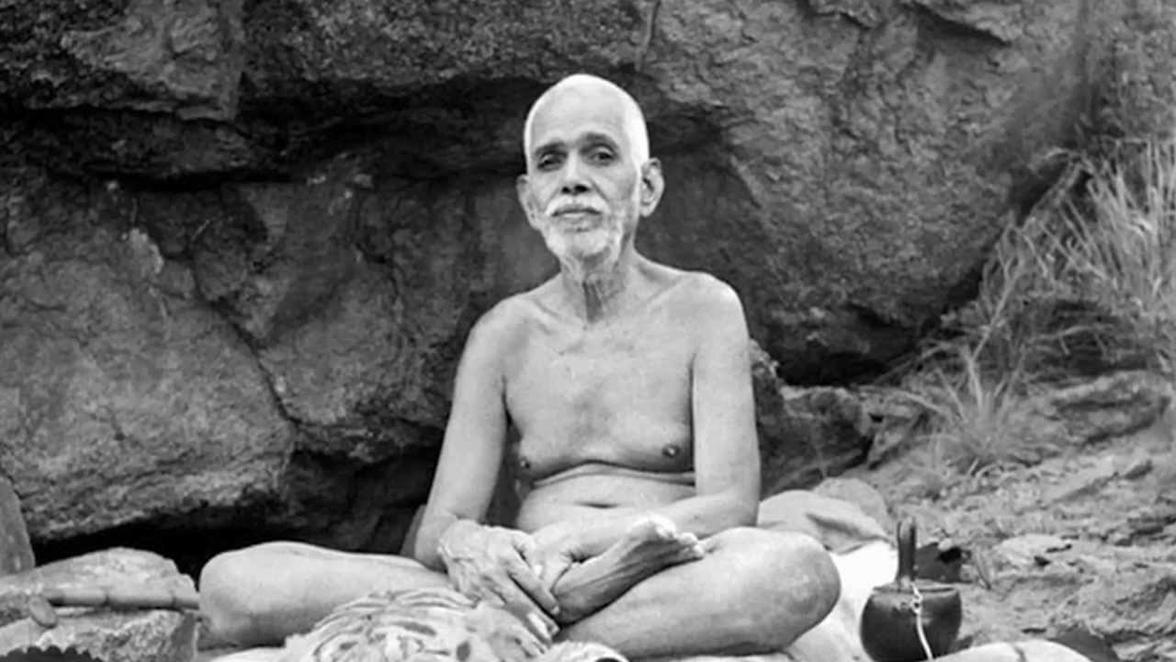
Sri Ramana Maharshi was born in the village of Tiruchuli (48 kilometers south of Madurai) on December 30, 1879. At age 16, when he was a student at a secondary school founded by American missionaries in Madurai, he had a spontaneous and total illuminating experience that converted him into one of India's greatest sages.
He completely renounced his ordinary life and traveled to Tiruvannamalai, a sacred town where the Arunachala hill is located, which is a direct manifestation of Lord Shiva, one of the three main deities of Hinduism.
After three years, during which he lived inside the main temple and other places in a state of strong absorption in which he seemed to have no awareness of his body, he moved to Arunachala, to the Virupaksha cave, where he remained for 17 years. In 1902, his devotee Sri M. Sivaprakasam Pillai asked him a series of questions about the spiritual search in general and about self-inquiry. Thus was formed the 28-question edition that first appeared in print in 1923.
The instructions in the text of "Who am I?" clearly detail Sri Ramana's main teaching, called "self-inquiry," which leads directly to the liberation of the individual soul. One must persist in inquiring "who" is having all kinds of thoughts that arise, until finally the "I thought" is destroyed and only the non-dual Self remains. In that condition of realization, there is no "I," nor sufferings, only peace, silence and absolute bliss. One must remain extremely alert and not let the mind wander. The various disciplines on breathing, meditation, repetition of God's names, etc., are only auxiliary practices and help the mind become single-pointed. Thus, the mind is strengthened and self-inquiry can be carried out constantly and without repression or violence. This is in summary the main teaching of Sri Ramana Maharshi in the text "Who am I?"
For now, tomorrow I'll move from the hotel to the ashram, and begin 6 days in this fantastic place; I'm very happy about it.
Moments of inspiration.
"Freedom is beyond silence; this is a necessary condition, but not sufficient."
"Time exists only to give us billions of opportunities during our life to start from scratch at any of them."
"Humility is surrender, surrender to God"
Days pass and I continue enjoying my daily routine. I get up early and have breakfast at the hotel; although I've changed residence I continue going to eat and have breakfast at the hotel. It's the only way that the schedules established by the ashram for meals don't condition my routine. Immediately after I face the ascent to Arunachala, slow, barefoot and invoking God, trying to keep my mind focused on it. I've already accumulated a supply of coins to give along the way to the poor who occupy the edges of the path in the initial ascent. Once up, in Ramana's house, I meditate for a while and again face the return path to the ashram where I sit in the great samadhi hall to read for a while. Next I go to my room and do my meditation routine; then I go to eat, and finally the afternoon I combine with reading in the ashram, work, some banana smoothie and again meditation. I'm delighted. When you settle into routine, the results of practices become more evident.
I'm reading one of the books by Ramana Maharshi that I bought "The Path of Self-Realization," which deals with his life and his self-realization process. In the book there's a chapter dedicated to Arunachala. Below, I describe some details extracted from the book that can serve to have a good idea about the relevance of the place.
Sri Bhagavan (Ramana Maharshi) always encouraged the pradakshina (circumambulation) of the mountain. Even in the case of elderly or invalid people he didn't disapprove, he only asked them to do it walking slowly. In reality, pradakshina is supposed to be done slowly, "like a pregnant queen in her ninth month." Whether in silent meditation or with chants and blowing of conch shells, it must be done on foot and barefoot, not in a vehicle. The auspicious moments are those of Shivarathri, Shiva's night, and Kartikai, the day when the constellation of Kartikai (Pleiades) is in conjunction with the full moon, a date that usually falls in November.
Arunachala is one of the oldest and most sacred places in India. Sri Bhagavan declares that it was the Heart of the Earth, the Spiritual Center of the world. Sri Shankara referred to the mountain calling it Mount Meru. The Skanda Purana declares: "Among all, Arunachala is the most sacred place. The Heart of the world. It is known as the most secret and sacred Heart-Center of Shiva." Many Saints have lived there, mixing their sanctity with that of the mountain. It is said, and Sri Bhagavan confirms it, that there are siddhas (sages endowed with supernatural powers) who dwell in the caves, either with physical bodies or not, and some say they have seen them at night moving like lights around the mountain. In Ramana's words: everyone sooner or later travels to Arunachala.
More than two years passed since his arrival in Tiruvannamalai until Sri Bhagavan began to live on the hill. Until that moment he had remained constantly in some sanctuary or temple. Only towards the end of 1898 did he fix his dwelling in the small temple at Pavashakkunru, sanctified many centuries before by the presence of the Great Saint Gautama Rishi. And it was in this precise place that his mother found him. He never again left Arunachala. At the beginning of the following year he moved to a cave on the same mountain and later lived in different caves until 1922, when he moved to the foot of the hill. There the current Ashram was built and there he spent his last years on Earth. While he was on the mountain, he lived almost all the time on the south slope. The Ashram is also situated to the south, right next to Dakshinamurthi. "Facing South" is one of the 108 Names of Bhagavan that are now chanted daily before his Samadhi (tomb).
After a few days climbing Arunachala I can say that the mind is becoming stronger dealing with thoughts and clearer when seeing "the mental scenario." As Ramana says: Arunachala, source of knowledge and dispeller of illusion.
Finally I decided to go visit the great temple of Arunachala. The good thing about having several days ahead is that you can choose the perfect moment to do things. I have to say that the enclosure is huge and the experience was amazing. I don't know if it was because it was Sunday, but there were quite a few people, without being excessive, visiting the temples.
I knew, from having read it in the book, that in one of the temple towers there is a linga that is "the star" of the place, and that's where I headed. I joined the queue and entered the interior. Although it's illuminated, the atmosphere transports you to the sets of Indiana Jones movies. The stone is ancient and dark, everything with reliefs and engravings, the ceilings not very high and, of course, flowers, leaves and candles everywhere. Being in the queue, it gives you time to soak up the atmosphere and in the end you end up raising your hands in pranam position whether you want to or not. The moment comes to approach the lingam; all the decoration and previous carvings are increasingly intense and just when the moment arrives, you only have about five seconds to see it. There it is, at the back of a dark room, surrounded by candles, a dark black monolith, exerting its magnetic power. All this at the foot of the sacred mountain, in the heart of the earth.
One of the many things I'm learning from Ramana through reading the book is how relentless he was about the inevitability of destiny. I already knew this aspect of reality because I've read it many times, but reading in his words how he refers to its strict inevitability has generated in me a much closer point of approach to the matter. Your destiny is marked from your birth, as well as the things that have to happen and those that don't, therefore, they are simply and inexorably waiting for their moment. The only thing over which we have freedom is over our identification with the body and with events, so at best you can only become a "free" spectator of what is going to happen.
Another phrase I also really liked is: "You thank God for the good things that happen to you, but you don't equally thank for the bad things that also happen to you."
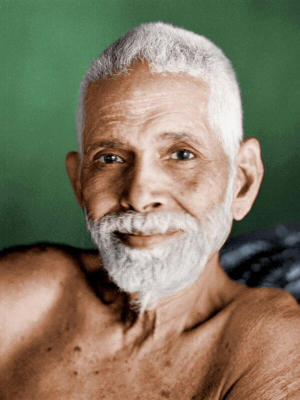
Ramana Maharshi
A curious detail of my stay at Ramana's ashram is the coexistence with the frequent sound of the peacocks that wander around the grounds.
Why do I say curious detail? Let me tell you...
I was born in Barcelona, in a building right in front of the city's Zoo; the lion cage is a pole vault away from my balcony. The Zoo is elongated and the different species are distributed along it, and my building is at the height of the lions and peacocks. I grew up listening to the intermittent roar of the lions and the crazy songs of those birds during the week, and on Sundays waking up with the "sardanas" that were played right in the park across the street, "The Citadel Park." Mind you, I'm not complaining, although part of my eye tic comes from being immersed in that racket... ;)
Jokes aside, it's a wonderful memory and I wouldn't change it for anything. It's been twenty years since I "left the nest" and here, thanks to the peacocks, I've reconnected with my childhood.

Another even more curious detail, if possible, is the following. When I made reservations at Ramana's ashram from home, I have to admit that between "yes you can" and "no you can't," some emails were exchanged. Finally, the dates were clear and that's why I had to combine the nine days between my stay at the hotel and the ashram; six of which were at the hotel and the rest at the ashram. The first day in Tiruvannamalai, when I went to visit the ashram for the first time, I asked a monk of the place about the policy of restriction of days of stay at the ashram, to which he answered that he had no knowledge of that policy. Immediately my head exploded and I started thinking about changing accommodation immediately, but of course, it's a very busy place and requesting accommodation without room to maneuver was going to be a matter of miracles. And so it happened. At the moment when the monk grabbed the reservation agenda to review availability, incredibly my name appeared written precisely for the days I wanted to stay, instead of only for the last three days, as I had planned... Om, Guru Om ...
I still have four days here left, during which I'll continue enjoying my nice routine and gathering the fruits of the work done.
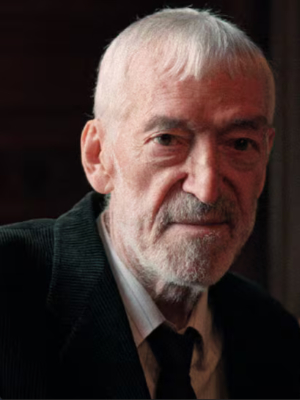
My next destination will be Anantapur, another much anticipated and desired destination. In Anantapur I'm going to visit the Vicente and Ana Ferrer project. Both are very well known and loved in Spain, especially in Catalonia, since Vicente was Catalan. Catalonia is where he went to ask for help during the first years to start the project. What they managed to do in Anantapur with God's help was incredible, and I want to go see it in person. It will be a destination where I'll also have contact with many Spaniards, since they are the ones who primarily do volunteer work. Don't miss the film where actor Imanol Arias plays Vicente Ferrer impeccably. In it you can become aware of the great work he did during his years in Anantapur together with his wife Ana Ferrer, who currently still leads, even in 2024, the project. You can find the film on streaming platforms without problems, it's called "Vicente Ferrer".
This text corresponds to my experience returning to Tiruvannamalai in 2024. Things here have changed little since my last time in 2022, but whenever I arrive at this place I feel happy and fortunate at the same time. So, with renewed enthusiasm, I'm ready to share with you my reflections during my stay. I hope you enjoy it and can take good advantage!
I arrive in Tiruvannamalai again. Tiruvannamalai is like a tongue twister for people who still don't know how to pronounce it. How do I get to Tiruvannamalai? well I arrive by plane first to Chennai, from Calcutta, and later having survived a bus journey that has tested all my spirituality; that's how I arrive in Tiruvannamalai.
From where the plane drops me off, in Chennai, I have to go on an adventure to find a bus station, locate my bus, get on it and head towards Tiruvannamalai, something I've never done before, because I've always gone by taxi like a Maharaja. But this time I said come on, dare yourself, it's about time. So, after the adventure, I've discovered that I like it, because the truth is that when you take planes you get into a cabin that transports you from one side to another and it's like getting into a time machine. That is, you miss the experience of traveling and, on the bus, I've realized, at this point in life, that it offers you that, it offers you the experience of traveling because you're seeing the landscape, and whether you want to or not, you also interact with the bus people.
Regular buses don't have air conditioning, and here in the south it's hot. The bus moves more than a candy in an old man's mouth and is very old, but it takes you everywhere, and for a price that's laughable. It cost me to come from Chennai airport to Tiruvannamalai, a five-hour trip, one euro and a half. It's true that the trip is hard, but it has other things that compensate.
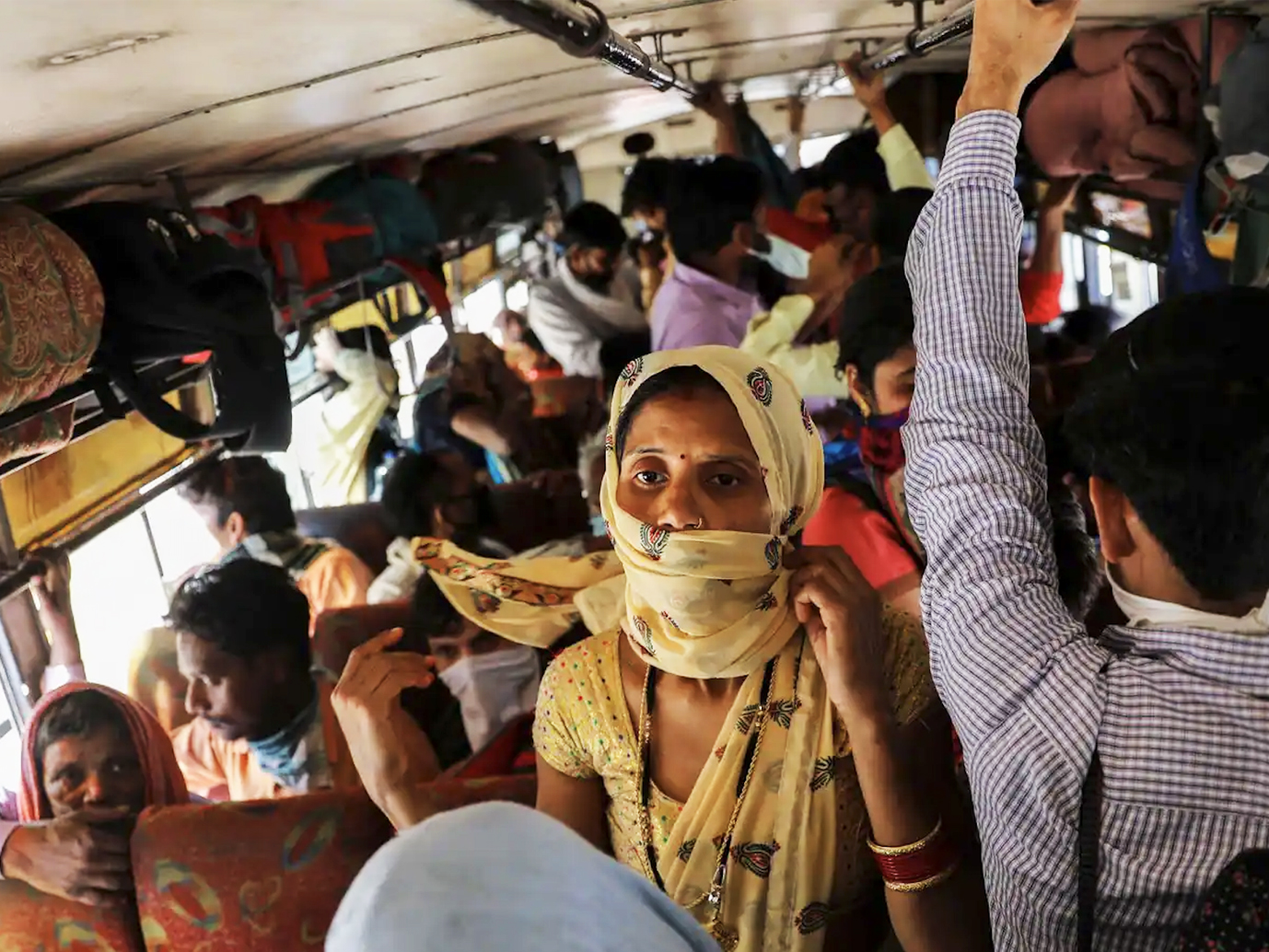
Buses in India
I arrived in Tiruvannamalai on a day when the night was astrologically auspicious, a day called Maha Shivaratri. It's a night when, for example, all Sadhguru devotees, during that night try to stay awake to keep the spine straight and thus favor all the influences on the chakras, which during that auspicious night you receive. So, for example, at Sadhguru's ashram what they do is organize concerts and activities to keep people entertained, awake and therefore upright.
After having made a bus trip of almost five hours, now finding myself well after having been sick for days, and therefore, being cured, I feel "on fire." I head to the hotel, and on the way, I see a crowd of people walking down the street, and I ask a foreigner, why are so many people walking? she answers me, because it's Maha Shivaratri, did you know? And she tells me that, here in Tiruvannamalai, during this night, people dedicate themselves to going around the Arunachala mountain, which is a sacred mountain, a materialization of Shiva.
Throughout the year many activities related to Arunachala are done, and that particular night people walk all around it for almost six hours.
During these days here, I'm going to eat at places where they make me tomato soup and vegetable noodles. It's the only thing I'm eating because I'm saturated with Indian food; I've reached my limit. I've found that vegetable noodles and tomato soup I like, wherever I go they cook them well, so I'm feeding myself on that and fruit, basically. I don't mind repeating. Until my body doesn't regain interest in Indian food again, I don't see myself eating anything else.
Well, that. I arrive on Maha Shivaratri night in Tiruvannamalai and discover that people are walking down the street barefoot in celebration mode. Since I feel "on fire," and I'm starting to feel good, I tell myself you know what? I'm signing up for this right now.
I go to the hotel, leave my things, take off my shoes and face the road after the crowd. How am I not going to sign up for this? I'm unable to get into bed knowing I can participate in this event!
Well that, I take off my shoes and join the procession as one more. It must be remembered that Indians, on the soles of their feet, don't have skin, they have Michelin rubber, because they walk barefoot all day and on all types of terrain. For them walking on asphalt, because this route is done on asphalt, is nothing.
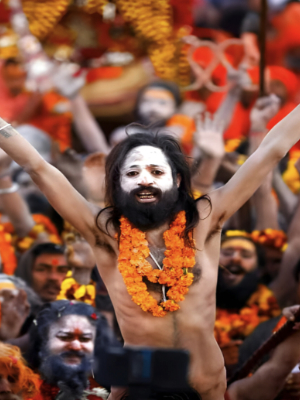
I, unaware of myself, throw myself into the adventure without thinking about this detail. Imagine that I come from having spent two weeks with a cold and just when I start to get better, I launch into this adventure, so I start super enthusiastic. During the route there are lots of Sadhus, on both sides of the road, who are these itinerant renunciants in orange robes that are all over India. There are also lots of temples where people stop, make a small worship and continue, plus a multitude of food stalls and loudspeakers making a mantra sound continuously. That is, a truly incredible experience, truth be told. These things you can only do in India.
Well, there I am, it's four hours, okay? After an hour, everything is super cool, but when you've been going for two hours you start to think, "wow, how big this mountain is, it never ends," but you keep going, since you're still on top with enthusiasm.
At three hours I realize that my feet hurt a little when I walk, but I continue, and after a while, I look at the soles of my feet and see four huge sores. I had gotten four blisters, two on each foot, on the heel and under the toes. Also, my feet were full of grime, black as coal, from walking down the street for more than three hours, with blisters that were about to burst and I tell myself: "oh no, no, no, I'm making a mess, I'm making a mess!". Me, who was recovering, and now I go and mess it up with these feet! And I tell myself, "no, no, no, no, that's as far as I go." I try to walk a little more with flip-flops on and I see that I can't; my feet are destroyed. I didn't even realize, and with the heat of the asphalt, although I didn't feel it hot, the constant impact cooked my feet and I got these four blisters.
I see that I can't walk with flip-flops either and I say, "well nothing, this is as far as I got Arunachala, I'm very sorry, but I'm not going to mess up my feet for wanting to finish you." At first the impulse overcomes me to want to finish, but I tell myself, you know what? I'm leaving it here. So I get a rickshaw and go back to the hotel. Once at the hotel, I wash my feet while witnessing the atrocity of seeing four blisters that struggle to seduce my attention, each one bigger; I couldn't believe it...
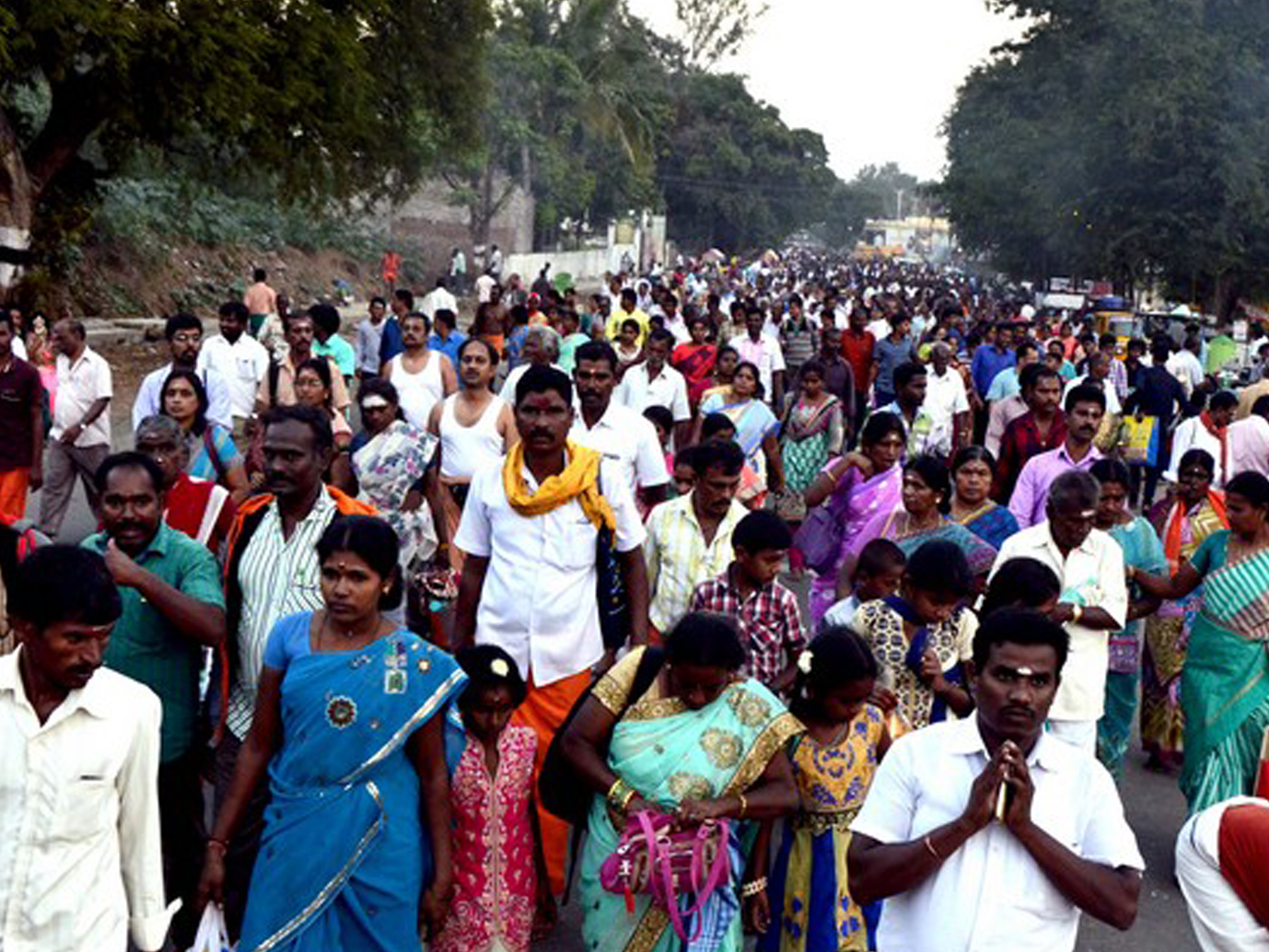
Maha Shivaratri in Tiruvannamalai
I've been in Tiruvannamalai for six days. Of those six days, I've spent four limping. Wherever I went, I did so limping. Little by little, each day I felt a little better, but the first days, I thought, "Enrique, how can you be so stupid, my God?"
The last two days I could already go with flip-flops, but I still noticed my heel sensitive from the impact when stepping. I had activities scheduled in Tiruvannamalai, but this time I felt like being very calm and barely moving. The dynamic has been to meditate and visit Ramana's ashram. There are two spaces there that I really like. In one, there's the room where the bed is located where Ramana used to lie down, sleep and receive people; people enter and meditate in silence. I visit this place every day and do the mantra that Babaji gave to all Kriya Yoga devotees. Then, in the afternoon, I go to a hall where Ramana's samadhi is located. It's a very large hall where people sing and walk around his tomb. It's a very beautiful place. Also, it's very cool and it's appreciated. Finally I return to my room and do the evening meditation, not without first having my much desired banana smoothie.
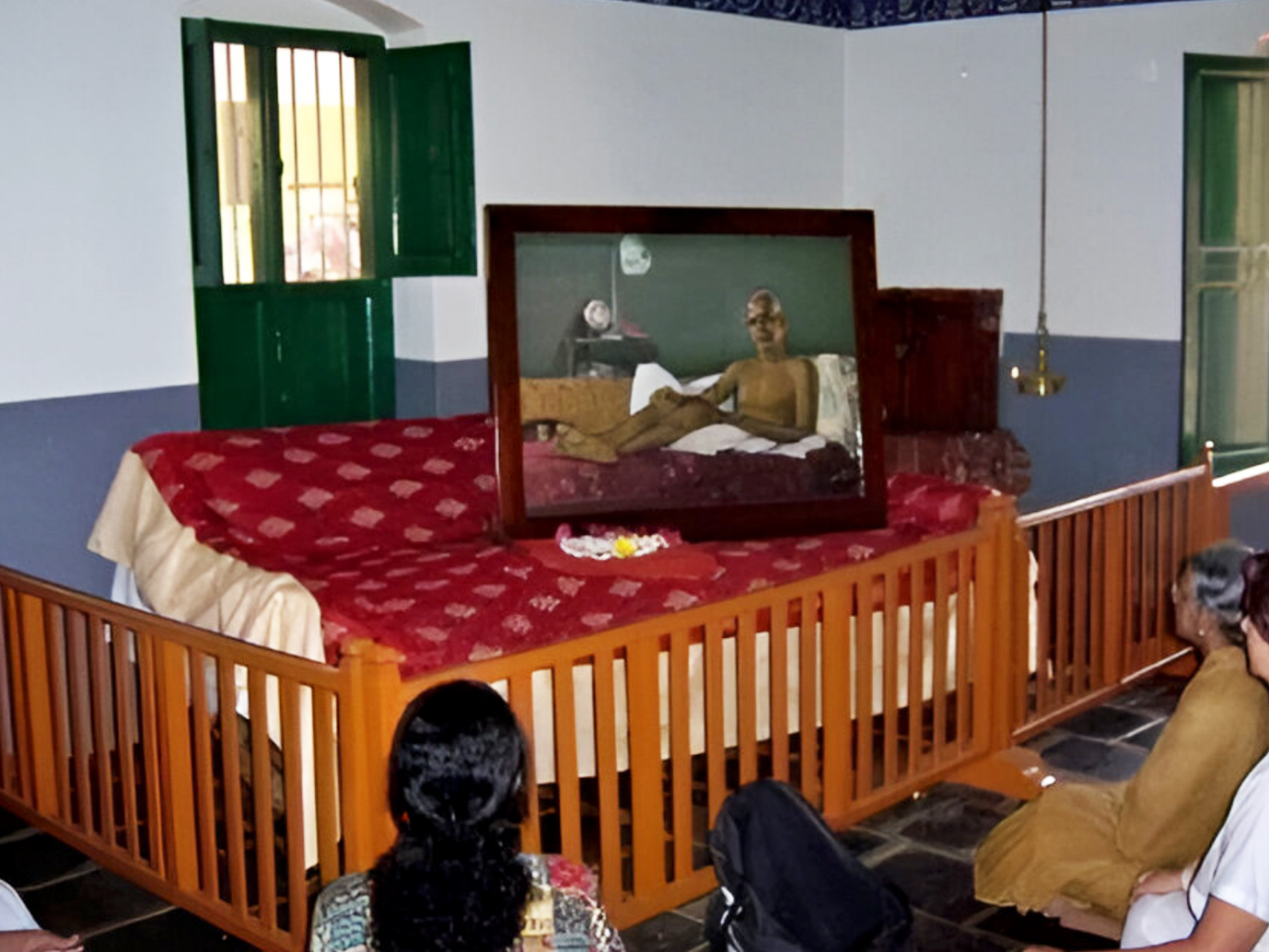
Ramana's samadhi hall
To eat I go to a nice restaurant where they make vegetable noodles and tomato soup and, then at night, my dinner is a mango lassi, which I love.
I came here to enjoy and each time one has to discover what enjoying means. And in Tiruvannamalai it has meant that, that routine that I love. When I hit upon a routine I like, I follow it firmly.
Another thing I'm loving on this third occasion in India is that I'm starting to feel integrated. I'm starting to know many small tricks of daily life: how to move, where to go, what yes, what no, etc. And that allows me to flow relaxedly. Under these conditions you have the sensation of living a life within another life.
The relationship between chanting Babaji's mantra and dreams. Since I recite the mantra very frequently, I'm having dreams in which very basic aspects of my nature are revealed, things that one has encountered, especially in stages of youth, adolescence, things that greatly mark your character. I've had the intuition that the intensive practice of the mantra what it has done has been, in some way, clarify the muddy water of karma to be able to see through the unconscious in dreams these patterns that are recorded in karma.
It has been very interesting to have these dreams where I've been able to see these karmic patterns so clearly and, at the same time, the intuition of connecting the practice of the mantra with the fact that this has been revealed. I believe that the practice of the mantra and techniques are tools to clarify the veil, to clean it, to make more transparent that which stands between you and what's inside you. That's the intuition I've had.
The aforementioned mantra was given to me by Swami Kriyanandaji in Ranchi, who by the way is a very special and particular Swami, there is documentation about him that reveals a person, a monk of great stature. Having had the privilege of being with him in Ranchi is an honor, as well as the fact that he gave me the mantra.
We must not forget that when he gives me the mantra, he does so after I asked him: "Swami, what could you recommend for me to practice the presence of God during the day?" and then he answers: practice this mantra of Babaji.
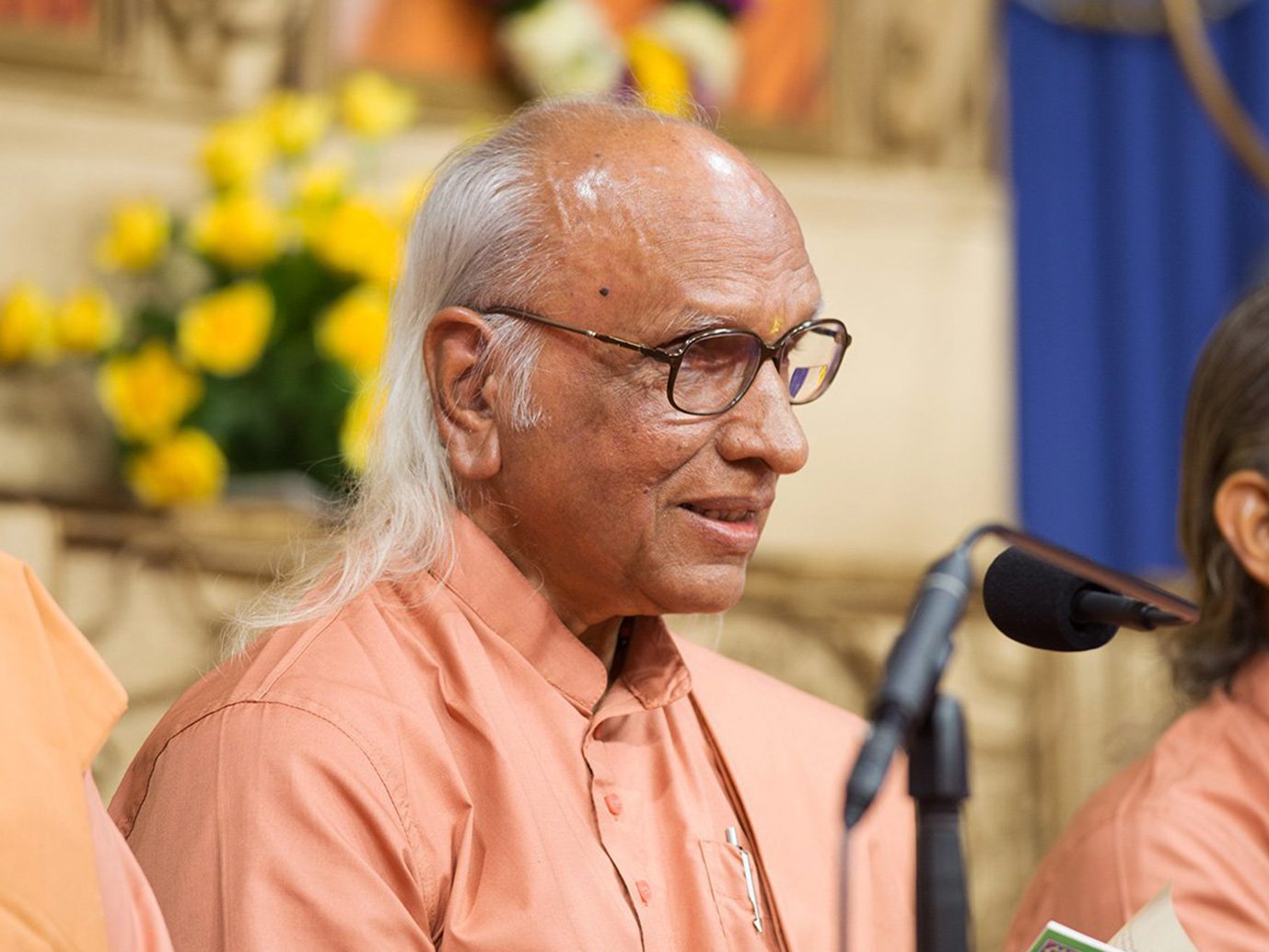
Swami Kriyanandaji. Monk of Yogoda Satsanga Society
All this connects me with the book "The Practice of the Presence of God" cited by Daya Mata in one of her talks. The fact is that there are many formulas to practice the presence of God during the day. And this being, something so important for a devotee, at least for Yogananda's devotees, having discovered, thanks to Kriyanandaji, that this mantra is a mantra to practice the presence of God, suddenly I've found what in recent months I was looking for, because you simply have to recite it and, being a sacred vibration, it already takes care of doing in you all the work it has to do.

The Practice of the Presence of God
In the book "Autobiography of a Yogi" there is a photo in which Yogananda is next to Ramana Maharshi.
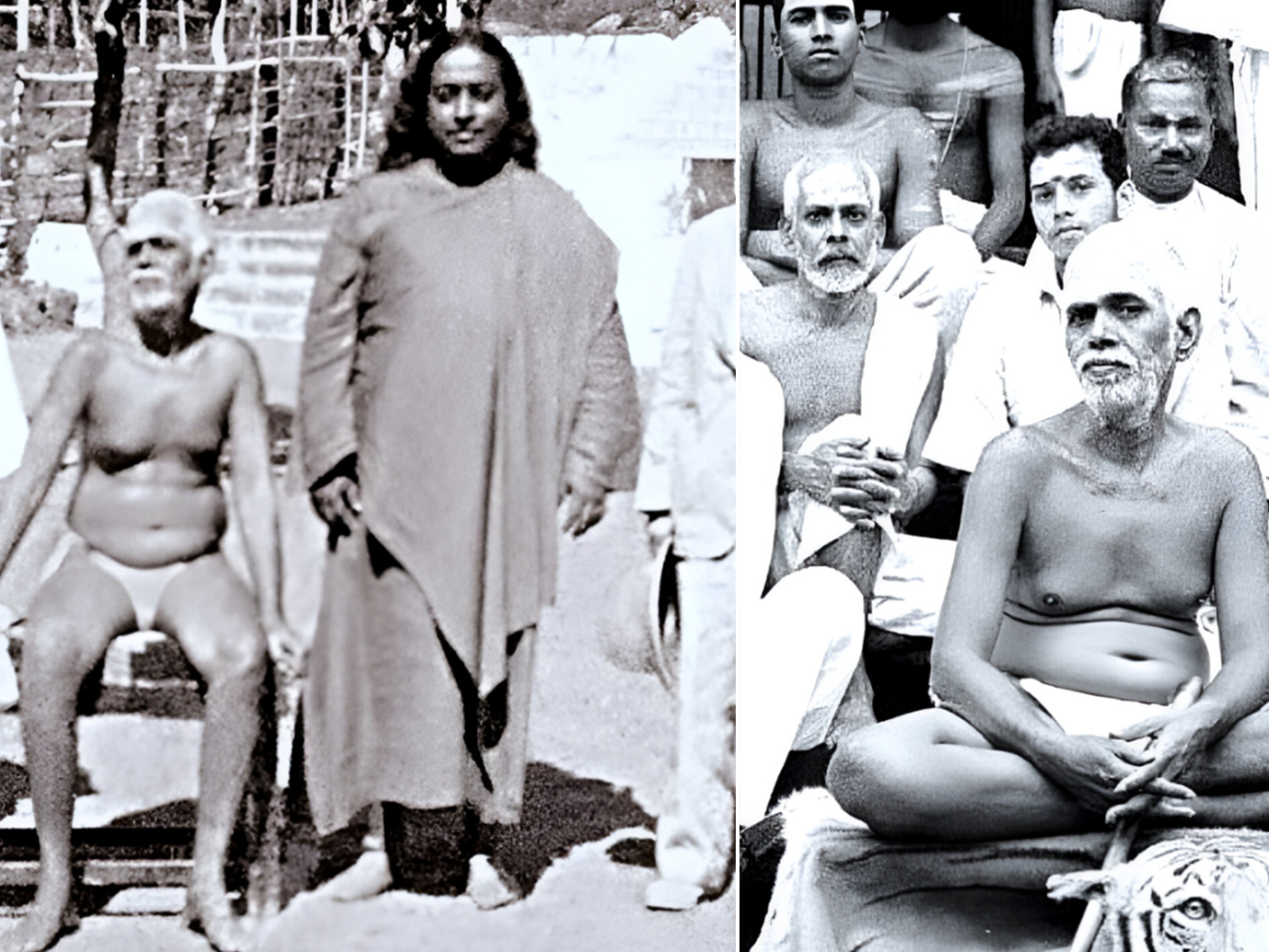
Ramana Maharshi and Yogananda
Below I leave the conversation they had at their meeting on November 29, 1935.
Swami Yogananda:
How can the spiritual growth of people be achieved? What
are the
instructions that should be given?
Ramana Maharshi:
They differ according to the temperament of individuals and according to the spiritual maturity
of
their minds. No instruction can be given to the masses.
Swami Yogananda:
Why does God allow suffering in the world? Shouldn't he, with his
omnipotence, end it at one stroke and order universal realization?
Ramana Maharshi:
Suffering is the path to realization.
Swami Yogananda:
Shouldn't it be ordered another way?
Ramana Maharshi:
It is the path.
Swami Yogananda:
Are yoga and religion antidotes to these sufferings?
Ramana Maharshi:
They help you overcome suffering.
Swami Yogananda:
Are yoga and religion antidotes to these sufferings?
Ramana Maharshi:
Who suffers? What is suffering?
Arunachala mountain.
Why do I come to Tiruvannamalai being a devotee of Yogananda? Because here
is
Ramana's ashram and it's a place with incredible energy. You have to be here to realize
it.
Whenever I come I have the habit of climbing the mountain walking barefoot and praying, because that is
the
ritual. I climb the mountain to a small house where Ramana Maharshi lived with his mother for
many years.
People arrive there and meditate in silence.
Whenever I come to Tiruvannamalai, every day, at some point in this wonderful routine I have set up, I escape and climb the mountain. But this year, because of my feet, I haven't been able to. I thought that maybe the last day I'd be better, and so it was. The last two days I was already quite well. I didn't climb barefoot because I didn't want to tempt fate, I put on some socks and managed to climb.
When I got to the top, the access was closed, so I couldn't enter the little house to meditate. I stayed outside, surrounded by monkeys. Luckily, I had nothing of value they could steal from me. I sat there and was able to reconcile with the mountain, understand why it's so amazing. You have to be there to realize the peace that surrounds you when you're there with the right attitude and your heart in the right place. I believe you have the possibility of connecting with the essence of the mountain and it gives you a lot, it gives you something very special. So much so that, after being there for a good while, I decided to go down. The path from the foot of the mountain, once down, to the hotel was like floating. The only time I've had a similar sensation was when I was in Encinitas, at the master's ashram in Encinitas. When I arrived there for the first time, I also had an incredible surprise; the sensation was just as clear and profound.
I arrived at the hotel saying: "thank God! that on the last day I was able to climb the mountain, and the mountain gave me everything, making me remember why it's worth coming all the way here, without doubt".
This is all that Tiruvannamalai has given me this year. As I said earlier, I'm very happy to have adopted the attitude of valuing my personal journey regardless of where I am, as this relaxes me very much; if I can't do what I had planned, no problem, I'll do it another time. What's important is important, and that's the priority.
As I mentioned in previous trips, the experience of coming to India frequently means that each time you repeat more of the known and desired places, and there are fewer new ones to discover. This translates to the fact that, in those places that are repeated, daily routines are consolidated and create an ideal context to enjoy simply "being," enjoying those things you've chosen to do each day and that are the "unavoidables" of your stay in that place. So coming to India to "be" is increasingly taking greater prominence over "discovering." There are fewer and fewer places to discover that interest me and the fact is, although the number of ashrams and Kendras of YSS in India is very large, the list of those that meet adequate conditions for lodging is short.
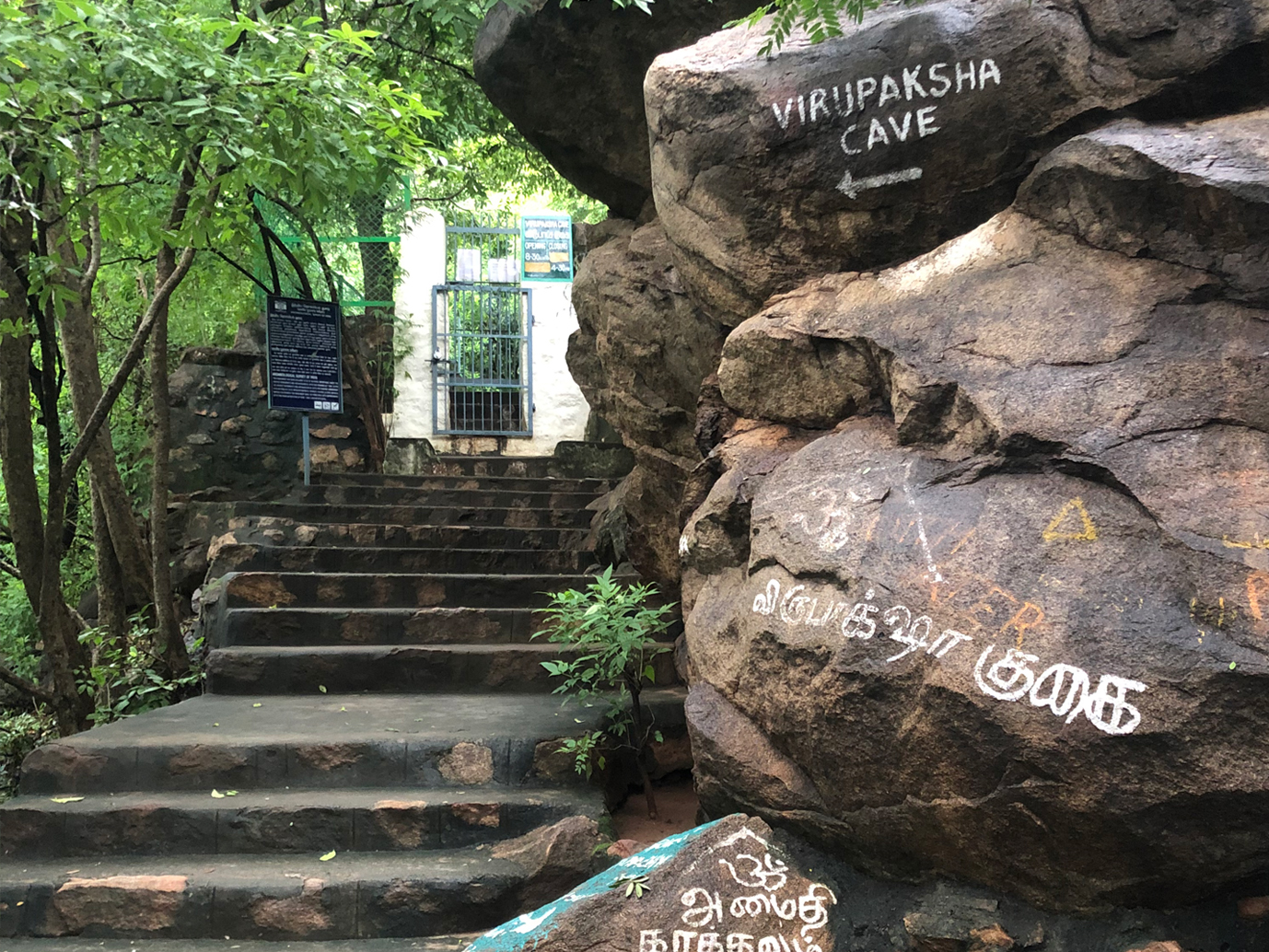
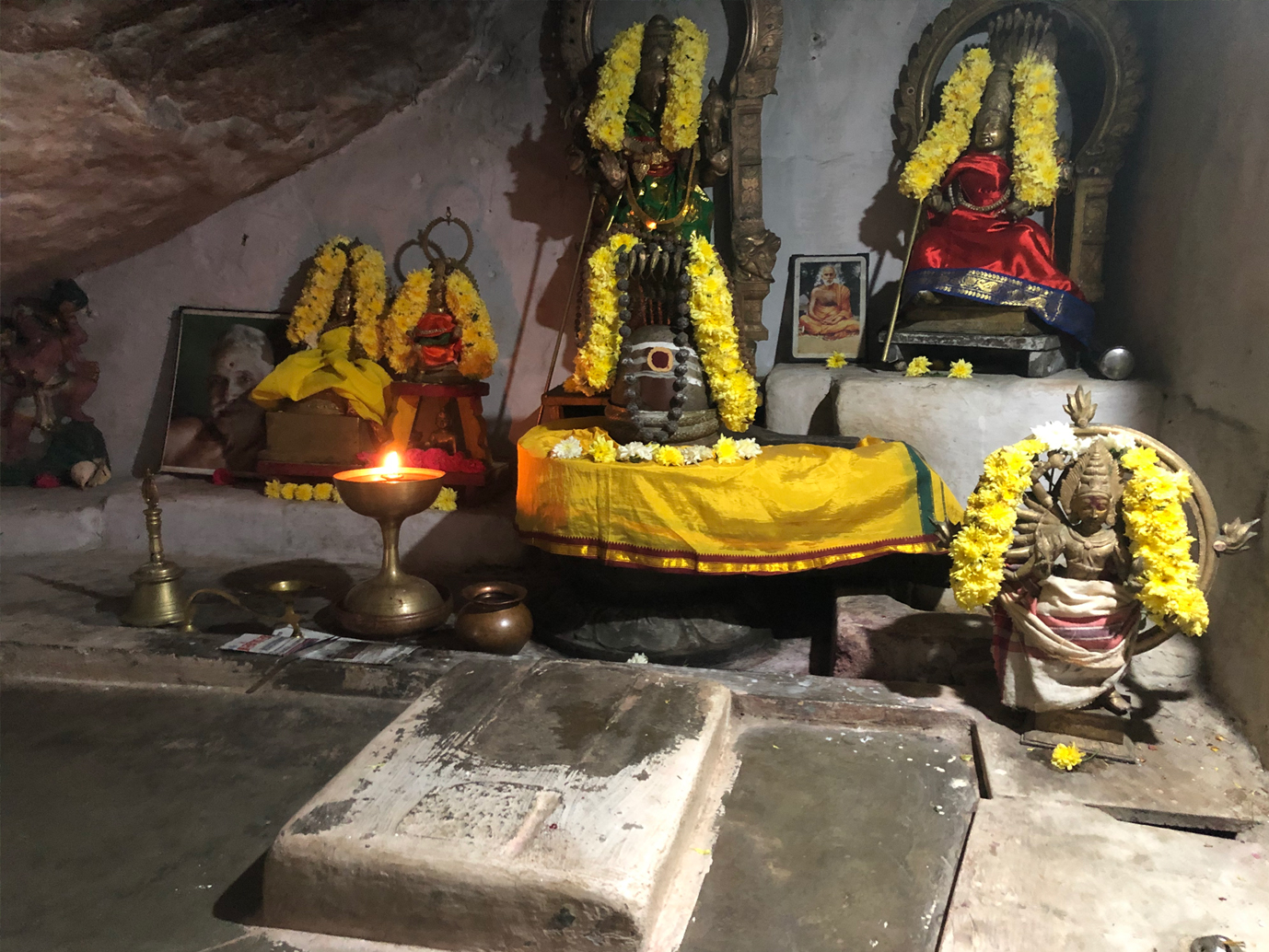
It is for all this that, on this 2025 trip, my stay in Tiruvannamalai has focused on "being," repeating everything I like to do in this fantastic place. I would only highlight two new things. I visited the cave where Ramana spent some years living and meditating. It's a place accessed by a small path that descends from Ramana's house on Arunachala mountain. It's well marked and indicated. The cave has been integrated into a small house that allows orderly access and keeps the space controlled and monitored. It's a space for 8 people meditating and without ventilation, so in the hot season it must be quite difficult to remain inside. Now, in November, you can be there and I must say it's a highly recommended experience. Meditations in this place are very good.
Finally, I should say that Ramana's ashram has changed certain things since the previous visit and, among them, the most important is that they now only provide accommodation to Ramana's devotees. On this occasion I was able to dodge the bullet, but on my future visits I'll have to find a hotel again for my days in Tiruvannamalai. I don't know if in that case I'll be prohibited from attending meals in the ashram dining hall. This year I ate for the first time at the ashram and I must say I loved it. I hope in the future to be able to continue doing so even though I'm staying at a hotel.
Although for this occasion I've had recommendations of other places to visit within Tiruvannamalai, with "special people," I've prioritized the tranquility and calm that comes from moving little and focusing on few things. So I've greatly enjoyed the practice of "being" versus "discovering." And you should know that coming to India on trips as long as the ones I usually take requires managing energies. India is a country that for Westerners demands a lot of patience, tolerance, good philosophy and a lot of energy to cope with the fact of being moving for more than a month in a country where short trips are made hard by noise, the state of roads, traffic jams and the volume of people and traffic.
So, if you learn to get the pulse of the country, in the end you discover that taking things calmly and managing energies is vital to sustain long periods.
Useful Information
Transportation:
Taxi from the hotel in Puducherry to Ramana Maharshi ashram in Tiruvannamalai; cost: 3700 rupees.
Accommodation in Tiruvannamalai:
Contact and reservations at Ramana's ashram: stay@gururamana.org
Contact person: Mr. Murti.
Website: Ramana Maharshi Ashram
Recommended donation: voluntary, not defined.
Places to visit:
The Ramana Maharshi ashram. Excursion to Arunachala mountain where you can also visit the house where Ramana lived (fantastic place to meditate). This excursion begins right at Ramana Maharshi's ashram and goes into a 45-minute walk along a cobblestone path. It's recommended to walk barefoot and slowly to enter into communion with the mountain. The main tourist attraction of the city: the temple complex Arunachala Temple. The route of the 8 lingas, The 14 km Girivalam route that is recommended to do at night to avoid crowds.
Important:
If you haven't read the Considerations section yet, don't forget to do so. In this section you'll find very valuable information that can save you many headaches. In particular, there are details related to credit cards and mobile phone use that are essential.