Kriyaban
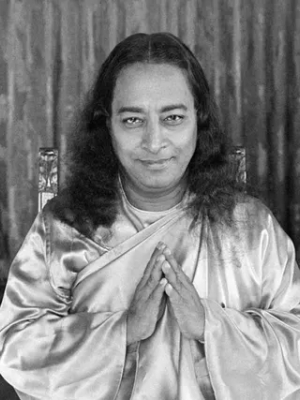
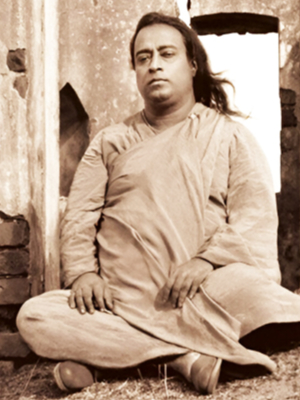
The only way to find God's Love is to surrender to Him.
So master your mind that you may offer it to Him.
So master your mind that you may offer it to Him.
"Paramahansa Yogananda"

Better readingon large screen:www.kriyaban.es
Before starting with the experiences in Anantapur, I would like to dedicate a few paragraphs to my last sensations and memories in Tiruvannamalai.
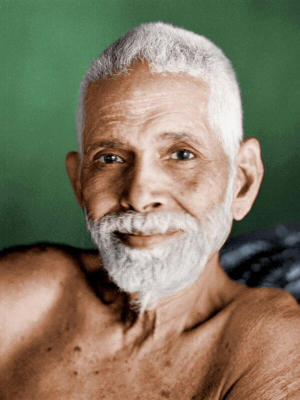
When I arrived in Tiruvannamalai, I knew I needed a book that would introduce me to the world of Ramana: his life, the Arunachala mountain, the ashram, and the city, as I knew nothing about it. It was going to be nine days, and to make the most of the experience, it was necessary to document myself minimally. Thanks to Ramana Maharshi's book, "The Path of Self-Realization," I was able to understand each corner of the place better.
The book accompanied me until the last day of reading. Just when I reached the last paragraph, it coincided with the closing of the puja ceremony being held in the mahasamadhi hall. I took that moment to join in and, from the bottom of my heart, thank Ramana for his life and how he dedicated it to the service of truth seekers.
Undoubtedly, I left Tiruvannamalai telling myself: I will return...
Now, a few days after being in Ranchi, where I started reading the biography of Janakananda, I sense why I had "the need" to buy this book. I believe the master induced me to understand the incredible importance of Janakananda in the life of SRF and YSS, and Ranchi was the perfect place to start. Janakananda not only helped save the organization in its most delicate financial moment but also contributed to its expansion. Additionally, I have the theory that he left his fortune and everything his businesses generated to SRF and YSS. According to this theory, one might think, wouldn't it be unnecessary to continue making donations? I believe donations are still requested not because they are economically dependent on them but because they help develop in the devotee's life the openness of heart through the practice of gratitude and detachment from material things. But well, this is a very personal theory.
I say goodbye to Tiruvannamalai and immerse myself in the journey to Anantapur. Again by bus, and all the occupants blessed before departure with a smoky ritual in the purest Hindu style. I make a stopover again in Chennai, where I take a sleeper bus that will take me bumping along for ten hours at night.
In Chennai, there are two YSS places: the retreat on the outskirts (where I stayed) and the temple in the city center. The Chennai temple is very cozy; you can only meditate there. The temple caretaker at that time was charming. I took advantage of my hours until the bus departure, meditating in the temple and buying photos of the gurus (at very low prices). Chennai is the most representative place of the Western lifestyle in India. You start to see Mercedes, people smoking, and luxury shops everywhere. We will see over time to what extent this lifestyle affects the current religious, chaotic, and ritualistic India.
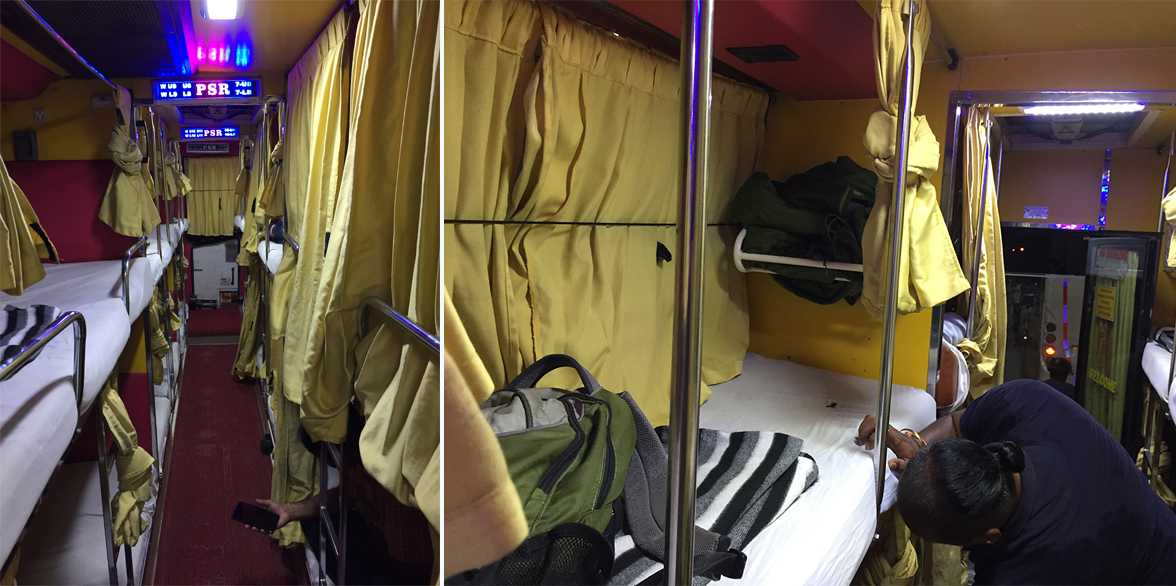
Sleeper bus
Now, Anantapur.
I arrive at 5 in the morning. As I approach the ashram, I look out the window for the golden statue of Vicente Ferrer. In India, statues of people celebrated by society, usually Indians, Hindus, saints, politicians, etc., but always natives, are placed at the crossings of towns and cities. Therefore, Vicente's statue has double value, deserved and recognized by the people of Anantapur. Finally, 200 meters before arriving, there it is, welcoming me.
When I arrive at the Campus, it is night, and I can barely grasp its size, but the next day everything changes, and I become aware of how big it is. This complex houses the offices from where all the foundation's projects are managed, accommodations for some workers, and guest houses.
When Vicente arrived, everything was a desert as far as the eye could see, and that is why the infrastructures of the projects scattered throughout Anantapur are enormous: schools, hospitals, sports fields, water reservoirs, solar panel farms, houses for people, wastewater filtration, and much more. All this is thanks to the money contributed over 50 years by Spaniards through donations and the child sponsorship project. I believe the project's success, how it has transformed the region, and most importantly, the confidence it has instilled in people, is due to a lifetime's work and not a one-time incursion into the territory. Tireless work by Vicente, his wife, and the team of people who have accompanied them for 50 years.
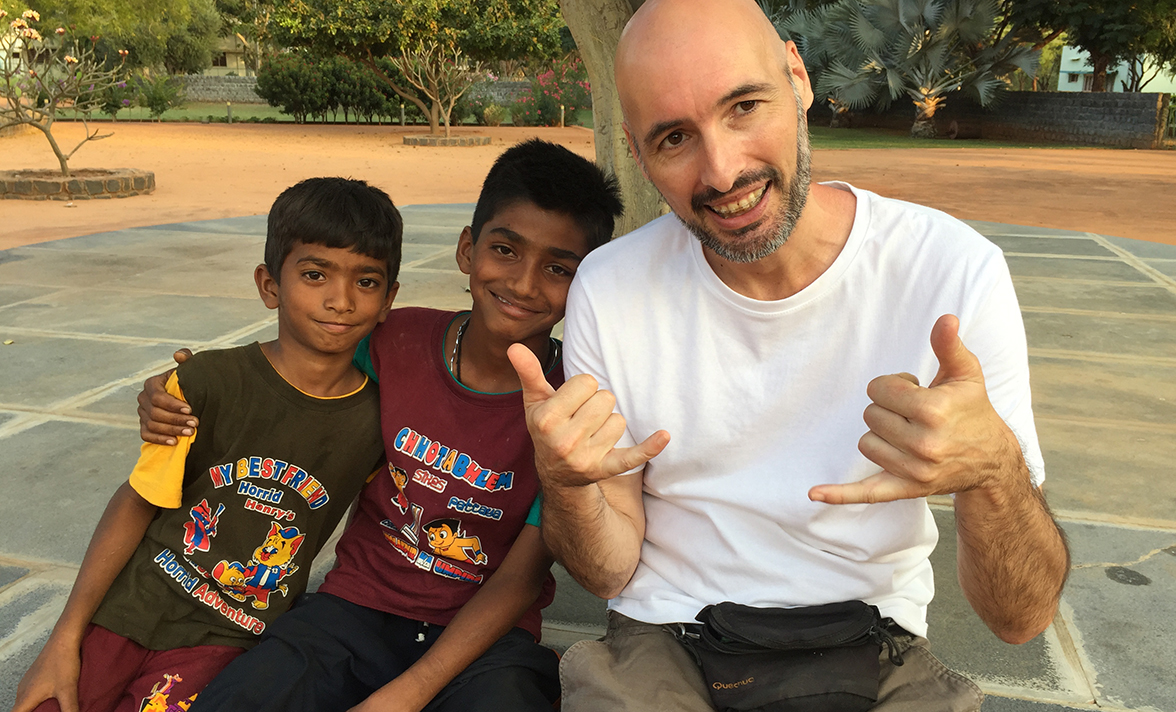
Making friends
On the Campus, I still find it hard to get used to Indians speaking Spanish and Catalan. It is truly surprising, but very welcoming at the same time. There are signs in Spanish, meal times are very "Spanish-like," and there is even tortilla de patatas for lunch.
The museum with "relics" from Vicente's early years in Anantapur is small but delightful. His desk, his typewriter, and his Bible are old and sober, transporting you to those moments of building the project.
Among the typewritten letters on the walls, written by him to his friends and family, I discover a gem for spiritual seekers: two books strongly recommended by him to a friend: "A Source of Energy" and "Memories of a Reporter in the Times of Christ," both by Father Heredia. I think that, being a person with such tremendous willpower and faith, I am convinced that these books must have much of Vicente in them.
I also really liked a paragraph where he told a friend: "Here, in India, the English style of educating with a stick still prevails. When children see us on the street, they run towards us, and it is because they love us, not because we don't hit them, but because they know we truly love them."
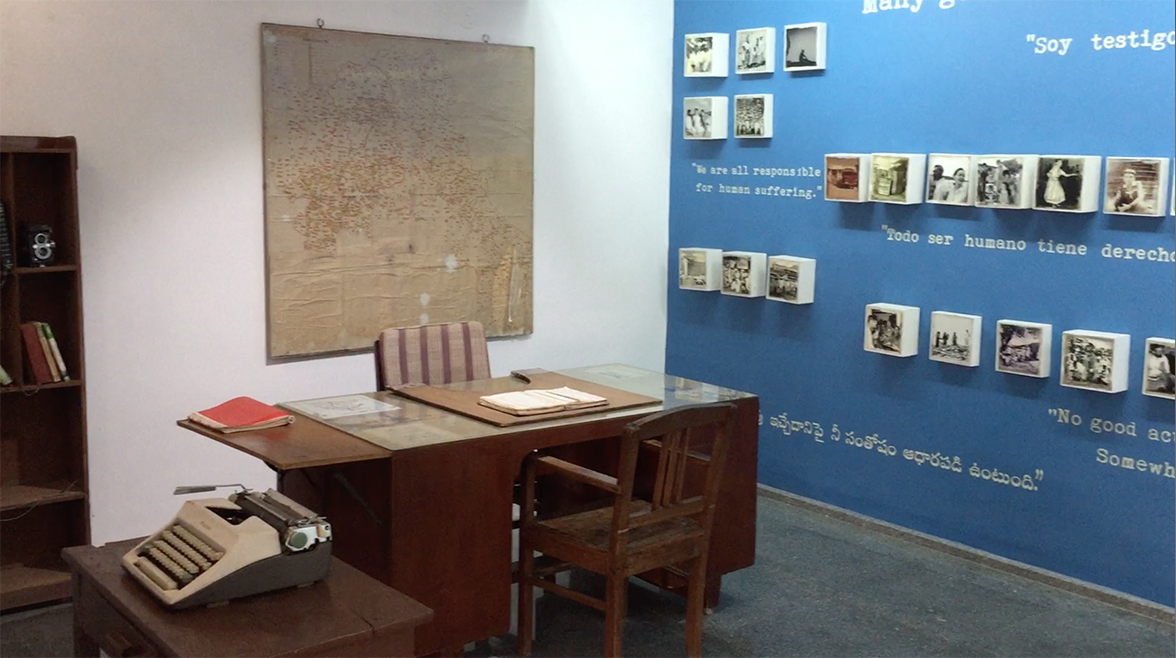
Vicente Ferrer Foundation Museum

The following days, I dedicated to visiting, along with a group of Spaniards and a guide, some of the "thousands" of projects the foundation has in the region.
I borrow Vicente's words when he says: "I am a witness that the world can be changed." Being here and visiting everything, you become aware of the dimension of what they have accomplished. There are really no words enough to describe it or to thank them.
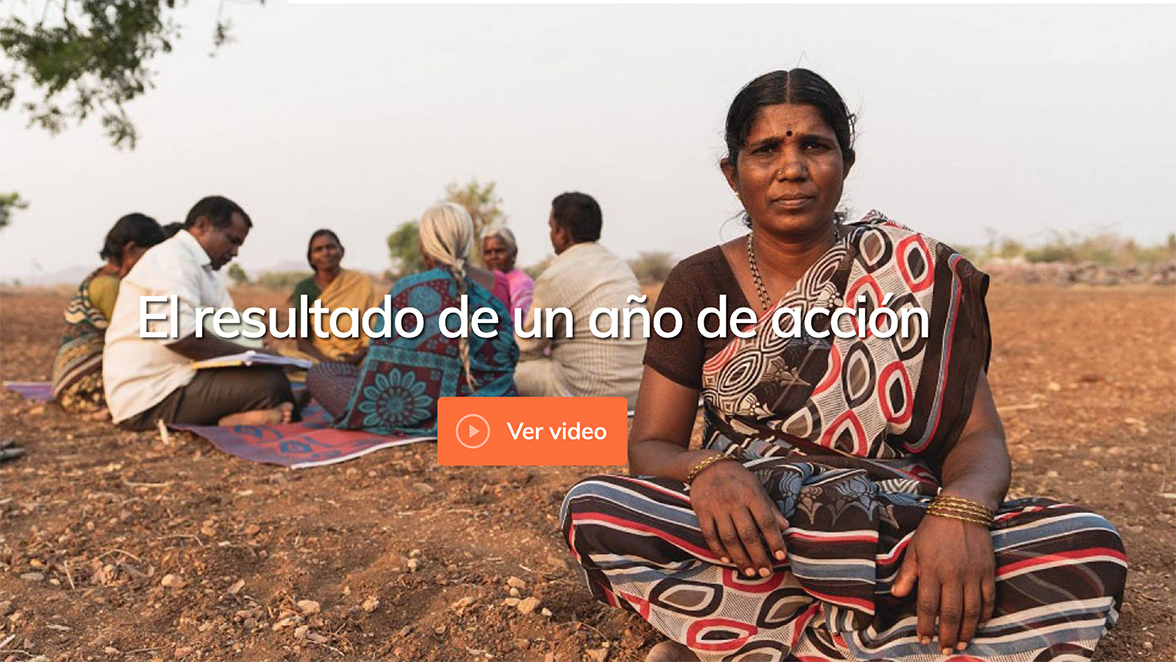
Thanks to the guide, during the visit to the hospitals, we have seen how the caste system in India is currently very active. In fact, you cannot understand Indian culture without understanding the castes. You can even see it in hospitals, when registering, you have to indicate the caste you belong to, and based on that, you receive government aid. Even your card is of one color or another depending on your caste.
On my last day, they asked me to dedicate some time to volunteering. In the sponsorship office, there are hundreds and hundreds of file cabinets, each with hundreds of folders, and each one is the life of a sponsored child. Sponsors and children correspond frequently, and there is a group of volunteers who translate the letters written by both. It's a huge job! Well, the thing is, there are some letters in Catalan, and they asked me to help with the translations. I am delighted to do so.
Also, I have a personal challenge I would like to accomplish: I want to find the moment to be alone with Ana Ferrer. I have some deep questions about spirituality that I would like to share with her. We'll see if the opportunity arises and I can enjoy her company for a while.
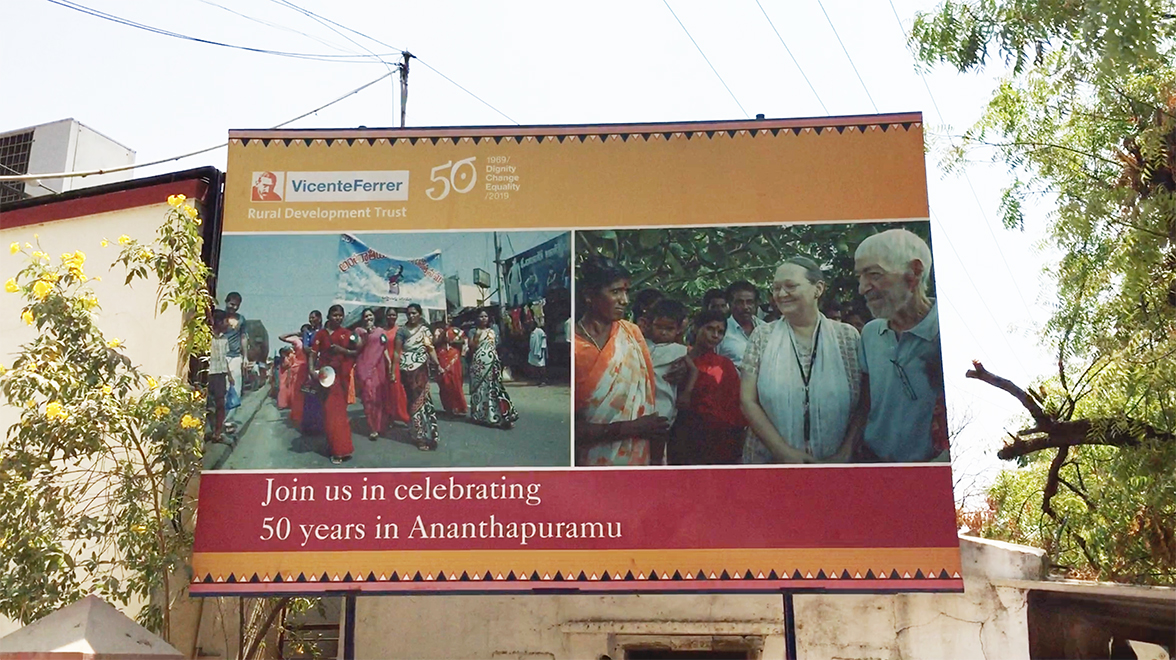
Vicente Ferrer Foundation Campus Office
Being in the language classroom, seeing the work volunteers do and the great attitude of the students, one feels like rolling up their sleeves and collaborating in any way possible. This has planted a seed in me that we will see if it becomes something in the future. But at first, I already have the machinery activated, the contact to start something of that nature, and the idea of how I could contribute. I can't help it...
After spending the day visiting a water filtration plant, an inclusive school, language reinforcement classrooms, and a rural village (where the foundation has built houses and carried out the women's grouping program), in the afternoon, we had our moment with Anna Ferrer.
In the afternoon, around six, Anna received the four visitors who have been together these days visiting the projects.
She is older than I thought and received us sitting at her desk, leaning back in her chair. She always has a few minutes to receive and greet all visitors, and for that reason, I think her attitude was very relaxed and even a bit routine, but at the same time very attentive and caring. What Anna didn't know is that I came with a list of ten questions. The questions were interesting, and when she detected that I was serious, the first thing she asked me was if I was a journalist, to which I replied no. Then she asked me where I came from. I told her I was very inquisitive and had been waiting for this moment for a long time. After some laughs, by the third question, she definitely perked up at the table to give body to everything she was telling us. I couldn't make a spiritual and religious monologue because the conditions weren't right, as you have to "know how to read" the environment and quickly adapt to the surroundings. She had just come from Spain after receiving an award, so I had compassion and reduced my list to seven questions. The fact is, we had a very pleasant and interesting time at the same time, and for me, it was a dream come true: I interviewed Anna Ferrer!
Next, and very briefly, I present the questions along with a synthesis of the answers.
Why do you say that India has a woman's face?
Despite the strong and violent patriarchy in India, women are able to support their families. You realize that they are the ones who really "pull the cart" and sacrifice themselves for the country.
Where does that attitude of gratitude come from that makes us feel so well received whenever we visit a Foundation project? Is there a will to create a culture of gratitude behind it?
No, it comes from them. Seeing how they lived before and how they live now after the help provided, it comes from them to thank you, the donors.
With what arguments can you convince a peasant family that their children should study, when the family counts on them to get the work done in the field?
It is not what is said to them; it is what is done.
Once we have helped families by giving them access to decent housing, free healthcare, and tools to improve their crop productivity, they are the ones who, when the time comes, ask for education for their children.
Is the project self-sufficient now? To what extent does it depend on donations?
For a few years now, part of the saved money has been generating interests that by themselves economically support some of the major infrastructures we have, such as some hospitals. Additionally, we have a community savings project, where families have a piggy bank and put what they can in it. On Vicente's anniversary, thousands of piggy banks in Anantapur are simultaneously broken. That money is channeled through the foundation to the projects that need it. However, we are still not totally self-sufficient.
Those who have benefited from the project's education aid, for example, and are now self-sufficient because they have found work and built a family, do they somehow feed the foundation back?
Yes, by their own will, many of them do.
Being Vicente a Jesuit and deeply religious, was it premeditated to exclude religion from the project? Here you don't perceive any trace of it; the foundation is totally neutral in that sense.
Vicente's way of understanding religion was precisely what he carried out: helping those in need through action.
Tell me very briefly and as best as you can, what was Vicente's relationship with God like?
Vicente believed above all and before everything in providence.
......
Another thing I will remember fondly from my stay at the Vicente Ferrer campus is the beautiful camaraderie shared with the volunteers. Most of them are young people who come to volunteer for a few months, having finished their studies and excited to participate in something useful and stimulating at the same time. Many of them are Spanish and come from all corners of Spain. It is very nice to gather together in the canteen at meal times, sharing our experiences in India, and of course, in a language we all share that allows us to enjoy humor 100% and not 20% as when we use English. It is greatly appreciated!
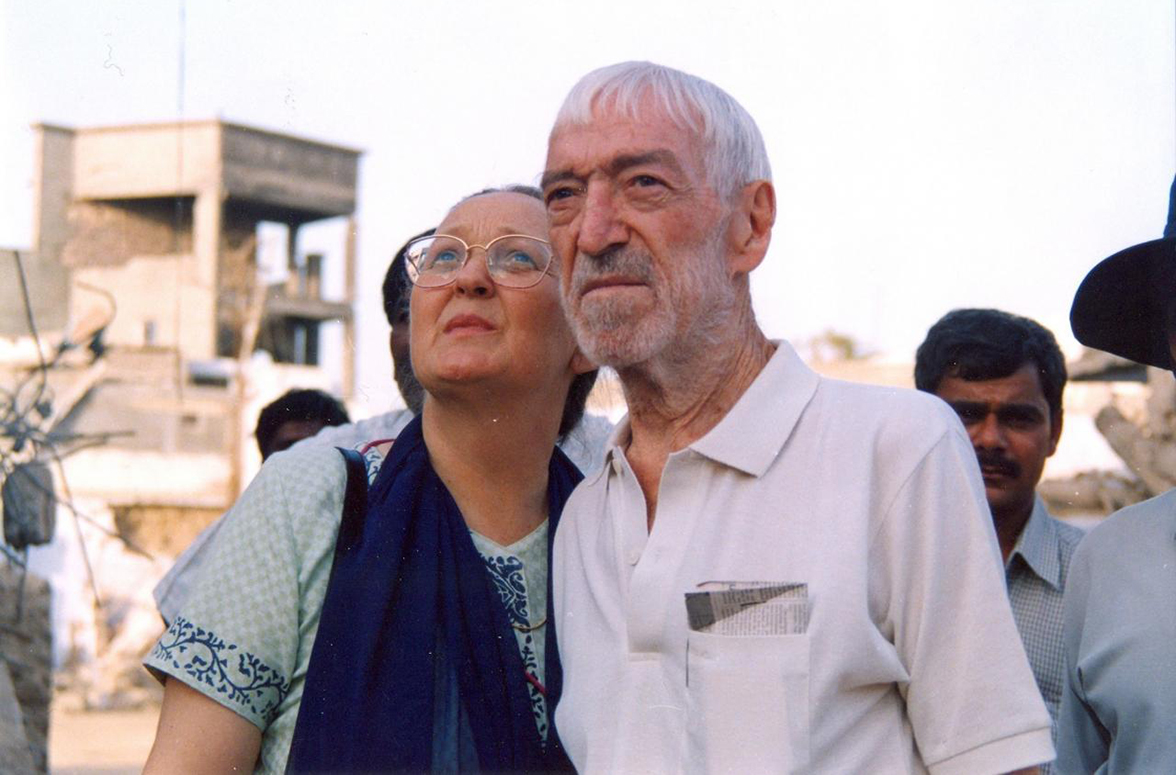
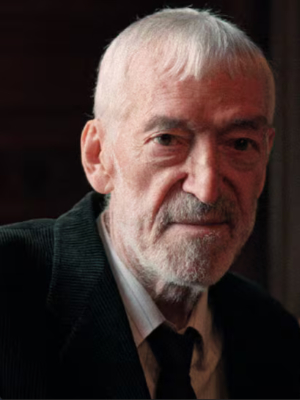
Vicente Ferrer and Anna Ferrer
Information of Interest
Transport:
Night bus from Chennai to Anantapur, cost: 1417 rupees.
Accommodation in Anantapur:
Vicente Ferrer Campus Office.
Website: Vicente Ferrer Campus Office
Contact and reservations in Website: Vicente Ferrer Campus Office
Recommended donation: voluntary, not defined.
Things to visit:
During your stay, the Campus guides will take you by car to visit some of the many projects the foundation has in Anantapur, so you don't have to worry about finding activities. Just with this, you will have more than enough.
Important:
If you haven't read the Considerations section yet, don't forget to do so. In this section, you will find very valuable information that can save you many headaches. In particular, there are details related to credit cards and mobile phone use that are essential.